










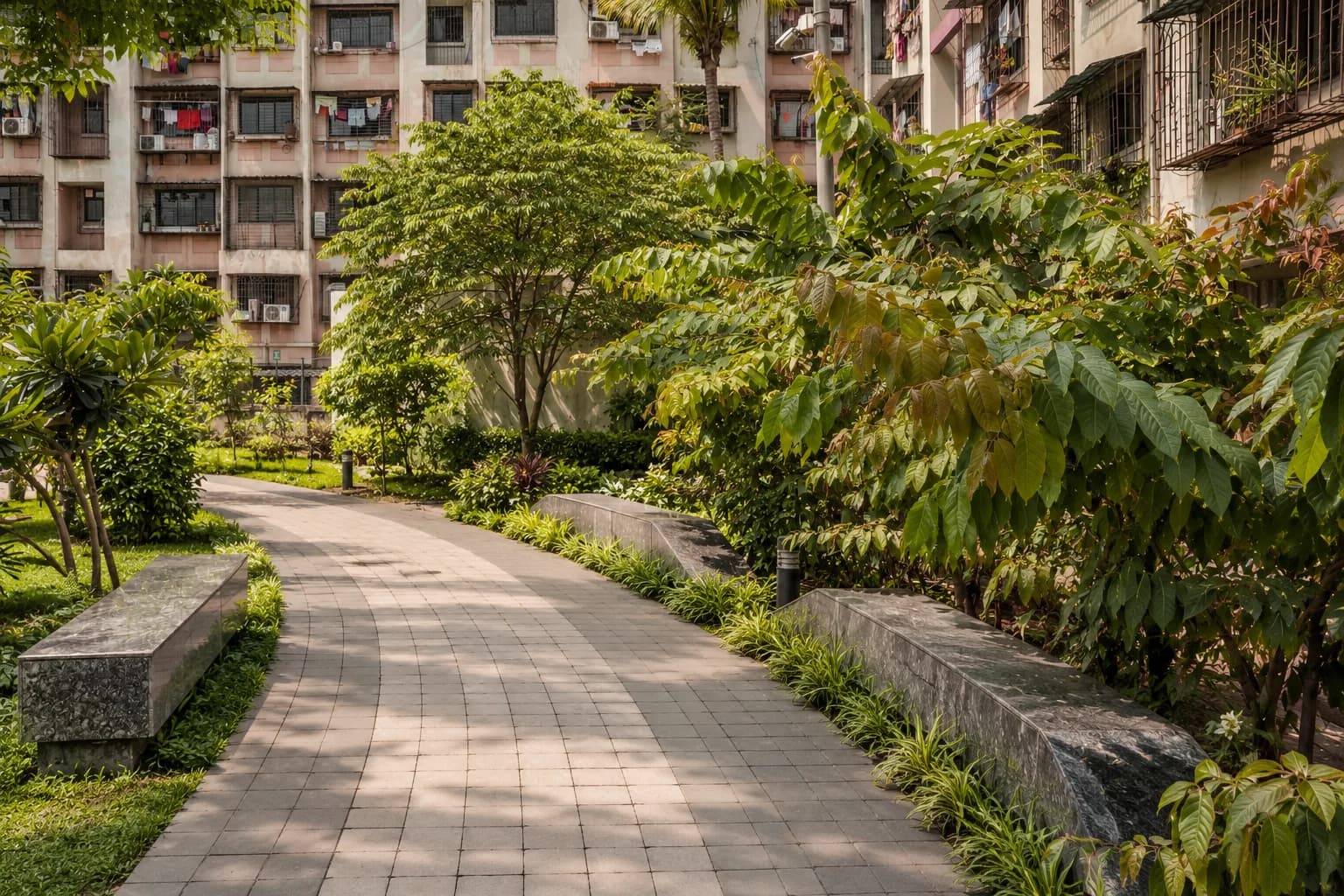
Softscape: the living layer of a landscape and the water it will need.
Softscape is everything living in a landscape (soil, lawn, ground cover, shrubs and trees) and the palette chosen here fixes the water and maintenance bill for the life of the site.
What it is
Softscape work begins below the surface: soil depth, texture, drainage and organic content decide what will grow and how much irrigation it will demand. Above it sit the planted layers (ground cover and lawn, shrub massing, small trees and canopy) arranged for the site's sun, wind and use, and selected for the climate and the water actually available rather than for a catalogue image.
KIPL specifies and executes softscape with water demand and maintenance load stated openly. Lawn, seasonal flowering and clipped hedging are high-input elements; native and drought-tolerant shrub massing, ground cover and trees are not. Deciding the proportion between them at design stage is the single largest lever an owner has over what the landscape costs to run.
What you get
The deliverables, in hand.
- Authority
- Site-matched species selection · soil and water assessment
- Typical timeline
- Weeks for execution; planting timed to the season
- Soil assessment, improvement and profile preparation
- Planting plan across ground cover, shrub, small tree and canopy layers
- Species schedule with sizes, quantities and sourcing
- Lawn preparation and laying where specified
- Planting execution with staking, mulching and initial irrigation
- Establishment-period care and gap filling
Straight answers
Softscape Development: common questions.
01What is included in softscape?
The living and soil elements of a landscape: prepared soil, lawn and ground cover, shrubs, hedges, climbers and trees, along with mulch. Hardscape covers the built elements. Most landscape contracts price the two separately because the skills, sequencing and risks differ.
02How is the planting palette decided?
By climate and rainfall, soil and drainage at the site, water quality and availability, sun and shade across the site, the use each area will take, and the maintenance capacity available. Native and locally adapted species are preferred where possible because they materially reduce water and maintenance.
03How much lawn should a project have?
As much as it will genuinely use and can afford to water. Lawn is the highest-input element in most landscapes (regular irrigation, mowing, edging and feeding) and large decorative lawn areas that nobody uses are the most common source of avoidable landscape running cost. Ground cover and shrub massing serve visually at a fraction of the input.
04Why is soil preparation so important?
Because plants perform to the soil they are in. Compacted, shallow or debris-laden soil produces weak growth and permanent irrigation dependence regardless of what is planted. Correcting the profile before planting is far cheaper than replacing failed planting into the same bad soil twice.
05When should planting be done?
Timed to the season, for most Indian sites at or around the monsoon, so establishment runs on natural rainfall and the plants face less transplant stress. Out-of-season planting is possible where irrigation is assured but carries higher losses and higher watering cost.
06How long is the establishment period?
Typically a few months of intensive care after planting for shrubs and ground cover, with trees needing attention across the first two summers. The period should be specified in the contract along with who waters, who weeds and who replaces failures, because that is where most post-planting disputes originate.
Within Sustainable Landscaping
Part of the whole route, the other components.
Relevant proof
Where this stage has already been delivered.
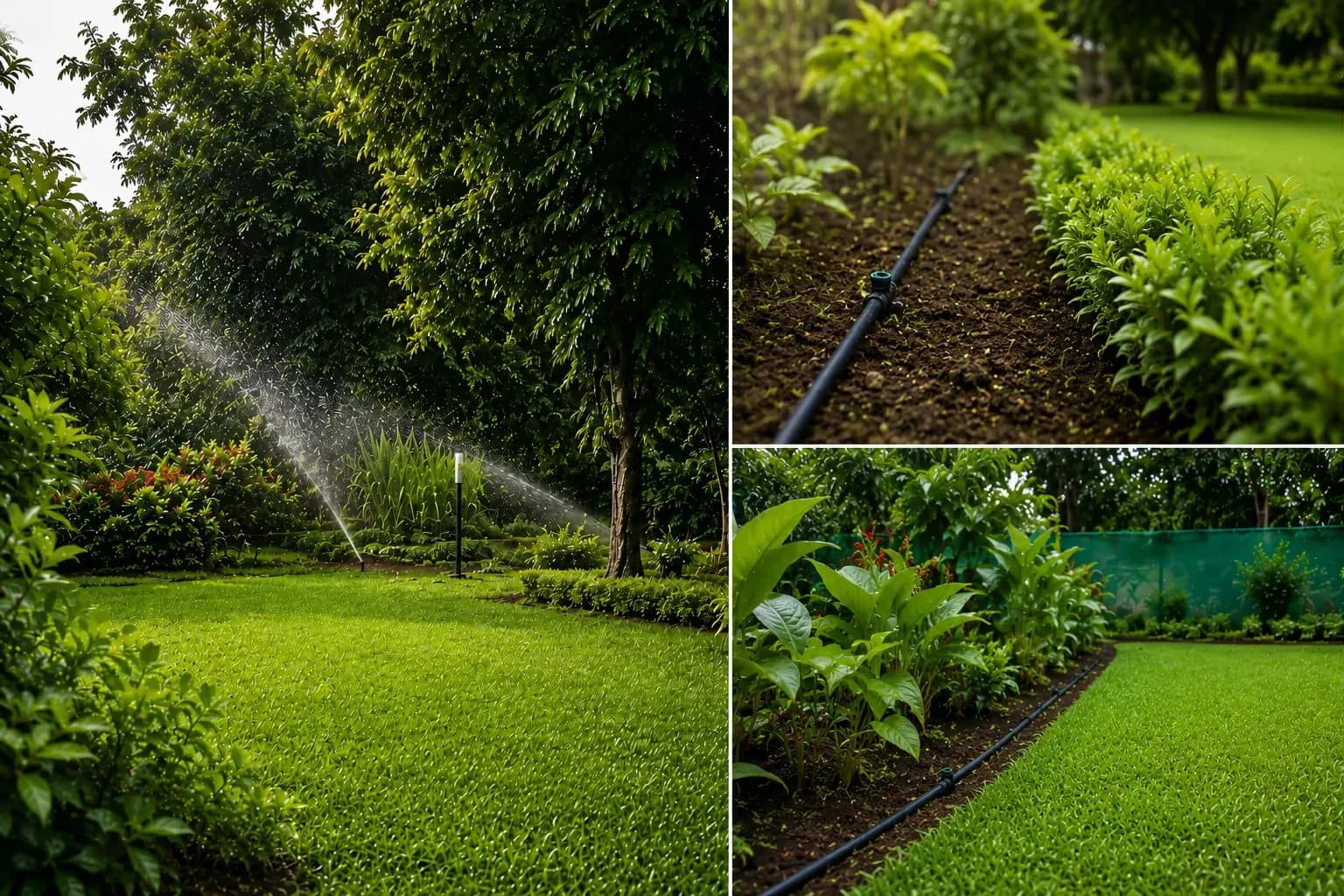
TCS, Banyan Park · Mumbai
IRRIGATION WORK AT TCS BANYAN PARK
Design and execution of an efficient drip-irrigation network across ~10,000 m² of landscape and plantation zones: pipeline, network and testing, completed in 45 days.
Where we do this
Sustainable Landscaping on the ground.
The authority, the timeline and the local ground differ by city. These pages set out how sustainable landscaping actually runs in each.
Featured projects
Work that carries its own evidence.
Our expertise
One team across the whole environmental brief.
Softscape Development is one stage of one practice. Most projects need several, and the commitments made at clearance are the ones we build and maintain.
Who we do this for
Sustainable Landscaping reads differently by industry.
- 01
Corporate CampusesCore
Campus softscape, hardscape and irrigation are the brand made physical, and are expected to run on treated water rather than fresh.
Sustainable Landscaping for Corporate Campuses - 02
Real Estate & Construction
Podium and open-space landscaping carries the plantation and pervious-area commitments made in the EIA, not just the amenity brief.
Sustainable Landscaping for Real Estate & Construction - 03
Townships & Area Development
Softscape, irrigation and water-sensitive hardscape are how the township's treated-water reuse and runoff commitments are actually realised.
Sustainable Landscaping for Townships & Area Development - 04
Hospitality, Healthcare & Education
Campus landscape is both the amenity the guest or patient experiences and the pervious-area and plantation commitment in the clearance.
Sustainable Landscaping for Hospitality, Healthcare & Education - 05
Municipal Corporations
Public realm landscaping has to survive footfall, water scarcity and a maintenance budget set years before, which drives species choice.
Sustainable Landscaping for Municipal Corporations
Trusted by
The organisations this work is done for.





In the press