










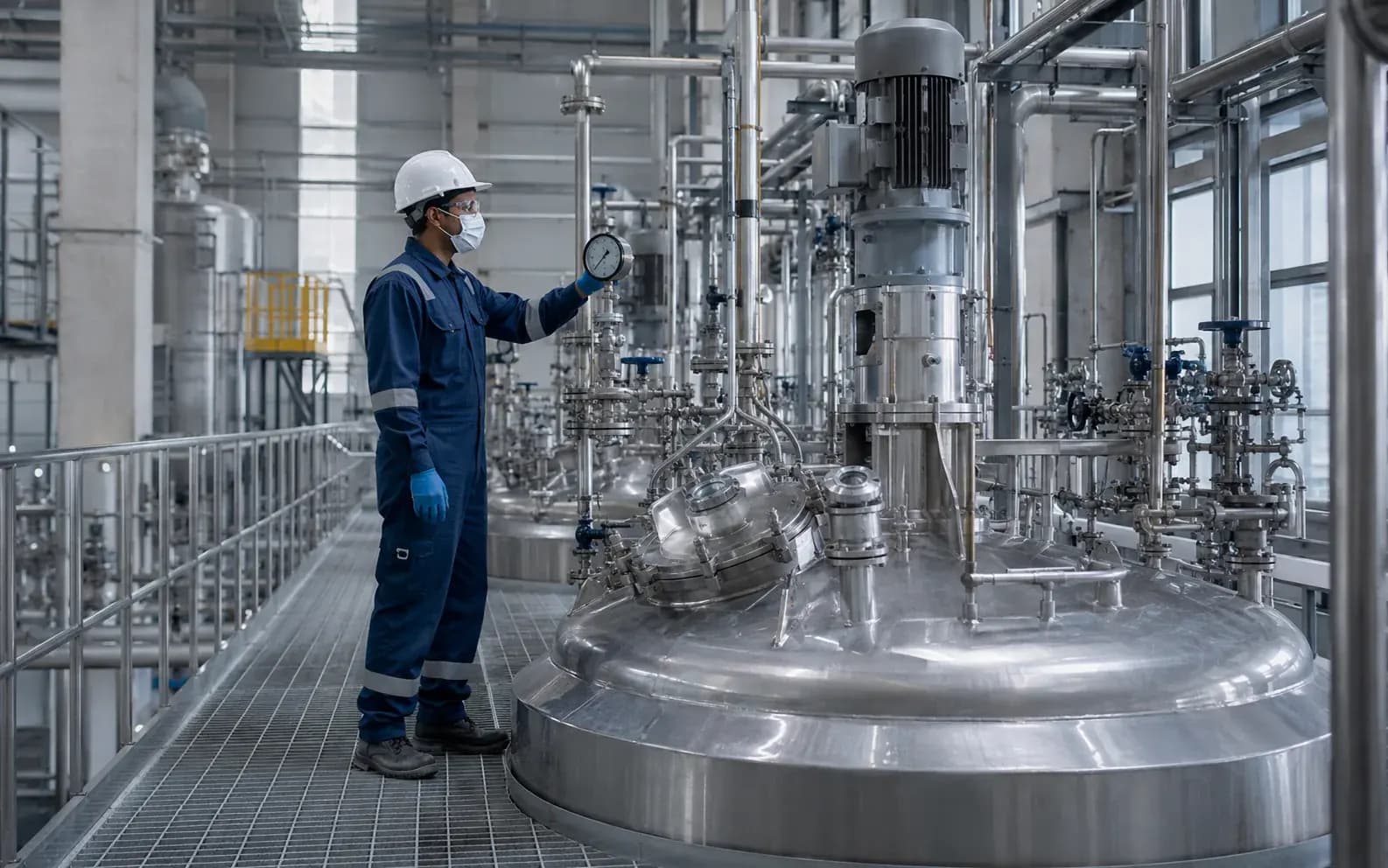
Effluent Treatment Plants · Sugar Industry
Effluent Treatment Plants for Sugar Mills
A sugar mill's ETP has to take a high-BOD, high-volume load for the length of the crushing campaign and then survive seven months with almost nothing to feed it, which is a fundamentally different design problem from a plant that runs all year.
Screening view on your project, with the category and route named. No obligation.
What this means for sugar industry
The effluent from a mill is mostly condensate, mill house and floor wash water, boiler blowdown and cooling tower overflow, and it arrives warm, acidic and organically loaded, sugar-bearing water that turns septic within hours. Volume is not the difficulty; the difficulty is the duty cycle. An anaerobic or activated sludge system commissioned in November has to be brought up to full biological load within days of the first cane and then held alive through an off-season when the substrate stops. Mills that ignore that end each campaign the same way: an ETP started cold, weeks of poor outlet quality at the beginning of the season, and effluent quality data in the monthly return that will not stand at consent renewal. Discharge quality is judged against the sugar-industry entry in Schedule I of the Environment (Protection) Rules 1986 and against whatever conditions the consent carries, and land irrigation and inland surface water discharge are held to different limits.
How KIPL runs it
KIPL designs and reviews sugar ETPs for campaign operation rather than for a steady-state datasheet: peak-load hydraulics sized on the crushing rate, equalisation with enough retention to absorb start-up and washing surges, biology chosen and seeded so it can be restarted rather than rebuilt each season, and a sludge route that does not create a second problem in the off-season. The reuse case is where the economics sit. Cane is largely water, so a mill that recovers and polishes condensate can meet a substantial share of its own process and cooling demand from the cane itself and cut fresh water intake, which matters directly where the mill also holds a groundwater NOC or draws from a stressed block. Where the mill has a distillery, we keep the spent wash system separate and route press mud into the bio-composting case rather than letting distillery load reach a plant designed for sugar effluent.
- EP Rules 1986
Sector-specific discharge standards
Sugar has its own entry in Schedule I of the Environment (Protection) Rules 1986, with different limits for discharge to inland surface water and to land for irrigation. The disposal route chosen decides the treatment target.
Campaign duty cycle
Full organic load for the crushing season and near-zero load outside it. Biological systems have to be started fast, held stable through washing surges and kept viable in the off-season.
Water closure earns its own case
Condensate recovery and treated water reuse cut fresh intake materially, which strengthens the consent position, the EC water balance and any groundwater NOC the mill relies on.
What you receive
Written for sugar industry, not adapted from a template.
- 01Effluent inventory by stream: condensate, mill house and floor wash, boiler blowdown, cooling overflow, with campaign peak and off-season flows
- 02ETP process design or review sized on crushing rate, with equalisation for start-up and wash surges
- 03Seasonal start-up and shutdown protocol: seeding, biomass preservation through the off-season, and a documented restart sequence
- 04Condensate recovery and treated-water reuse scheme for process, cooling and green belt irrigation, with the resulting fresh-water saving
- 05Sludge handling route and its interface with press mud and, where present, distillery bio-composting
- 06Outlet monitoring plan and record format that supports the monthly returns, Form-V and consent renewal
Questions from sugar industry
What sugar industry ask before appointing us.
Answered against the regulation as it stands, not as a sales pitch. If your situation is not here, ask us directly.
Ask a question →Why does a sugar ETP behave differently from a normal industrial ETP?
Because it is asked to work for part of the year. Biological treatment depends on a live, acclimatised biomass, and a plant that is starved for seven months cannot deliver compliant outlet quality on the first day of crushing. The design has to include how the biology is preserved or reseeded and how the plant is ramped, otherwise the first weeks of every campaign produce the worst numbers of the year.
Can a sugar mill actually be water-positive?
Cane carries a large proportion of water into the plant, so a mill that condenses and recovers it can meet a meaningful share of process and cooling demand from the cane itself rather than from an external source. Whether it becomes water-positive depends on the recovery equipment, the cooling system and how honest the water balance is. It is a design outcome to aim at, not a claim to make before the balance is measured.
Where should treated effluent go?
In order of preference: back into the process and cooling loop, then to green belt and campus irrigation, and only then to a permitted external route. The choice is not purely commercial, because Schedule I applies different limits to discharge on land for irrigation and to inland surface water, and the consent will state which route is permitted. The route has to be fixed in the consent, not decided at the outlet valve.
We have a distillery on the same premises. Can one plant handle both?
No. Spent wash is an order of magnitude stronger than sugar effluent and is governed by its own regime, with concentration and incineration or bio-composting with press mud as the accepted routes. Feeding it into the sugar ETP destroys the plant's biology and the compliance position with it. The two systems are kept separate and interfaced only where press mud crosses from the mill to the compost yard.
How is the ETP judged at consent renewal?
On records rather than on the drawing. The Board looks at outlet analysis across the campaign, flow measurement, whether the plant was operating when the mill was crushing, and whether reported quality is consistent with the declared load. A plant that is technically adequate but poorly logged fails the same way as one that is undersized, which is why the monitoring format matters as much as the process design.
Does an ETP upgrade need approval before it is built?
A change in treatment scheme, capacity or discharge route changes the consented position, so it is taken up with the Board rather than treated as internal maintenance. Where the upgrade accompanies a crushing capacity increase it also belongs in the Environment Clearance file, and the sensible order is to fix the water balance first so the ETP is sized against the capacity that will actually be cleared.
Stage by stage
How effluent treatment plants actually runs, step by step.
Also for sugar industry
The rest of the environmental brief for this sector.
Primary sources
Verify any of this at the source.
Relevant proof
EIA for Synthetic Organic Chemical Industry
CTE/CTO application, ToR application, baseline data collection, EIA report and appraisal before the EAC: Category 5(f), the sector KIPL holds Category A accreditation in.
- Capacity
- 20 → 140 TPM
- 5(f) accredited
- Cat A
Where we do this
Effluent Treatment Plants for sugar industry, city by city.
Other sectors
Who else we run effluent treatment plants for.
Next step
Tell us the project, and we will tell you the category and the route.
Screening is the cheapest stage to get right and the most expensive to get wrong. We will say plainly what effluent treatment plants your sugar industry project needs, and what it does not.





























































Start the conversation