










Mitigation Plan: the specific measures that reduce each impact, with an owner and a cost.
A mitigation plan sets out, impact by impact, the measures that will avoid, reduce, restore or offset a project's environmental effects: with who does it, when, and at what cost.
What it is
Mitigation is applied in a hierarchy, and the order is not decorative. Avoidance comes first, because an impact designed out of the project needs no ongoing management; then minimisation through design, technology and operating practice; then restoration of what is unavoidably affected; and only then offsetting or compensation for the residual. A plan that reaches straight for compensation without demonstrating that avoidance and minimisation were considered is weak on appraisal and weaker still in operation.
KIPL prepares mitigation plans that link each measure to the specific predicted impact it addresses, so that the connection between the assessment and the commitment is visible rather than asserted. Each measure carries a responsible party, a project phase, a design or performance specification, an indicative cost and a statement of the residual impact that will remain after it is applied. Being explicit about residual impact is what makes the rest of the plan credible.

What you get
The deliverables, in hand.
- Authority
- EIA Notification 2006 · mitigation hierarchy · EC conditions
- Typical timeline
- Weeks, following completion of impact prediction
- Impact-to-measure mapping across air, water, land, noise, ecology and social
- Mitigation hierarchy applied and documented for each significant impact
- Design, technology and operating specifications for each measure
- Phase-wise responsibility allocation for construction and operation
- Indicative capital and recurring cost per measure
- Residual impact statement after mitigation
Straight answers
Mitigation Plan: common questions.
01What is an environmental mitigation plan?
It is the set of measures a project commits to in order to reduce its predicted environmental impacts, organised impact by impact with a responsible party, a phase, a specification and a cost against each. It is the substance of what an Environment Management Plan then operationalises.
02What is the mitigation hierarchy?
The sequence in which mitigation should be considered: avoid the impact, minimise it, restore what is affected, and offset or compensate for what remains. Applying it in order matters because avoidance is permanent and free of ongoing management burden, while offsetting is the most expensive, least certain and most scrutinised option.
03How is a mitigation plan different from an EMP?
The mitigation plan is the measures component. The Environment Management Plan is the wider instrument that contains those measures plus the monitoring programme that checks them, the institutional arrangement that delivers them and the budget that funds them. In many reports the mitigation plan appears as a chapter within the EMP rather than as a separate document.
04Who verifies that mitigation is actually implemented?
Implementation is reported by the proponent in the half-yearly compliance reports against the Environment Clearance conditions and is verifiable on inspection by the regional office of the Ministry, by the State Pollution Control Board and, where proceedings arise, by the National Green Tribunal. Independent third-party verification is commissioned by many proponents and by lenders, and is more useful than self-reporting alone.
05What happens if a mitigation measure does not work?
The monitoring programme is what reveals it, which is the point of tying monitoring to each measure. The correct response is to report the shortfall, establish the cause and revise the measure, seeking an amendment to the clearance condition if the change is material. Continuing to report a committed measure as implemented when the monitoring shows it is not working is the failure mode that turns a technical problem into an enforcement one.
06Is compensatory afforestation part of the mitigation plan?
It is a distinct obligation. Where forest land is diverted, compensatory afforestation and associated levies arise under the forest clearance regime and the compensatory afforestation fund framework, separately from the Environment Clearance. Greenbelt development within the project boundary, by contrast, is a standard mitigation measure and usually a specific EC condition. The two are frequently conflated and should not be.
07Do construction-phase measures need separate treatment?
Yes. Construction impacts (dust, spoil, construction water and wastewater, labour camp sanitation, traffic, noise from equipment) are different in kind and duration from operational impacts, and they are largely delivered by contractors rather than by the proponent's own staff. Unless they are written into contractor scopes with the specification and the cost, they are consistently the measures that go unimplemented.
Within Environment Management & Mitigation Plan
Part of the whole route, the other components.
Primary sources
Check it at source.
This page describes EIA Notification 2006 · mitigation hierarchy · EC conditions. The regulation and the filing portal are public, these are the official endpoints, not our summary of them.
Relevant proof
Where this stage has already been delivered.

KwaliChem Pvt. Ltd. · TTC Industrial Area, Rabale, Navi Mumbai
EIA for Synthetic Organic Chemical Industry
CTE/CTO application, ToR application, baseline data collection, EIA report and appraisal before the EAC: Category 5(f), the sector KIPL holds Category A accreditation in.
Where we do this
Environment Management & Mitigation Plan on the ground.
The authority, the timeline and the local ground differ by city. These pages set out how environment management & mitigation plan actually runs in each.
- Ahmedabad
- Ambernath
- Andhra Pradesh
- Badlapur
- Bengaluru
- Bhiwandi
- Chennai
- Chhatrapati Sambhajinagar
- Delhi NCR
- Gandhinagar
- Goa
- Gujarat
- Gurugram
- Haryana
- Hyderabad
- Indore
- Jaipur
- Kalyan-Dombivli
- Karnataka
- Kerala
- Kharghar
- Kochi
- Kolhapur
- Kolkata
- Lucknow
- Madhya Pradesh
- Maharashtra
- Mira-Bhayandar
- Mormugao
- Mumbai
- Nagpur
- Nashik
- Navi Mumbai
- New Delhi
- Noida
- Panaji
- Panvel
- Pune
- Punjab
- Rajasthan
- Rajkot
- Solapur
- Surat
- Taloja
- Tamil Nadu
- Telangana
- Thane
- Ulhasnagar
- Uran
- Uttar Pradesh
- Vadodara
- Vasai-Virar
- Visakhapatnam
- West Bengal
Featured projects
Work that carries its own evidence.
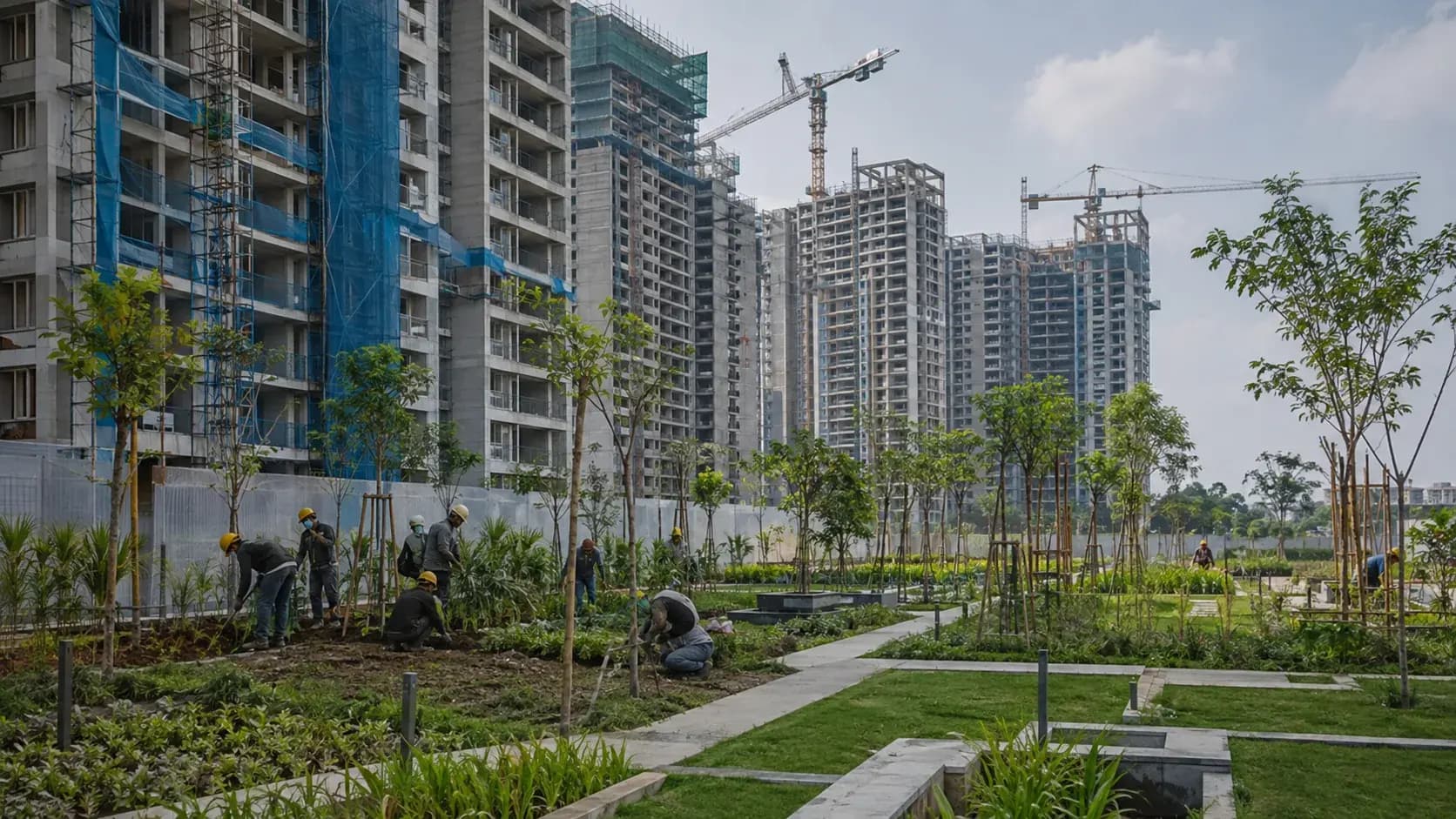
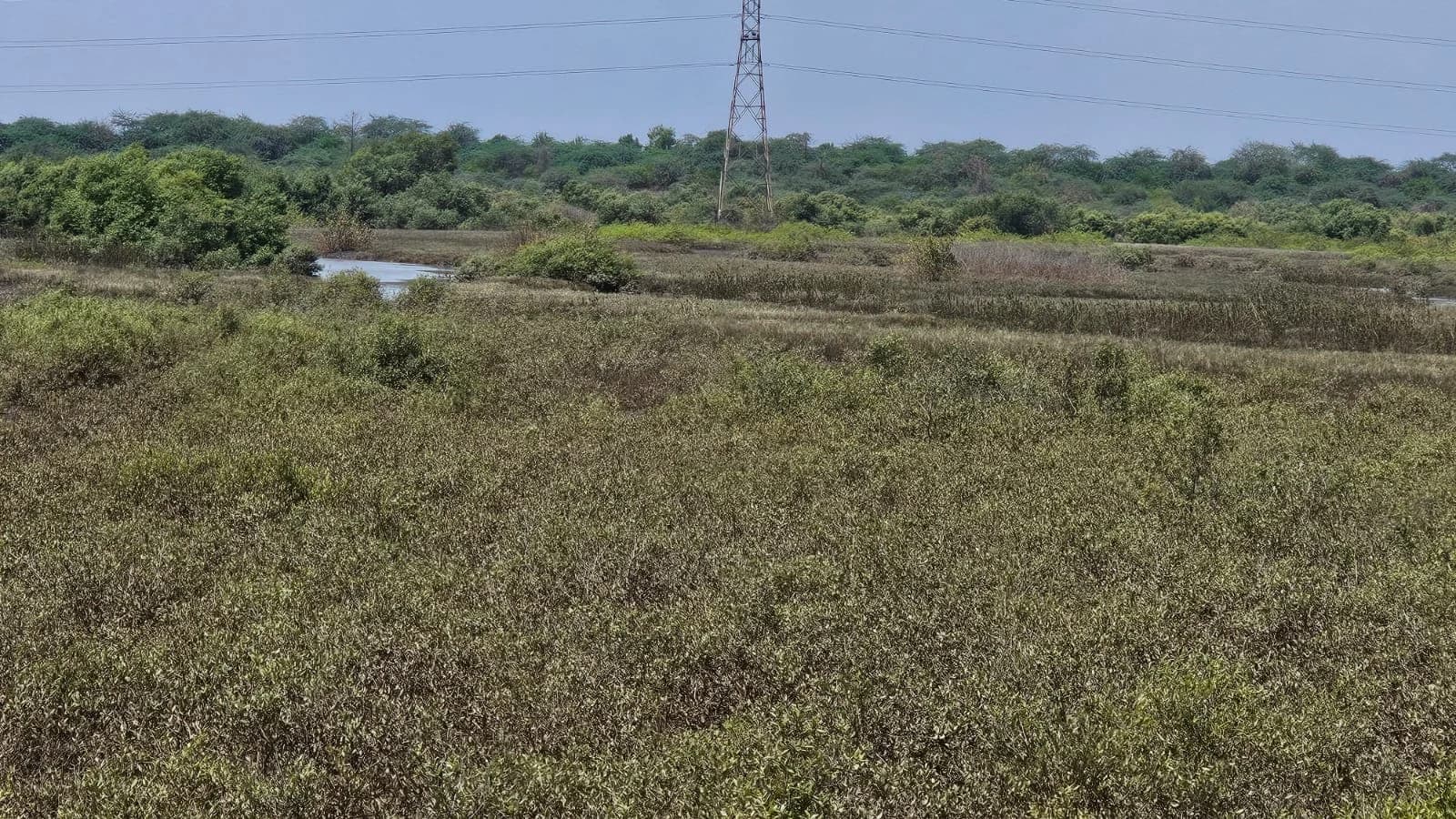
Our expertise
One team across the whole environmental brief.
Mitigation Plan is one stage of one practice. Most projects need several, and the commitments made at clearance are the ones we build and maintain.
Who we do this for
Environment Management & Mitigation Plan reads differently by industry.
- 01
Townships & Area DevelopmentCore
In an 8(b) case the EMP is the infrastructure specification: treatment capacity, green network and water balance become binding build obligations.
Environment Management & Mitigation Plan for Townships & Area Development - 02
Chemical IndustryCore
Solvent recovery, emergency preparedness and risk mitigation are the operating core of a chemical EMP, not an appendix to it.
Environment Management & Mitigation Plan for Chemical Industry - 03
Distilleries & EthanolCore
The EMP has to convert the spent-wash strategy into daily operating limits on storage days, concentration and boiler feed.
Environment Management & Mitigation Plan for Distilleries & Ethanol - 04
Sugar IndustryCore
The EMP has to work for a plant that runs flat out for five months and idles for seven, which routine templates do not accommodate.
Environment Management & Mitigation Plan for Sugar Industry - 05
Mining & MineralsCore
The EMP has to run with the mine plan: progressive reclamation, dump stability, dust suppression and haul-road control, year by year.
Environment Management & Mitigation Plan for Mining & Minerals - 06
Industrial Corridors & MIDCCore
The node-level EMP fixes the environmental ground rules, monitoring network and allocation logic that hundreds of downstream units build against.
Environment Management & Mitigation Plan for Industrial Corridors & MIDC - 07
River & Water MissionsCore
Programme-level EMP and EHS governance has to cover contractors across many sites, which is where mission compliance usually fails.
Environment Management & Mitigation Plan for River & Water Missions - 08
Environmental & Social Due DiligenceCore
Diligence findings become a corrective environmental and social action plan written into the facility agreement and monitored against it.
Environment Management & Mitigation Plan for Environmental & Social Due Diligence
Trusted by
The organisations this work is done for.









In the press