









Post-EC Compliance · Townships & Area Development
Post-EC Compliance for Townships & Area Development: a decade of half-yearly reporting against commitments made before the first plot sold.
A multi-phase township files half-yearly Environment Clearance compliance reports on 1 June and 1 December for the length of its build-out, measured against infrastructure commitments made in an appraisal that predates the first plot sale.
Screening view on your project, with the category and route named. No obligation.
What this means for townships & area development
The reporting obligation itself is the same as for any clearance, a half-yearly compliance report on 1 June and 1 December to the regulatory authority, placed in the public domain. What differs on a township is the duration and the subject matter. The report is not describing a construction site; it is describing the progressive realisation of a settlement's infrastructure: how much treatment capacity is commissioned against how much occupancy, how much treated water is actually being reused, how many hectares of the committed green network are planted and surviving, what the groundwater draw is against the approved balance, how the solid waste system is performing sector by sector, and what the ambient monitoring across the site is showing. Over ten years and several changes of project team, the risk is not that the township fails to build infrastructure. It is that nobody can any longer demonstrate the relationship between what was committed and what exists.
How KIPL runs it
KIPL runs township compliance as a continuous programme anchored to the commitment register: each clearance condition carried forward with its capacity, location and phase trigger, monitored on a fixed calendar, and reported in the same terms it was committed in, half-year after half-year. That continuity is the whole value. It also protects the developer at the two moments that matter most on a township: when a phase seeks occupancy and the record is examined, and when the master plan is commercially revised and the compliance history has to show a coherent, honest account of what changed and when. The alternative, which we are frequently asked to repair, is a project in year six with three years of thin reports, a plantation nobody can locate on a map, and no way to reconstruct the record.
- 1 Jun / 1 Dec
Half-yearly, for the whole build-out
The compliance report falls due on 1 June and 1 December from the grant and continues through every phase and into operation. On a township that is a reporting relationship measured in decades.
Phase occupancy is where it gets examined
Each phase seeking occupancy brings the compliance record into view, along with the question of whether the infrastructure committed for that phase is actually commissioned.
Commitments outlive the people who made them
The team that appeared at appraisal will not be the team delivering phase five. A commitment register carried forward in the reports is what keeps the obligation legible across staff turnover.
What you receive
Written for townships & area development, not adapted from a template.
- 01Commitment register carried across phases, mapping every EC condition to capacity, location, trigger and evidence
- 02Half-yearly compliance reports on 1 June and 1 December for the full build-out
- 03Treatment capacity versus occupancy tracking, with reuse volumes metered and reported
- 04Green network delivery reported against the committed map, with area planted and survival evidenced
- 05Groundwater abstraction, recharge and water-balance reporting against the approved balance
- 06Site-wide ambient air, noise and water monitoring, and solid waste performance sector by sector
Questions from townships & area development
What townships & area development ask before appointing us.
Answered against the regulation as it stands, not as a sales pitch. If your situation is not here, ask us directly.
Ask a question →How long does a township keep filing compliance reports?
For as long as the clearance conditions run, which on a phased township means through the entire build-out and into the operational life of the settlement. The reports are due half-yearly, on 1 June and 1 December, and the obligation does not pause between phases.
What is examined when a phase seeks occupancy?
Whether the infrastructure committed for that phase is commissioned and performing (treatment capacity, water supply, reuse, waste processing, green network) and whether the compliance record supports the claim. This is where a thin reporting history becomes a commercial problem, because possession dates depend on it.
Our project team has changed twice since the clearance. How do we report against commitments we did not make?
By reconstructing a commitment register from the clearance letter, the EIA and the EMP, establishing the current position honestly against each item, and reporting from there. That reconstruction is a defined exercise and it is far better done proactively than in response to a query at occupancy stage.
We have missed several reporting cycles. What is the sensible course?
An honest gap assessment, immediate resumption of monitoring and reporting, and a remediation plan for the commitments that were never operationalised, filed as such rather than papered over. Reconstructed evidence that does not stand up is worse than an acknowledged gap with a credible plan.
The master plan changed. How is that handled in the compliance report?
Transparently, and alongside whatever amendment position has been taken with the authority. The compliance report is still measured against the approved commitments, so a divergence that is explained and being formally addressed reads very differently from one that simply appears in the numbers.
Can the same reporting serve the MPCB consent obligations?
Much of it can. The effluent testing, ambient monitoring and waste records feed the EC half-yearly report, the phase consent conditions and the annual Form-V statement. On a township with several plants and an active construction front, running one monitoring programme for all of them is the only way the numbers stay consistent.
Stage by stage
How post-ec compliance actually runs, step by step.
Also for townships & area development
The rest of the environmental brief for this sector.

Relevant proof
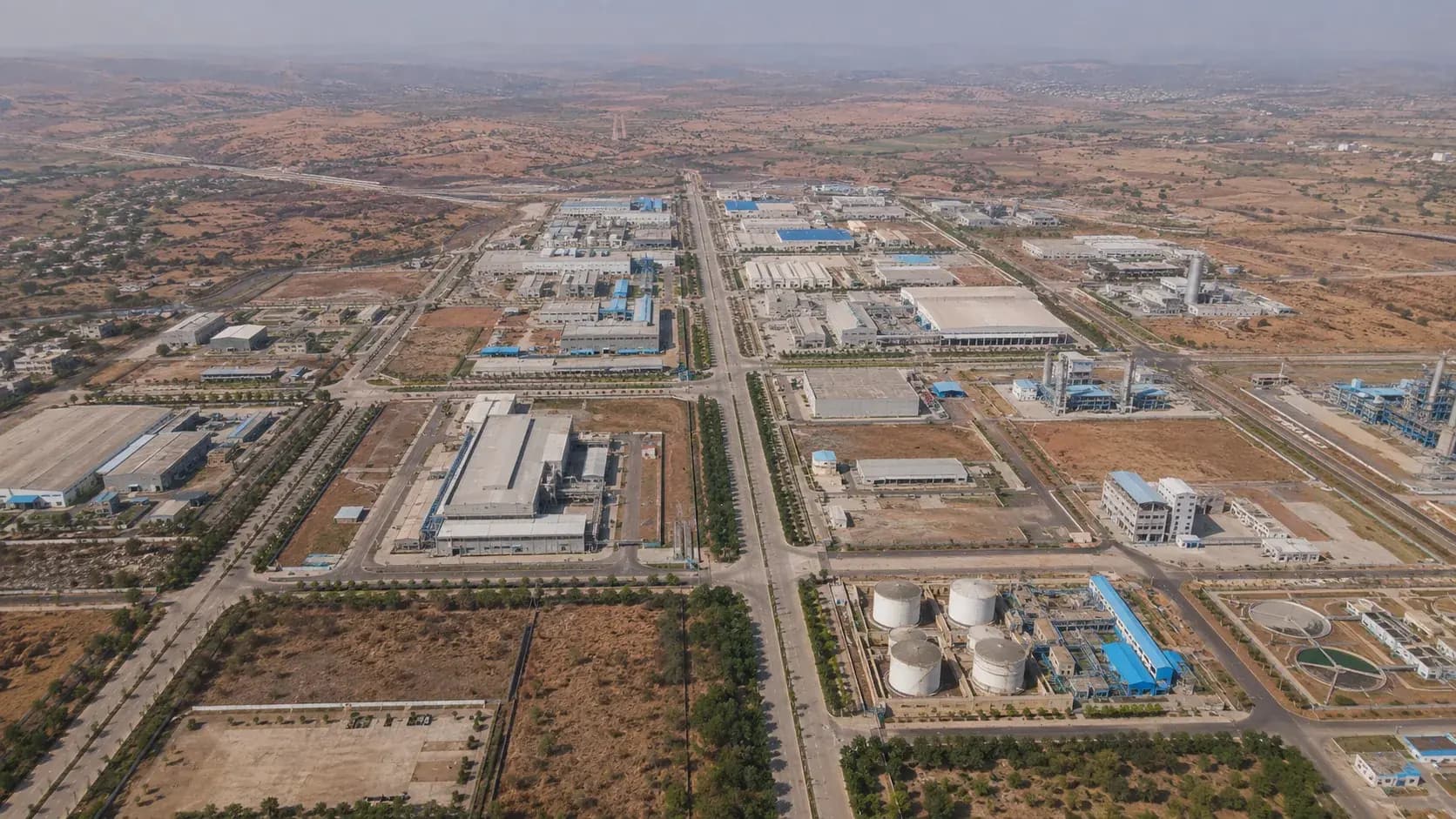
SHENDRA AND BIDKIN INDUSTRIAL AREA, AURANGABAD
Environmental compliance audits, Consent to Establish and green certification support across two industrial nodes of the Delhi-Mumbai Industrial Corridor.
- Shendra + Bidkin
- 4,024 ha
- City scale
- IGBC Gold
Where we do this
Post-EC Compliance for townships & area development, city by city.
Other sectors
Who else we run post-ec compliance for.
Next step
Tell us the project, and we will tell you the category and the route.
Screening is the cheapest stage to get right and the most expensive to get wrong. We will say plainly what post-ec compliance your townships & area development project needs, and what it does not.





























































Start the conversation