









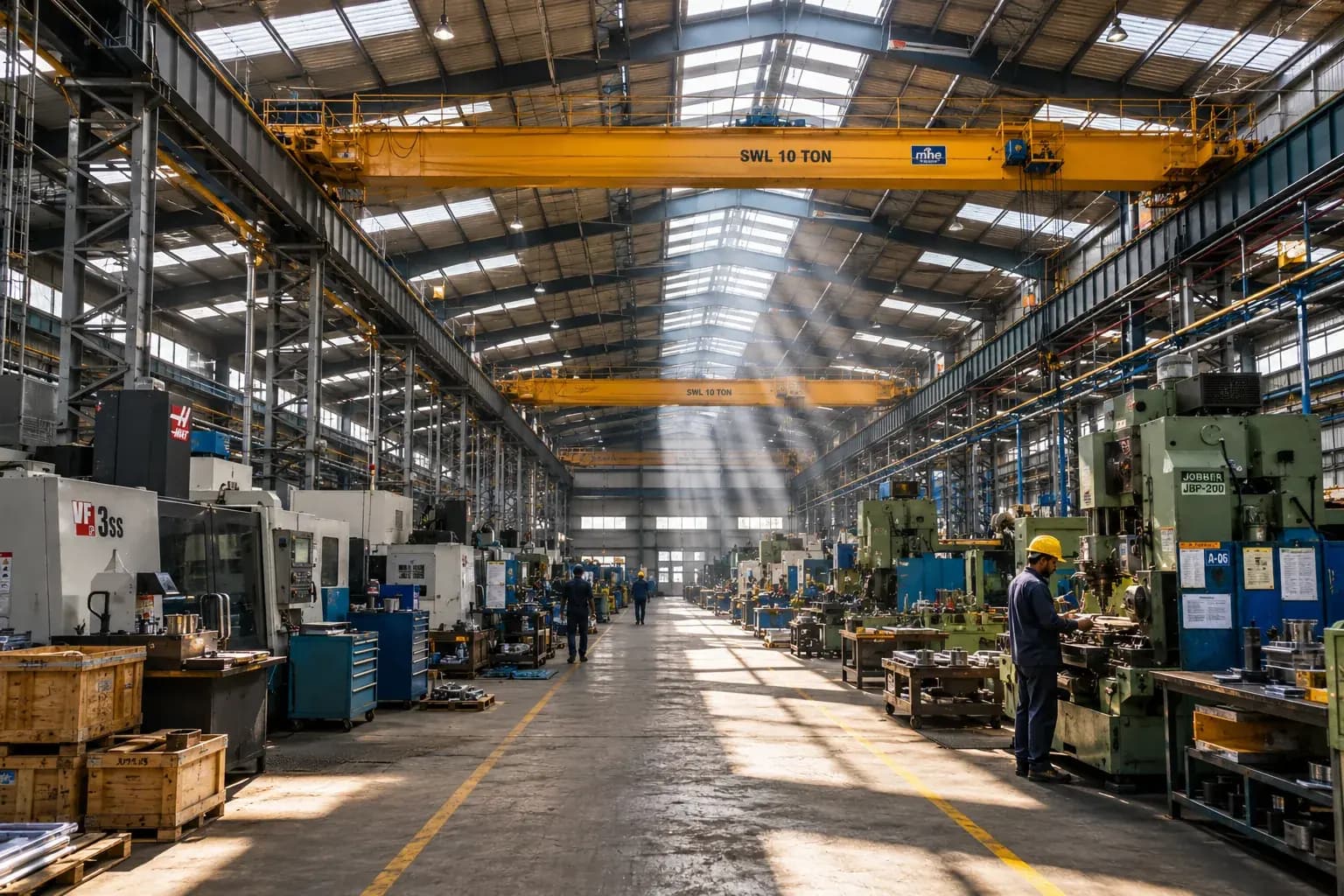
Integrated Solid Waste Management · Industrial & Manufacturing
Integrated Solid Waste Management for Manufacturing Units
The waste a manufacturing unit sends out in a municipal tipper (canteen waste, packaging, sweepings, non-hazardous process scrap) is governed by the Solid Waste Management Rules 2016 and its bulk generator duties, which are a separate obligation from the hazardous waste authorisation the plant already holds.
Screening view on your project, with the category and route named. No obligation.
What this means for industrial & manufacturing
Manufacturing units tend to manage hazardous waste carefully, because it comes with an authorisation, manifests and an annual return, and to manage everything else by handing it to a contractor. But a unit generating above the bulk generator threshold under the Solid Waste Management Rules 2016 carries its own duties: segregation at source into wet, dry and domestic hazardous fractions, processing of wet waste on the premises as far as practicable, handing over segregated waste only to authorised waste pickers or agencies, and paying the user fee the local body sets. On a plant with a large canteen and a busy despatch bay this is not a trivial stream: food waste, cartons, stretch wrap, wooden pallets, metal strapping and floor sweepings add up, and the fractions have real value if they are kept apart and real cost if they are not. Packaging waste also connects to a second regime, because plastic packaging placed on the market brings EPR obligations that are separate from what the plant disposes of at its own gate.
How KIPL runs it
KIPL sets the system up as a working segregation and offtake scheme rather than a policy note: a waste inventory by stream and quantity, bins and collection points where the waste is actually generated, on-site composting or biomethanation for canteen waste where the volume justifies it, recyclable fractions routed to authorised channels with records, and a clear boundary maintained against the hazardous streams so that contaminated rags, spent oil containers or chemical drums never enter the general stream. Records matter because the same figures appear in Form-V and are checked against the plant's other filings. The two failures we see repeatedly are a single mixed skip that makes every fraction worthless and every record impossible, and hazardous items (oily rags, empty chemical containers, e-waste from the office) leaving with the general waste contractor, which is a hazardous waste breach dressed up as housekeeping.
- SWM 2016
Bulk generator duties apply to the plant
Premises generating above the bulk generator threshold under the Solid Waste Management Rules 2016 must segregate at source, process wet waste on site as far as practicable and hand over to authorised agencies.
- HOWM 2016
The boundary against hazardous waste
Oily rags, empty chemical containers and similar items belong to the hazardous regime. Letting them travel with general waste is a breach of authorisation, not a housekeeping lapse.
- EPR
Packaging has a second life as an obligation
Plastic packaging placed on the market carries EPR obligations distinct from disposal of packaging waste at the gate, and the two positions have to be consistent.
What you receive
Written for industrial & manufacturing, not adapted from a template.
- 01Waste inventory by stream and quantity: canteen and wet waste, packaging, wood and pallets, non-hazardous process scrap, sweepings and e-waste
- 02Source segregation scheme with bins and collection points at the point of generation, and a plant waste storage layout
- 03On-site wet waste processing option, composting or biomethanation: sized to canteen volume where it is justified
- 04Authorised offtake arrangements for recyclable and residual fractions, with documentation for each channel
- 05Explicit segregation boundary against hazardous waste streams and against e-waste, with handling instructions at each point
- 06Record and reporting format feeding Form-V, the local body's requirements and the plant's own reconciliation
Questions from industrial & manufacturing
What industrial & manufacturing ask before appointing us.
Answered against the regulation as it stands, not as a sales pitch. If your situation is not here, ask us directly.
Ask a question →Is a factory a bulk waste generator under the SWM Rules 2016?
It is where the premises generate above the threshold the Rules set for bulk generators, which many plants with a sizeable canteen and despatch operation do. The duties that follow are source segregation into wet, dry and domestic hazardous fractions, on-site processing of wet waste as far as practicable, and handing over to authorised agencies. The local body also sets a user fee.
How is this different from our hazardous waste authorisation?
Different rules, different authority, different records. Hazardous waste is authorised by the Board under the Hazardous and Other Wastes Rules 2016 with manifests and an annual return. Municipal-type solid waste falls under the SWM Rules 2016 and is dealt with largely through the local body. A plant needs both, and the compliance failure is usually at the boundary between them rather than inside either.
Which items are most often misrouted?
Oily rags and cotton waste, empty chemical and paint containers, used oil filters, discarded office electronics and lab consumables. All belong to a regulated stream and all look like general waste to a housekeeping contractor. Labelling the collection points and instructing the contractor is a small intervention that removes a disproportionate share of the risk.
Is on-site composting worth it for a plant canteen?
It depends on volume, available space and whether there is a use for the output, which on an industrial plot there usually is in the green belt. Where the canteen serves a large workforce, on-site processing meets the Rules' expectation directly and removes a daily wet fraction from the outgoing stream. Where volumes are small, an authorised offtake arrangement is more practical, and the position should be stated rather than left implied.
Do these figures appear in Form-V?
The environmental statement covers waste generated and its disposal, so the solid waste position is part of what the plant declares annually. That is another reason for the records to be real: the SWM figures sit alongside hazardous waste quantities in the same statement, and a plant that can account for one but not the other has drawn attention to the gap itself.
Our contractor takes everything and gives us a receipt. Is that enough?
Not if the waste is unsegregated or if the contractor is not authorised for what is being handed over. The duty to segregate sits with the generator, and handing a mixed load to a contractor does not transfer it. The practical fix is segregation at the point of generation and documented, appropriately authorised channels for each fraction rather than a single arrangement covering everything.
Stage by stage
How integrated solid waste management actually runs, step by step.
Also for industrial & manufacturing
The rest of the environmental brief for this sector.

Relevant proof
SHENDRA AND BIDKIN INDUSTRIAL AREA, AURANGABAD
Environmental compliance audits, Consent to Establish and green certification support across two industrial nodes of the Delhi-Mumbai Industrial Corridor.
- Shendra + Bidkin
- 4,024 ha
- City scale
- IGBC Gold
Where we do this
Integrated Solid Waste Management for industrial & manufacturing, city by city.
Other sectors
Who else we run integrated solid waste management for.
Next step
Tell us the project, and we will tell you the category and the route.
Screening is the cheapest stage to get right and the most expensive to get wrong. We will say plainly what integrated solid waste management your industrial & manufacturing project needs, and what it does not.





























































Start the conversation