









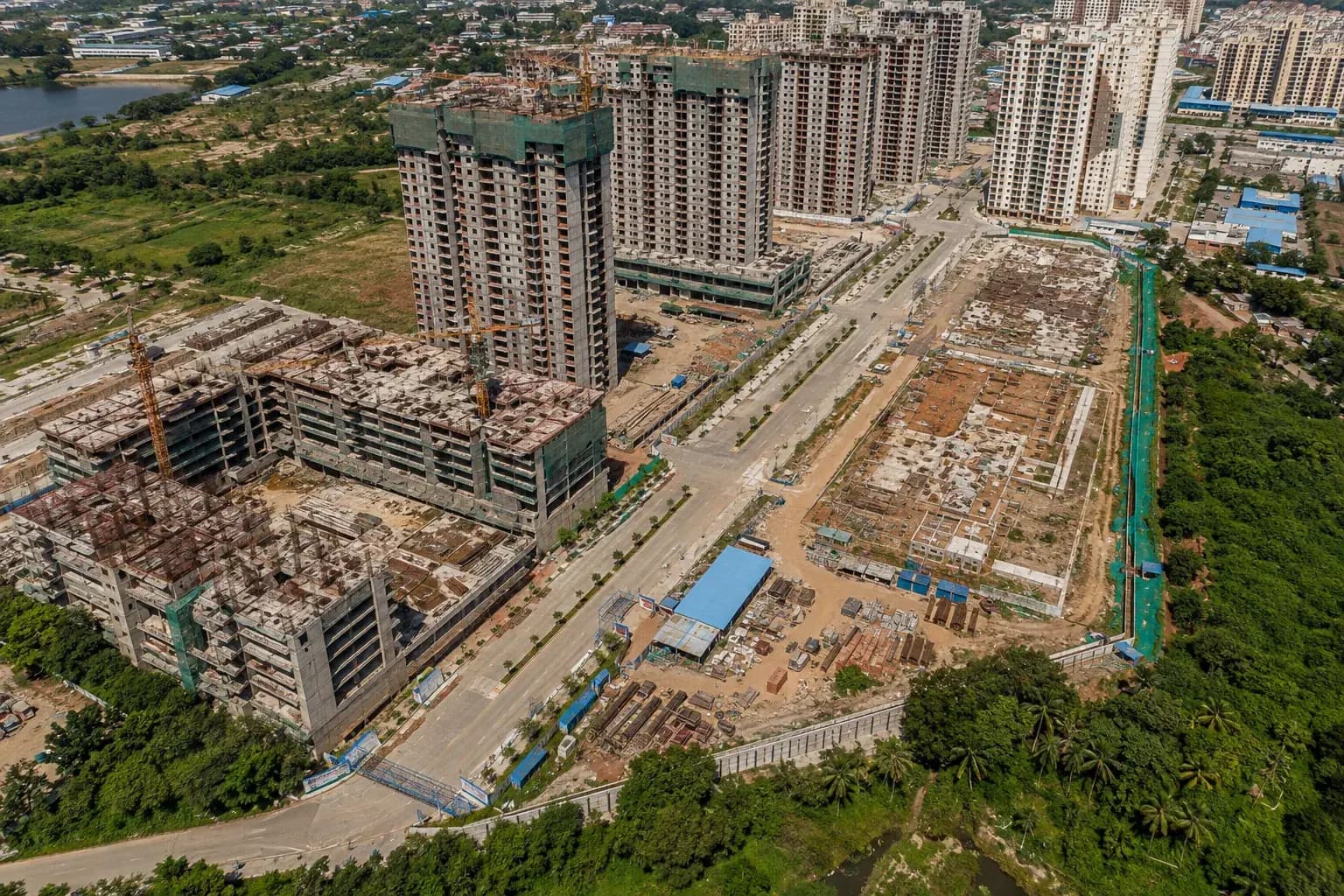
Integrated Solid Waste Management · Real Estate & Construction
Integrated Solid Waste Management for Real Estate & Construction: bulk waste generator obligations for a housing project.
A residential or commercial development generating 100 kg a day or more of solid waste is a bulk waste generator under the Solid Waste Management Rules 2016, which obliges it to segregate at source and process its wet waste on site rather than hand the whole stream to the municipal collection.
Screening view on your project, with the category and route named. No obligation.
What this means for real estate & construction
Rule 4 of the Solid Waste Management Rules 2016 brings bulk waste generators (premises generating 100 kg a day or more, along with residential welfare associations, gated communities and institutions above the specified area) into a distinct obligation: segregate waste into wet, dry and domestic hazardous fractions at source, process the biodegradable fraction within the premises as far as possible, and hand over only the residual and recyclable streams to the authorised collection system. For a large housing project that arithmetic is reached easily, and it is reached at the point the towers fill, which is after the developer has moved on. The obligation also appears from the other direction: the Environment Clearance for the project carries solid waste conditions, and the half-yearly compliance report has to evidence them, so the waste system is being examined by both the municipal corporation and the SEIAA's compliance route.
How KIPL runs it
KIPL designs the waste system as part of the building rather than as equipment bought later: segregated collection at each floor or lobby, a chute or collection logic that does not defeat the segregation, a sized and ventilated waste room, a wet-waste processing installation with the utilities and access it needs, dry-waste storage with room for a recycler's vehicle, and a domestic hazardous point. The systems that fail are the ones designed backwards (a composting unit specified after the basement layout was frozen, with no water point, no power, no drainage and no vehicle access) and the ones handed to a society with no operating arrangement and no explanation of why the obligation exists. We hand over with a waste management plan the society can run and a record the corporation will accept.
- SWM Rules 2016
Bulk waste generator status
Premises generating 100 kg a day or more, and residential associations and gated communities above the specified threshold, must segregate at source and process wet waste within the premises under Rule 4 of the Solid Waste Management Rules 2016.
- 8(a)
Solid waste is an EC condition too
The clearance carries conditions on segregation, on-site processing and disposal routing, reported half-yearly. The municipal obligation and the clearance condition have to be satisfied by the same physical system.
It is designed at basement stage or not at all
Waste rooms, chutes, processing space, water, power, drainage and vehicle access are building decisions. Once the layout is frozen, the compliant system becomes a retrofit the society pays for.
What you receive
Written for real estate & construction, not adapted from a template.
- 01Waste generation estimate by stream for the design population, with the bulk-generator position established
- 02Segregation infrastructure design: floor-level collection, chute logic, waste room sizing, ventilation and washdown
- 03On-site wet-waste processing capacity with utilities, access and odour management designed in
- 04Dry-waste storage and material recovery arrangement, including recycler access and record-keeping
- 05Domestic hazardous waste collection point and authorised disposal routing
- 06Waste management plan and record formats for the municipal corporation and the EC half-yearly report
Questions from real estate & construction
What real estate & construction ask before appointing us.
Answered against the regulation as it stands, not as a sales pitch. If your situation is not here, ask us directly.
Ask a question →Is our housing project a bulk waste generator?
If the premises generate 100 kg a day or more of solid waste, or the project is a residential association or gated community above the specified threshold under the Solid Waste Management Rules 2016, then yes. Large residential developments reach that figure comfortably once occupancy builds, so the system should be designed for it from the start rather than after the corporation raises it.
Does the corporation collect our wet waste if we are a bulk generator?
The Rules require bulk generators to process biodegradable waste within the premises as far as possible and to hand over only the residual and recyclable streams. Corporations across the Mumbai and Pune belts enforce this, and some refuse collection of unsegregated or unprocessed wet waste from large societies outright.
When does this need to be designed?
At the same time as the basement and services layout. Waste rooms, processing space, water and drainage points, ventilation and vehicle access are architectural and MEP decisions. A composting unit specified after the layout is frozen usually ends up in a location with no water, no drainage and an odour complaint waiting.
How does this connect to the Environment Clearance?
The clearance carries its own solid waste conditions and the half-yearly compliance report must evidence them. The same physical system satisfies both the municipal obligation under the SWM Rules and the EC condition, provided it was designed once, to the higher of the two requirements.
What happens after handover to the society?
The obligation becomes the society's, operated with its housekeeping contract and its budget. Developers who hand over the equipment without the operating arrangement, the record formats and an explanation of the legal basis leave a system that stops within a year: and the compliance record that follows is still associated with the project.
What about construction waste: is that covered by the same rules?
No. Construction and demolition waste is governed separately by the C&D Waste Management Rules 2016, with its own routing and its own documentation, and larger projects are required to file a waste management plan with the local authority. Both streams need handling, but they are different regimes and different records.
Stage by stage
How integrated solid waste management actually runs, step by step.
Also for real estate & construction
The rest of the environmental brief for this sector.

Relevant proof
SHENDRA AND BIDKIN INDUSTRIAL AREA, AURANGABAD
Environmental compliance audits, Consent to Establish and green certification support across two industrial nodes of the Delhi-Mumbai Industrial Corridor.
- Shendra + Bidkin
- 4,024 ha
- City scale
- IGBC Gold
Where we do this
Integrated Solid Waste Management for real estate & construction, city by city.
Other sectors
Who else we run integrated solid waste management for.
Next step
Tell us the project, and we will tell you the category and the route.
Screening is the cheapest stage to get right and the most expensive to get wrong. We will say plainly what integrated solid waste management your real estate & construction project needs, and what it does not.





























































Start the conversation