









Integrated Solid Waste Management · River & Water Missions
Solid Waste Management for River & Water Missions
Riverbank dumping, floating waste and legacy dumpsites on the floodplain undo treatment gains a river mission has paid for, which is why solid waste sits inside the mission's scope rather than beside it.
Screening view on your project, with the category and route named. No obligation.
What this means for river & water missions
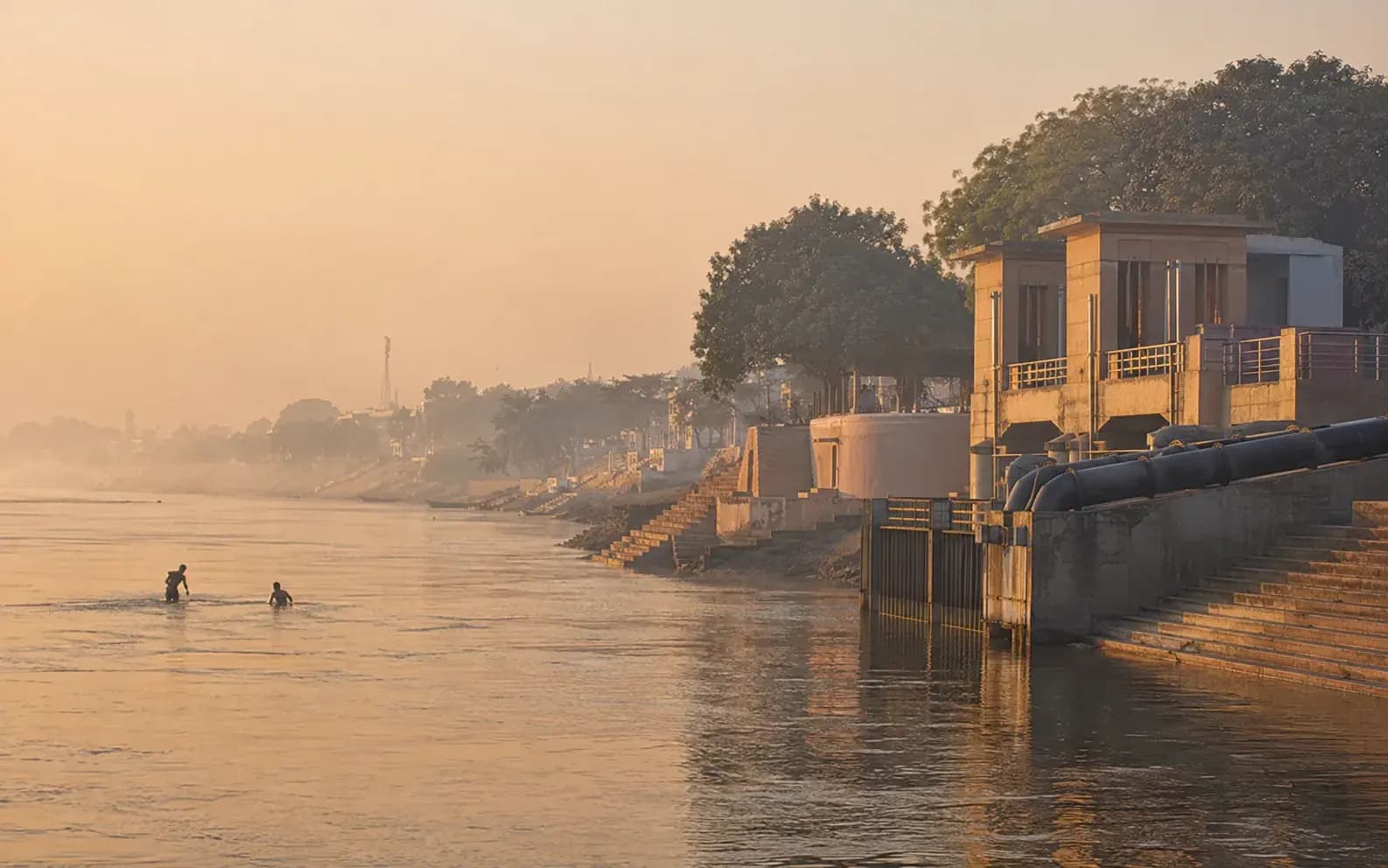
A cleaned stretch that still receives waste from its own banks does not read as cleaned. Municipal waste dumped on the floodplain leaches into the channel and is carried into it during monsoon; floating debris accumulates at ghats and structures; offerings and ritual material enter at the very reaches where public use is highest. The Solid Waste Management Rules 2016 place the primary duty on the urban local body, but a river programme cannot leave the outcome to that duty alone, because the indicator it is judged on is the condition of the river.
How KIPL runs it
KIPL treats riverbank waste as a source to be managed with the same discipline as a drain: mapped, quantified, routed and monitored. That means identifying the dumping points and legacy sites on the reach, designing ghat-side collection that fits how the ghat is actually used rather than how a plan assumes it is used, providing for floating waste retrieval where structures accumulate it, and setting out the processing and disposal pathway so that collected waste does not simply return to the floodplain a kilometre upstream. Where legacy dumpsites sit on the bank, remediation or capping is assessed on the leachate risk to the channel, not on the visual improvement alone.
- SWM 2016
Local body duty, programme outcome
The Solid Waste Management Rules 2016 place collection, segregation and processing duties on the urban local body, whose performance directly determines the river programme's result.
Legacy dumpsites on the floodplain
Historic dumping on the bank continues to leach into the channel and is mobilised during monsoon, so it is a live source rather than an inherited eyesore.
Ritual and public use at the ghats
Offerings, floral waste and public use at bathing reaches generate a stream that has to be collected where it arises, in a way the community will actually use.
What you receive
Written for river & water missions, not adapted from a template.
- 01Reach-wise mapping of dumping points, legacy sites and floating-waste accumulation locations
- 02Ghat-side collection and segregation system designed around actual ritual and public use patterns
- 03Floating waste retrieval arrangement at structures and accumulation points
- 04Processing and disposal routing so collected waste leaves the floodplain permanently
- 05Legacy dumpsite assessment on leachate risk to the channel, with remediation or capping options
- 06Monitoring and reporting format linking waste interventions to the reach's condition
Questions from river & water missions
What river & water missions ask before appointing us.
Answered against the regulation as it stands, not as a sales pitch. If your situation is not here, ask us directly.
Ask a question →Is solid waste really part of a river mission's scope?
In practice, yes, because the programme is judged on the river's condition and riverbank waste is a direct contributor to it. The statutory duty for municipal waste sits with the urban local body under the SWM Rules 2016, so mission work here is usually about designing and financing systems the local body then operates.
What is done about a legacy dumpsite on the riverbank?
It is assessed first on what it is releasing to the channel (leachate pathway, groundwater interaction, monsoon mobilisation) and then on the options: biomining and reclamation, in-situ capping, or relocation. The choice depends on site conditions, land availability and the volume involved rather than on a general preference.
How is ritual and floral waste handled without conflict?
By collecting it at the point where it arises, in a form the community accepts, rather than by prohibiting the practice. Ghat-side collection points, designated immersion arrangements and regular clearance work where they respect how the ghat is used; arrangements designed without that consultation are bypassed.
Who operates the system after the programme builds it?
Normally the urban local body, or its contracted operator. This is the single biggest risk to durability, which is why the operating cost, staffing and reporting obligation should be settled during design rather than at handover.
Does floating waste retrieval need to be permanent?
At structures and natural accumulation points, yes. Retrieval addresses what has already entered the channel; it is a maintenance function, not a one-time cleanup, and it should be budgeted as such in the operating phase.
How is the effect of waste interventions measured?
By quantity collected and diverted from the floodplain, by the reduction in identified dumping points on the reach, and by the reach's own water quality monitoring where leachate was a demonstrated contributor. Collection tonnage alone does not show whether the river is cleaner.
Stage by stage
How integrated solid waste management actually runs, step by step.
Also for river & water missions
The rest of the environmental brief for this sector.

Relevant proof
SHENDRA AND BIDKIN INDUSTRIAL AREA, AURANGABAD
Environmental compliance audits, Consent to Establish and green certification support across two industrial nodes of the Delhi-Mumbai Industrial Corridor.
- Shendra + Bidkin
- 4,024 ha
- City scale
- IGBC Gold
Where we do this
Integrated Solid Waste Management for river & water missions, city by city.
Other sectors
Who else we run integrated solid waste management for.
Next step
Tell us the project, and we will tell you the category and the route.
Screening is the cheapest stage to get right and the most expensive to get wrong. We will say plainly what integrated solid waste management your river & water missions project needs, and what it does not.





























































Start the conversation