









Integrated solid waste management: bulk-generator compliance under SWM Rules 2016.
At a glance
ISWM- Authority
- Solid Waste Management Rules 2016 · ULB bye-laws
- Typical timeline
- Assessment in weeks; system by site scale
- Who needs it
- Housing societies, campuses, hotels, markets, institutions (bulk generators)
- solid waste management consultant
- SWM Rules 2016
- bulk waste generator compliance
- material recovery facility
- decentralised processing
- waste segregation
- ISWM DPR
What it is
Integrated Solid Waste Management, without the guesswork.
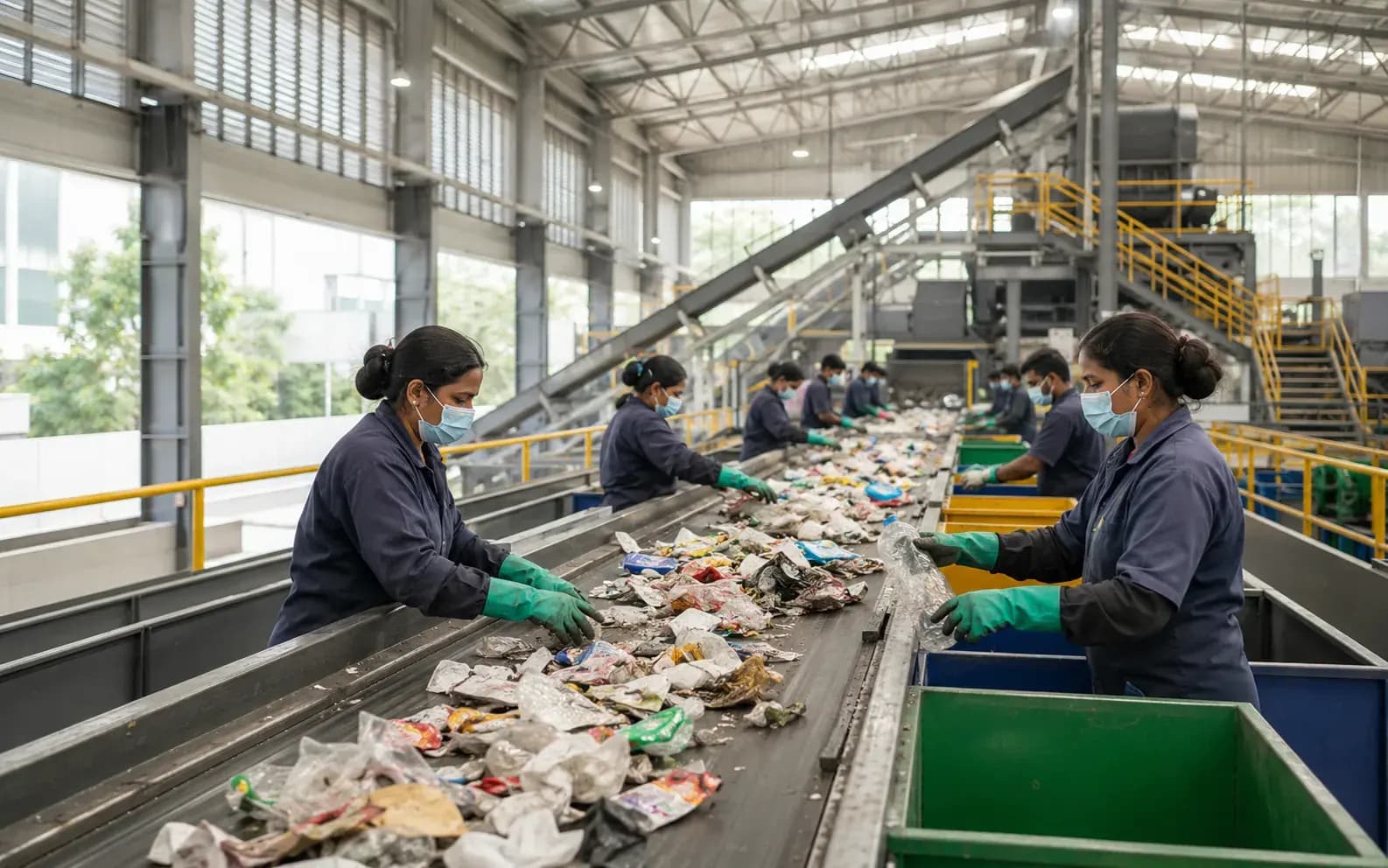
Under the Solid Waste Management Rules 2016, a bulk waste generator (a housing society, campus, hotel, market or institution above the notified size) cannot simply hand its waste to the municipality. It must segregate at source and process the wet fraction on or near the premises. KIPL turns that obligation into a working system: segregation, collection, a material-recovery step and decentralised processing sized to what the site actually generates.
We start with a waste assessment (quantities and composition, not assumptions) and design the smallest system that keeps the site compliant: colour-coded segregation, a material-recovery facility for dry recyclables, and organic processing for the wet stream. The result is less waste leaving the gate, a documented compliance trail, and often compost the site can use.
What’s included
Every component of integrated solid waste management.
4 components, each a service in its own right: open any one, or bring us the whole scope and one team carries it.
One accountable team, start to finish
The process
How the file moves.
You see the whole route on day one; then one accountable team holds it, stage after stage.
Waste assessment
Quantities and composition measured across the wet, dry and domestic-hazardous streams, the basis for right-sizing everything.
Segregation & collection design
Colour-coded, source-level segregation and a collection flow the residents or staff will actually follow.
Material recovery
A recovery step for dry recyclables, cutting what goes to landfill and turning waste into value.
Decentralised processing
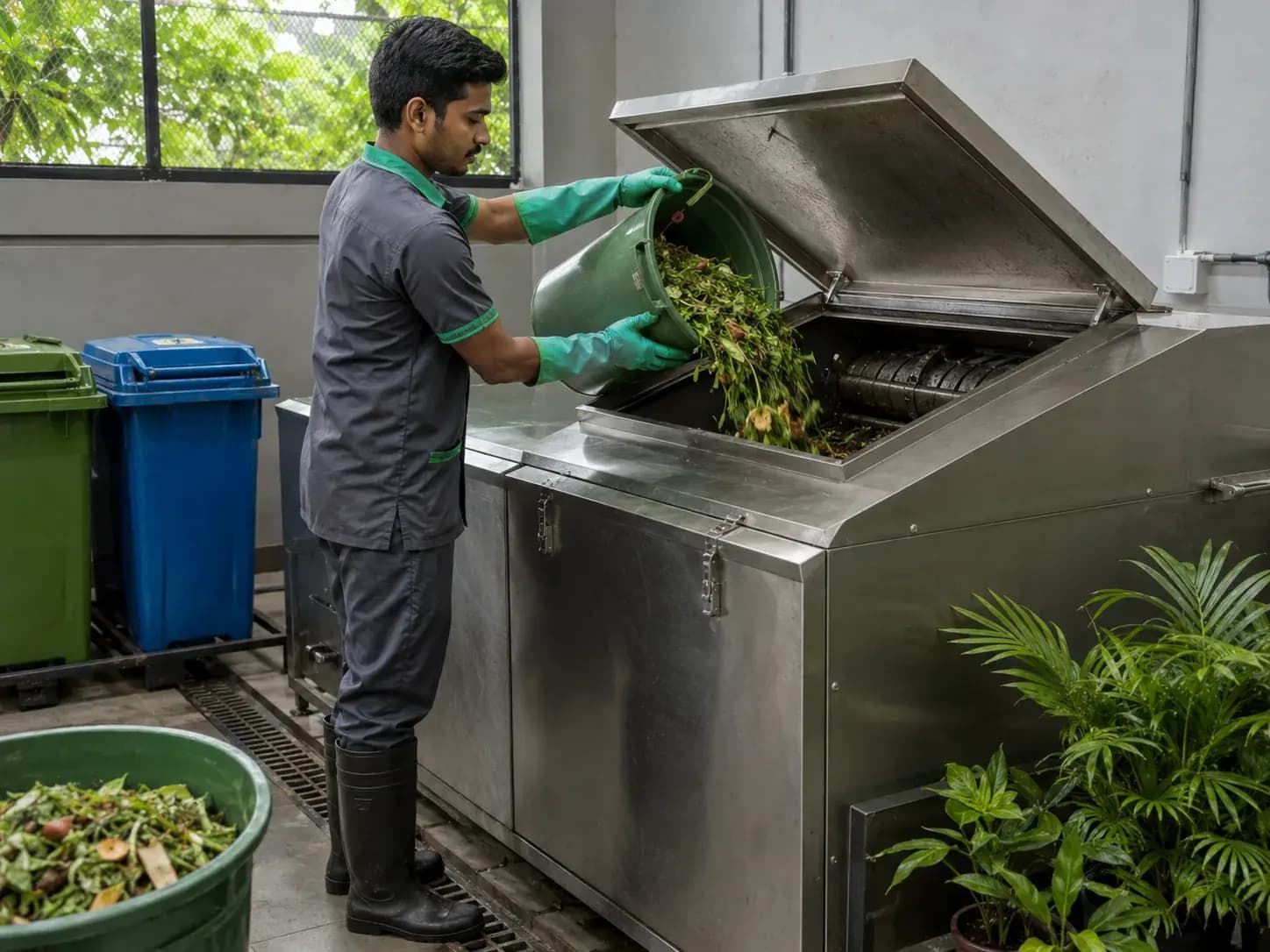
On-site composting or biomethanation for the wet fraction, sized to the load, with a plan for the finished compost or gas.
DPR & compliance
A detailed project report where needed and the records that satisfy the urban local body and the bulk-generator rules.
Integrated Solid Waste Management
Segregate at source, process on site. The rule is old; the discipline is what's new.

Why KIPL
Credentials you can check.
A firm that sells regulatory compliance has to be beyond reproach on its own. Every credential below is verifiable, and every figure traces to a document.
Proof
The same practice, on the ground.

MIDC / AURIC · Shendra & Bidkin, Chhatrapati Sambhajinagar
SHENDRA AND BIDKIN INDUSTRIAL AREA, AURANGABAD
Environmental compliance audits, Consent to Establish and green certification support across two industrial nodes of the Delhi-Mumbai Industrial Corridor.
Straight answers
Integrated Solid Waste Management: the questions clients ask first.
01Who is a 'bulk waste generator'?
Under the SWM Rules 2016, a bulk waste generator is broadly an occupier of premises generating more than 100 kg of waste a day, or an event, market, institution or residential society above the size the rules and the local body notify. Bulk generators must segregate at source and process wet waste on-site, obligations a general household does not carry.
02Do we have to process waste on-site?
The rules require bulk generators to segregate and, for the biodegradable fraction, to process it as far as possible within the premises or through a decentralised facility, rather than sending mixed waste to the municipal stream. On-site organic processing is the usual answer, which is why an organic waste converter is central to compliance.
03What does an integrated system include?
Source segregation, a collection mechanism, recovery of dry recyclables, decentralised processing of wet waste, and safe channelling of domestic-hazardous waste, designed together so the streams don't recombine. We size each element to the measured waste, not a template.
04Can KIPL both design and run the system?
Yes. We assess and design the system, install the processing units, and can operate and maintain them, so compliance is continuous rather than a one-time report.
Where we work
Filed where your project is.
Integrated Solid Waste Management, carried with the deepest roots across the Mumbai Metropolitan Region and Maharashtra: and wherever a good project needs it. Every filing lands on the right desk, argued by named, accredited people.
Home turf
Mumbai Metropolitan Region- Navi Mumbai
- Mumbai
- Thane
- Panvel
- Kalyan-Dombivli
- Vasai-Virar
- Mira-Bhayandar
- Bhiwandi
- Ulhasnagar
- Ambernath
- Badlapur
- Uran
- Taloja
- Kharghar
By state
State-wide pagesNot listed? We carry integrated solid waste management across the region all the same, tell us where your project is.
Who we do this for
The same filing reads differently by industry.
What integrated solid waste management demands of a data centre is not what it demands of a distillery. These set out the item code, the conditions that bite and the evidence each sector is asked for.
Trusted by
The builders, industry and public bodies we file for.






Bring us your integrated solid waste management file.
One conversation to map the route, and the team that will carry it.