









Sewage Treatment Plants · River & Water Missions
Sewage Treatment Plants for River & Water Missions
Untreated municipal sewage is the dominant load on almost every Indian river stretch, which makes sewage treatment capacity, its upgradation and its measured performance the spine of any river mission.
Screening view on your project, with the category and route named. No obligation.
What this means for river & water missions
For a mission, an STP is not a utility asset but an outcome instrument. What matters is whether the plant receives the flow it was built for, meets the discharge standard the consent sets, and keeps meeting it through the operating period: because the river's classification responds to actual treated volume, not installed capacity. This is why mission structures increasingly tie payment to performance over a long O&M term rather than to commissioning, and why the recurring problem on the ground is a plant running well below design flow because the sewerage network feeding it was never completed, or above it because unaccounted drains were connected later.
How KIPL runs it
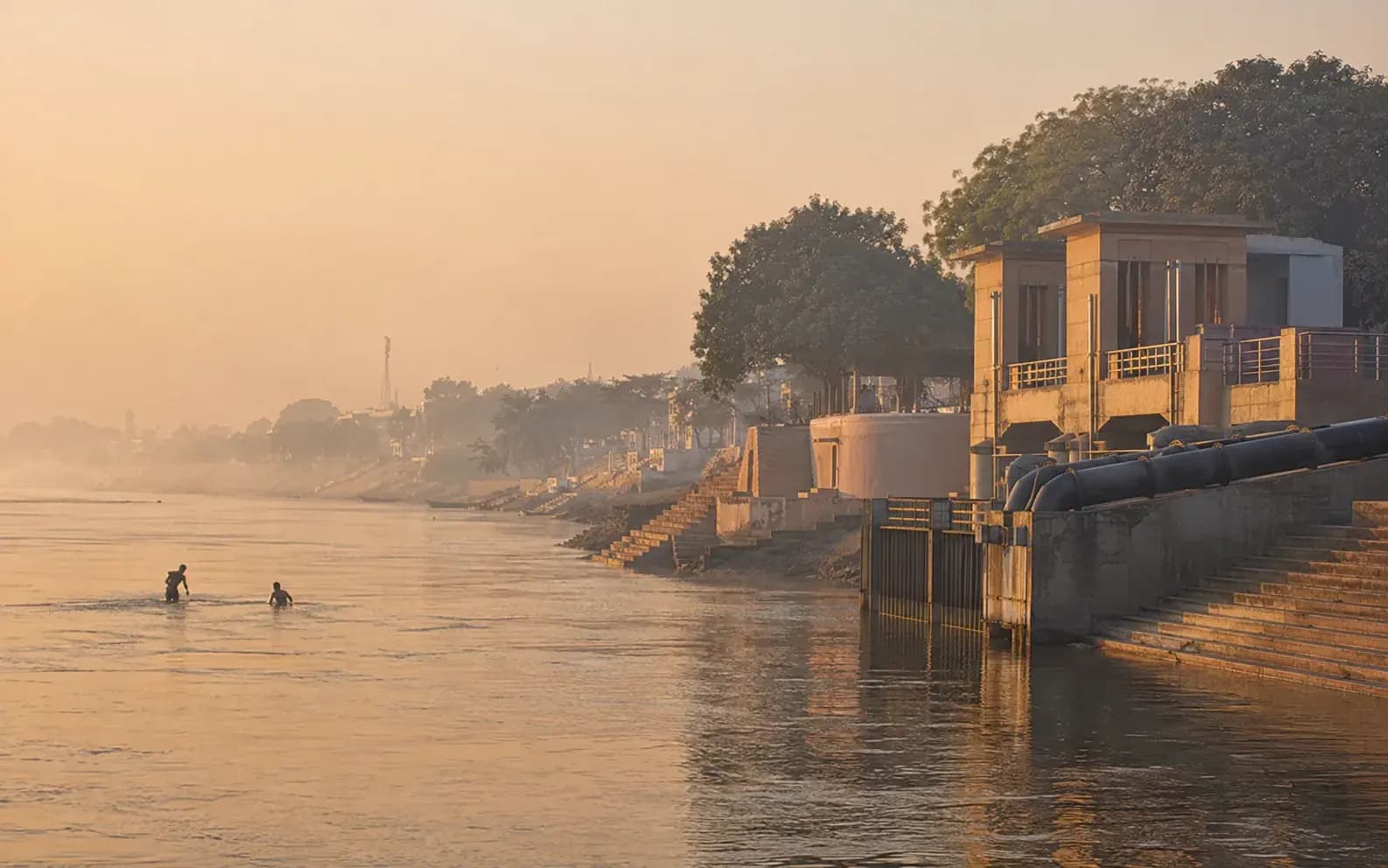
KIPL works on the assessment, environmental and EHS side of these plants, and reads them the way the programme will be judged: flow actually reaching the plant against design, treated effluent against consent standards, sludge routing, and the condition of the receiving reach. KIPL's environmental and social impact assessment and EHS reporting for existing and proposed sewage treatment plants on the Ganga at Kanpur and Unnao, under the Namami Gange programme, covered exactly this ground. Where a plant is being upgraded rather than built, the recurring finding is that the upgrade was designed for a stricter standard while the inlet load has changed underneath it: which is a reason to characterise the incoming sewage before, not after, the design is frozen.
Sewage is the dominant load on the stretch
Municipal sewage discharge is the principal reason most Indian river stretches fail their designated best-use criteria, so treatment capacity is the programme's primary lever.
- Water Act
Consent conditions on the outfall
Discharge from a treatment plant is consented by the state pollution control board under the Water Act 1974, and the standard in that consent is what performance is judged against.
Performance-linked O&M structures
Hybrid annuity and O&M-linked mission contracts pay against measured performance over years, so the plant's operating behaviour, not its commissioning, carries the commercial risk.
What you receive
Written for river & water missions, not adapted from a template.
- 01Environmental and social impact assessment for proposed and upgraded treatment plants on the reach
- 02Inlet sewage characterisation against design basis, including seasonal and diurnal variation
- 03Effluent compliance review against the consent standard and the receiving stretch's use classification
- 04Sludge handling, disposal and reuse pathway assessment
- 05EHS documentation and reporting for the construction and O&M phases of the package
- 06Outfall and receiving-water monitoring protocol for programme and monitoring committee reporting
Questions from river & water missions
What river & water missions ask before appointing us.
Answered against the regulation as it stands, not as a sales pitch. If your situation is not here, ask us directly.
Ask a question →Does an STP on a river mission need its own environmental clearance?
It depends on scale, siting and the schedule item it falls under, and on whether the works are covered by the programme's own approval. Consent to Establish and Consent to Operate from the state pollution control board under the Water Act 1974 and Air Act 1981 are required in any case. The correct answer for a given plant comes from screening it against the EIA Notification 2006 schedule rather than from assumption.
Why do mission STPs underperform?
Most often because the collection network feeding them is incomplete, so the plant runs well below design flow while sewage continues to reach the river through untapped drains. The second reason is O&M: power, sludge handling and staffing lapse after the construction contractor leaves. Neither is a treatment technology problem.
What is assessed on an upgradation, as opposed to a new plant?
The existing plant's actual performance and inlet load first, because an upgrade designed against the original design basis rather than the current one will not meet the new standard. Then the constructability of the upgrade on a live plant, since the existing plant usually cannot stop treating while the work is done.
How does the ESIA differ from a normal EIA for an STP?
The social component is substantive rather than nominal. A plant on a river programme touches land, access, odour exposure for nearby settlements, and often the livelihood and ritual use of the reach it discharges to, and mission and lender frameworks require those to be assessed and consulted on, not just noted.
Who is responsible for performance during the O&M period?
Whoever the concession names, which under hybrid annuity structures is normally the concessionaire for a defined operating term. The environmental consequence is that monitoring, reporting and consent renewal obligations sit with that operator, and should be written into its scope explicitly.
How long does the assessment take?
It depends on the schedule item, whether baseline monitoring across seasons is required, and on the appraisal committee's calendar. Where a plant requires a full assessment with baseline data, the baseline season itself sets the floor on the timeline, which is why screening should be done at the earliest possible stage of the package.
Stage by stage
How sewage treatment plants actually runs, step by step.
Also for river & water missions
The rest of the environmental brief for this sector.
Primary sources
Verify any of this at the source.

Relevant proof
NAMAMI GANGE PROGRAMME
Environmental & Social Impact Assessment and EHS reporting for existing and proposed sewage treatment plants on the Ganga.
- Largest existing STP
- 130 MLD
- Assessed
- 5 plants
Where we do this
Sewage Treatment Plants for river & water missions, city by city.
Other sectors
Who else we run sewage treatment plants for.
Next step
Tell us the project, and we will tell you the category and the route.
Screening is the cheapest stage to get right and the most expensive to get wrong. We will say plainly what sewage treatment plants your river & water missions project needs, and what it does not.





























































Start the conversation