










ETP design and engineering: matching a treatment train to the effluent a process actually produces.
An ETP is designed around a specific effluent (its flow pattern, its contaminants and its variability) because industrial wastewater differs by process in ways sewage never does.
What it is
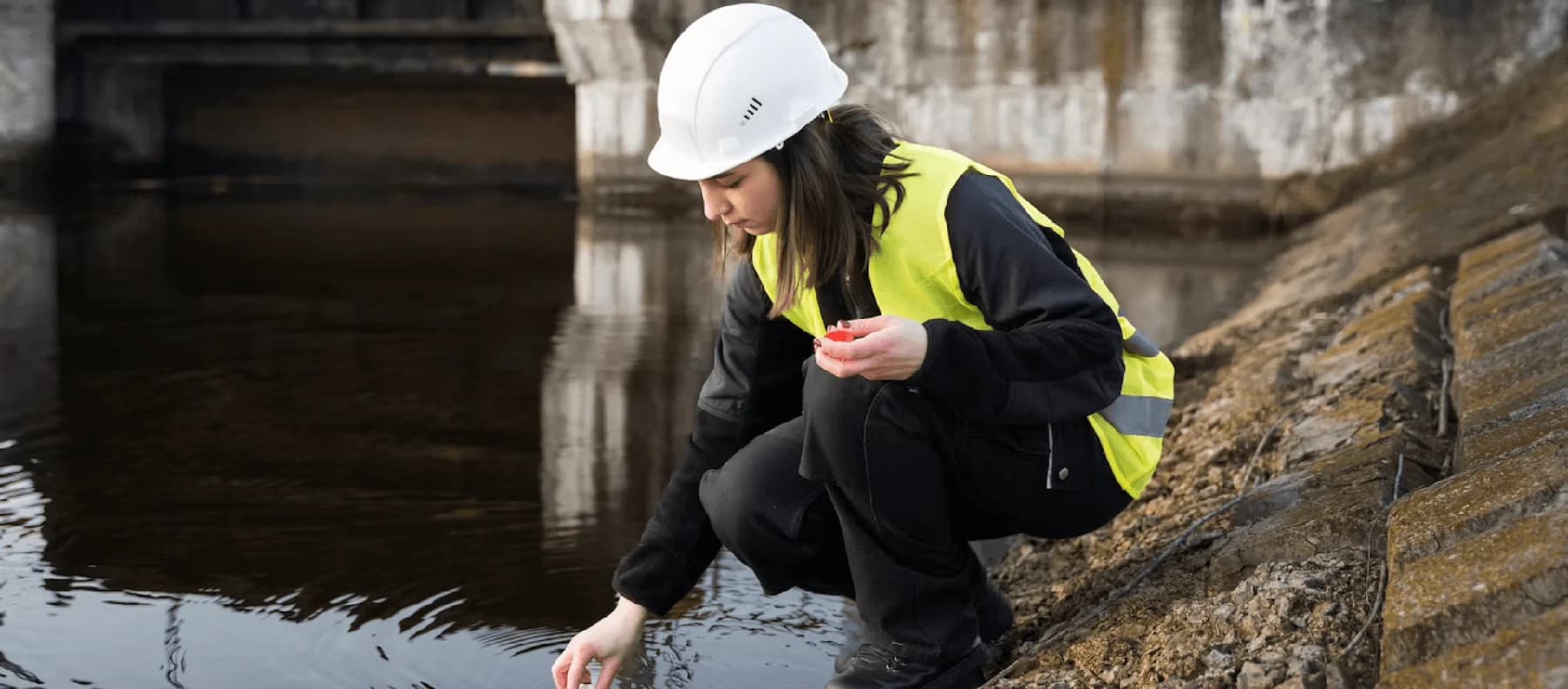
Design begins with characterisation: stream-by-stream flow, pH, COD and BOD, suspended and dissolved solids, oil and grease, colour, heavy metals and any process-specific contaminant, together with how those vary through a shift and a campaign. From that, a train is assembled: physico-chemical primary treatment such as equalisation, neutralisation, coagulation-flocculation and clarification; biological secondary treatment where the load is biodegradable; and tertiary polishing, filtration, activated carbon, RO or evaporation where the discharge standard or a reuse or ZLD requirement demands it.
KIPL designs with segregation as a first principle, because mixing a small, concentrated, hard-to-treat stream into the main flow multiplies the cost of treating everything. High-TDS, high-colour or toxic streams are usually better handled separately and concentrated, leaving a larger biodegradable stream that conventional treatment handles economically. The design is then fixed against the standard in the unit's consent: and, for units in the categories where it applies, against the zero liquid discharge requirement rather than a discharge norm at all.
What you get
The deliverables, in hand.
- Authority
- CPCB / SPCB consent standards · category-specific effluent norms
- Typical timeline
- Weeks; depends on effluent characterisation data
- Effluent characterisation and stream-wise flow and load balance
- Segregation strategy for concentrated, toxic or high-TDS streams
- Process design and treatment train selection with mass balance
- Unit sizing, hydraulic profile, GA drawings and equipment specifications
- Sludge quantification, dewatering scheme and disposal route
- BOQ, cost estimate and documentation for Consent to Establish
Straight answers
ETP Design & Engineering: common questions.
01How does an ETP differ from an STP?
An STP treats sewage, which is broadly consistent in character and predominantly biodegradable, so its design is largely a question of scale and technology. An ETP treats industrial effluent, whose contaminants, concentration and variability depend entirely on the process generating it, which is why an ETP is designed around characterisation data and frequently needs physico-chemical and tertiary stages a sewage plant never has.
02What do primary, secondary and tertiary treatment mean in an ETP?
Primary is physical and chemical: screening, oil and grease removal, equalisation, neutralisation, coagulation-flocculation and clarification, taking out solids and adjusting the effluent so what follows can work. Secondary is biological, reducing the biodegradable organic load. Tertiary is polishing to the discharge or reuse standard: filtration, activated carbon, disinfection, and membrane or thermal processes where dissolved solids must come out.
03How are design flow and load fixed?
From measured effluent over a representative period, not from a single grab sample. Industrial flow is often batch-driven and highly variable, so the design accounts for peak flow and peak load separately, and equalisation is sized to smooth both. Where a new plant has no effluent to sample, load is derived from process water balance and comparable units, with the assumptions stated.
04When is RO or evaporation needed?
When dissolved solids have to be removed: because the discharge standard limits TDS, because the treated water is to be recycled to process, or because the unit is required to achieve zero liquid discharge. Reverse osmosis concentrates the dissolved load into a reject stream, and a multiple effect evaporator or similar thermal system takes that reject down to salts. Both add substantial operating cost, so they are specified where the standard requires, not by default.
05Which discharge standard applies to an ETP?
The standard in the unit's Consent to Operate, which reflects the CPCB general standards, any industry-specific effluent standard notified for that category, whatever the State Board has tightened, and the disposal route: inland surface water, land for irrigation, public sewer or a common effluent treatment plant. The sewer or CETP route carries its own inlet standard, which is not the same as the surface-water norm.
06Does the Pollution Control Board approve the ETP design?
The board grants Consent to Establish on the basis of the proposed treatment scheme and grants Consent to Operate against demonstrated performance, so the design is effectively examined at consent stage. It is not a design approval in an engineering sense, the obligation to meet the standard stays with the occupier regardless of what was submitted.
07Why does stream segregation matter so much?
Because treatment cost scales with the hardest fraction. Diluting a small, concentrated, high-TDS or toxic stream into the general effluent means the entire flow now needs the expensive treatment that only the small stream required. Segregating at source, treating the difficult stream separately and concentrating it, is usually the single largest cost decision in an ETP design.
08What happens to ETP sludge?
Chemical and biological sludge is thickened and dewatered, and its disposal route depends on its character, sludge from many industrial ETPs falls under the hazardous and other wastes rules and must go to an authorised treatment, storage and disposal facility under manifest. Sludge quantity and its disposal route are quantified at design stage, because they are a recurring cost and a compliance obligation, not an afterthought.
Within Effluent Treatment Plants
Part of the whole route, the other components.
Primary sources
Check it at source.
This page describes CPCB / SPCB consent standards · category-specific effluent norms. The regulation and the filing portal are public, these are the official endpoints, not our summary of them.
Relevant proof
Where this stage has already been delivered.
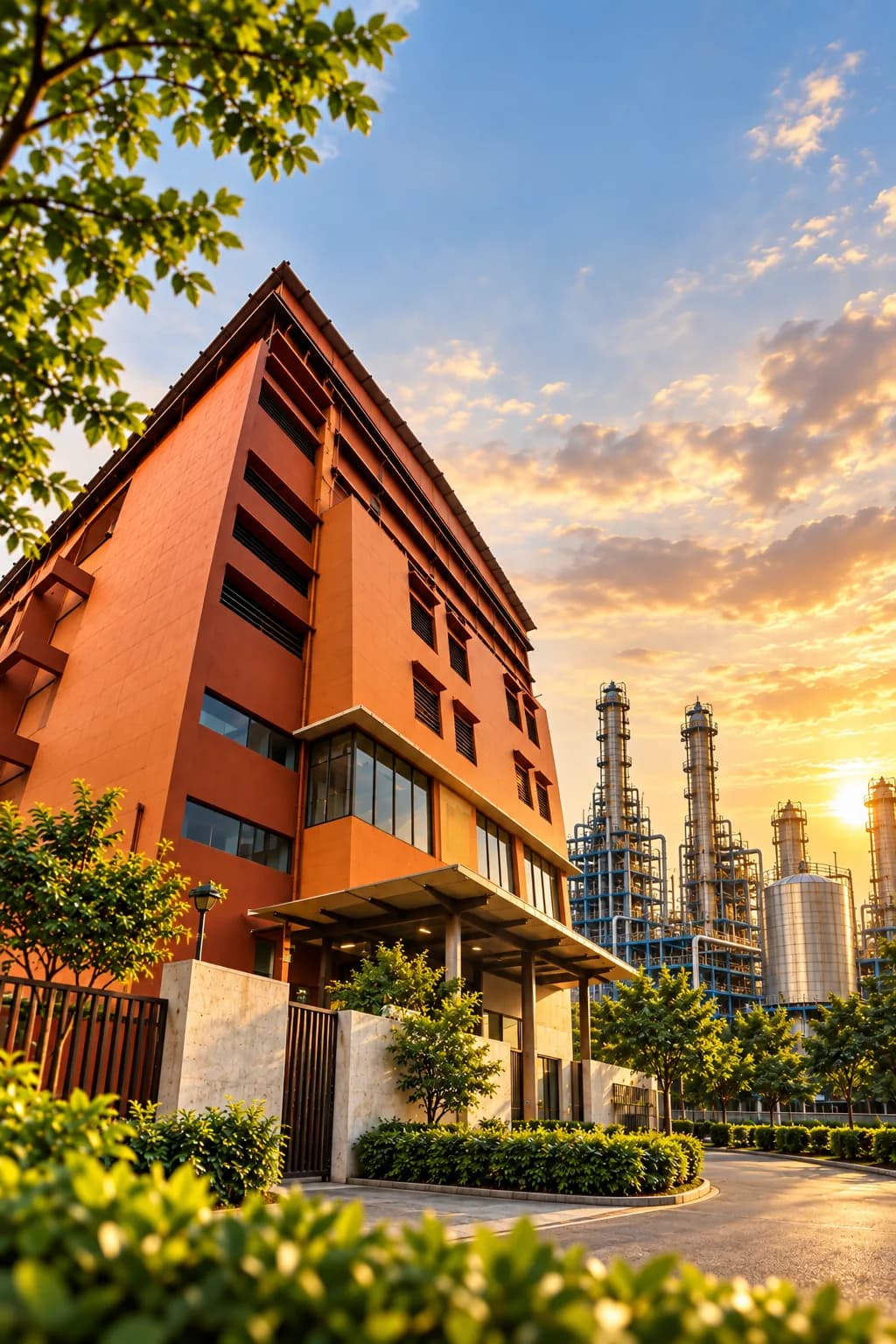
KwaliChem Pvt. Ltd. · TTC Industrial Area, Rabale, Navi Mumbai
EIA for Synthetic Organic Chemical Industry
CTE/CTO application, ToR application, baseline data collection, EIA report and appraisal before the EAC: Category 5(f), the sector KIPL holds Category A accreditation in.
Where we do this
Effluent Treatment Plants on the ground.
The authority, the timeline and the local ground differ by city. These pages set out how effluent treatment plants actually runs in each.
Featured projects
Work that carries its own evidence.


Our expertise
One team across the whole environmental brief.
ETP Design & Engineering is one stage of one practice. Most projects need several, and the commitments made at clearance are the ones we build and maintain.
Who we do this for
Effluent Treatment Plants reads differently by industry.
- 01
Chemical IndustryCore
High-TDS, high-COD streams make ZLD or a defensible CETP interface the spine of the case; a weak ETP design is where 5(f) files fail.
Effluent Treatment Plants for Chemical Industry - 02
Distilleries & EthanolCore
Spent wash at 8-15 litres per litre of alcohol forces biomethanation with concentration and incineration; ZLD is the regulator's default expectation.
Effluent Treatment Plants for Distilleries & Ethanol - 03
Sugar IndustryCore
Seasonal, high-BOD condensate and wash water demands an ETP designed for campaign operation, and reuse to close the water loop.
Effluent Treatment Plants for Sugar Industry - 04
Industrial & ManufacturingCore
Process effluent must meet consent norms at the outlet or the CETP inlet, and MIDC estates meter what leaves the premises.
Effluent Treatment Plants for Industrial & Manufacturing - 05
Industrial Corridors & MIDCCore
The common effluent treatment plant and its conveyance network is the single decision that determines which industries the node can host.
Effluent Treatment Plants for Industrial Corridors & MIDC - 06
River & Water Missions
Industrial clusters on the river bank are the load a mission cannot ignore, and CETP performance decides whether STP gains survive.
Effluent Treatment Plants for River & Water Missions
Trusted by
The organisations this work is done for.












In the press