










Zero Liquid Discharge: recovering the water and leaving no liquid effluent to discharge.
Zero Liquid Discharge means an industrial unit sends no liquid effluent out of its boundary: the water is recovered and reused, and what remains leaves as solids.
What it is
A ZLD scheme is a concentration chain. Pre-treatment removes solids, hardness, organics and anything that would foul what follows; reverse osmosis then recovers the bulk of the water as permeate and concentrates the dissolved load into a much smaller reject; and that reject goes to thermal concentration, typically a multiple effect evaporator followed by an agitated thin film dryer or crystalliser, which drives off the remaining water as condensate and leaves salts as a solid. Recovered permeate and condensate return to process or utility use.
KIPL approaches ZLD as a water-balance and segregation problem before it is an equipment problem, because the cost of a ZLD system is set almost entirely by the volume and salinity reaching the thermal stage. Reducing effluent at source, segregating high-TDS streams from treatable ones, and maximising RO recovery are what make a ZLD plant affordable to run; a scheme designed without that work upstream produces an evaporator that dominates the factory's energy bill.
What you get
The deliverables, in hand.
- Authority
- CPCB / SPCB ZLD directions for notified categories · consent conditions
- Typical timeline
- Months; thermal package lead time usually governs
- Water and salt balance across the unit, stream by stream
- Source reduction and segregation plan to minimise the ZLD load
- Pre-treatment and RO scheme with recovery targets stated
- Thermal concentration design, MEE, ATFD or crystalliser as suited
- Recovered water quality and its reuse points in process and utilities
- Salt and residue characterisation with an authorised disposal route
Straight answers
Zero Liquid Discharge: common questions.
01What does Zero Liquid Discharge actually mean?
That no liquid effluent leaves the premises. Wastewater is treated and concentrated until the water fraction has been recovered for reuse and the dissolved load remains as solid salts and residues, which are then disposed of through an authorised route. The discharge that remains is solid waste and vapour, not liquid.
02Which industries are required to achieve ZLD?
ZLD is not a universal requirement. It is imposed on specified highly polluting categories and on units in particular locations through CPCB and State Pollution Control Board directions and through consent conditions, with textile dyeing, distilleries and tanneries among the categories most commonly covered. Whether it applies to a given unit is determined by the directions in force for its category and state and by what its own consent says.
03What is a typical ZLD treatment train?
Primary and secondary treatment to remove solids and organic load, softening and fine filtration to protect the membranes, reverse osmosis in one or more stages to recover permeate and concentrate the reject, then a multiple effect evaporator to concentrate further, and an agitated thin film dryer or crystalliser to produce dry salt. The exact configuration follows the effluent's TDS, its organic content and the recovery achievable.
04What is the difference between ZLD and near-ZLD?
Near-ZLD recovers most of the water and reduces discharge substantially but still leaves a small liquid stream (often the hardest, most saline fraction) to be disposed of. True ZLD carries that fraction through to solids. The last increment of recovery is disproportionately expensive in energy, which is why the distinction is a real engineering and commercial decision rather than semantics.
05What does it cost to run a ZLD system?
The dominant costs are the thermal stage's steam or fuel demand and the electrical load of the RO and pumping, followed by membrane replacement, chemicals for pre-treatment and cleaning, and disposal of the recovered salts. Because thermal energy scales with the volume reaching the evaporator, the operating cost is decided upstream, by how much effluent is generated and how well streams are segregated, more than by the evaporator itself.
06What happens to the salt that ZLD produces?
It is characterised and disposed of through the route its character requires. Mixed salts from many industrial effluents are managed under the hazardous and other wastes rules and go to an authorised treatment, storage and disposal facility under manifest. Where selective crystallisation produces a saleable, sufficiently pure salt, recovery is possible, but that depends on the effluent and should not be assumed at design stage.
07Can the recovered water go back into the process?
Permeate and evaporator condensate are usually of good quality and are commonly reused as process or boiler feed water after appropriate polishing. Reuse points have to be chosen against the quality each use demands, and the water balance has to close. A ZLD plant recovering more water than the factory can absorb simply moves the problem.
08Why do ZLD plants underperform in practice?
Most often because the effluent reaching them is not what the design assumed: inadequate pre-treatment fouls the membranes, unsegregated streams push TDS beyond the RO's recovery, and organics carry through to the evaporator and cause scaling and foaming. Add to that deferred membrane replacement and interrupted steam supply, and a plant that was compliant on paper becomes intermittent in operation.
Within Effluent Treatment Plants
Part of the whole route, the other components.
Primary sources
Check it at source.
This page describes CPCB / SPCB ZLD directions for notified categories · consent conditions. The regulation and the filing portal are public, these are the official endpoints, not our summary of them.
Relevant proof
Where this stage has already been delivered.
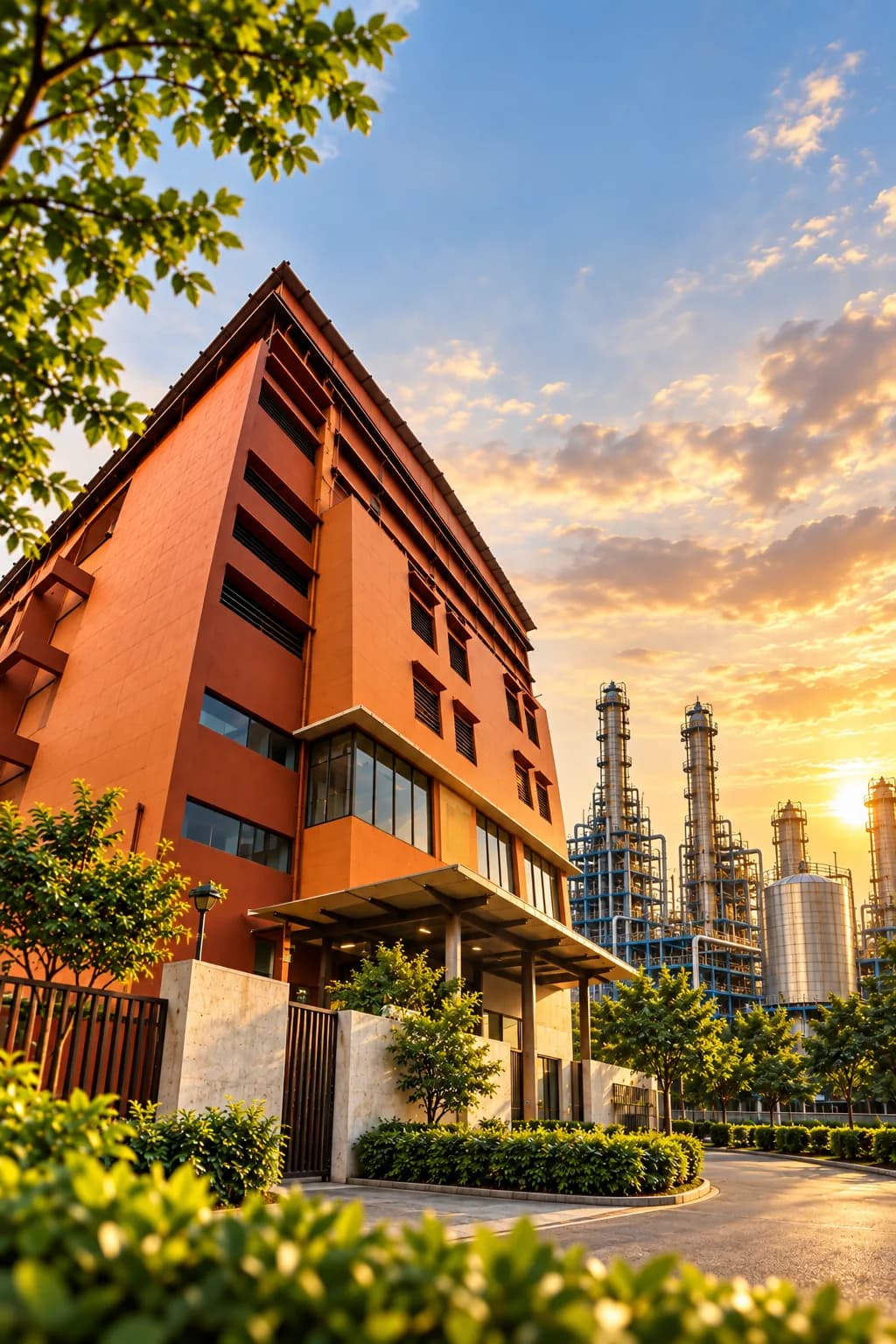
KwaliChem Pvt. Ltd. · TTC Industrial Area, Rabale, Navi Mumbai
EIA for Synthetic Organic Chemical Industry
CTE/CTO application, ToR application, baseline data collection, EIA report and appraisal before the EAC: Category 5(f), the sector KIPL holds Category A accreditation in.
Where we do this
Effluent Treatment Plants on the ground.
The authority, the timeline and the local ground differ by city. These pages set out how effluent treatment plants actually runs in each.
Featured projects
Work that carries its own evidence.
Our expertise
One team across the whole environmental brief.
Zero Liquid Discharge is one stage of one practice. Most projects need several, and the commitments made at clearance are the ones we build and maintain.
Who we do this for
Effluent Treatment Plants reads differently by industry.
- 01
Chemical IndustryCore
High-TDS, high-COD streams make ZLD or a defensible CETP interface the spine of the case; a weak ETP design is where 5(f) files fail.
Effluent Treatment Plants for Chemical Industry - 02
Distilleries & EthanolCore
Spent wash at 8-15 litres per litre of alcohol forces biomethanation with concentration and incineration; ZLD is the regulator's default expectation.
Effluent Treatment Plants for Distilleries & Ethanol - 03
Sugar IndustryCore
Seasonal, high-BOD condensate and wash water demands an ETP designed for campaign operation, and reuse to close the water loop.
Effluent Treatment Plants for Sugar Industry - 04
Industrial & ManufacturingCore
Process effluent must meet consent norms at the outlet or the CETP inlet, and MIDC estates meter what leaves the premises.
Effluent Treatment Plants for Industrial & Manufacturing - 05
Industrial Corridors & MIDCCore
The common effluent treatment plant and its conveyance network is the single decision that determines which industries the node can host.
Effluent Treatment Plants for Industrial Corridors & MIDC - 06
River & Water Missions
Industrial clusters on the river bank are the load a mission cannot ignore, and CETP performance decides whether STP gains survive.
Effluent Treatment Plants for River & Water Missions
Trusted by
The organisations this work is done for.












In the press