









CSR / CER Advisory · Mining & Minerals
CER & CSR Advisory for Mining Projects
For a mining project, Corporate Environment Responsibility is the part of the clearance that the affected villages can see, and the commitments made at the public hearing are the standard the spend is measured against.
Sector experience, not sector accreditation. KIPL has delivered work in this sector under an approved project coordinator. It is outside our QCI-NABET accredited scope, and we say so before any appointment.
Screening view on your project, with the category and route named. No obligation.
What this means for mining & minerals
Mining sits differently to every other sector on community obligations because it carries three of them at once, from three different statutes, and they are routinely confused. Corporate Environment Responsibility is a clearance obligation, graded to the project's capital cost under the MoEF&CC Office Memorandum of 1 May 2018, directed at the villages inside the study area and enforced through the clearance conditions and the half-yearly compliance report. The District Mineral Foundation contribution is separate and statutory, a prescribed share of royalty payable under the Mines and Minerals (Development and Regulation) Act and spent through the district on the areas and people affected by mining. Corporate social responsibility under the Companies Act is separate again, governed by its own schedule of permitted activities and its own board process. A rupee cannot honestly do duty in all three, and a mining company that reports the same borewell under CER, DMF and CSR will be asked about it. On top of that sits the specific weight of the public hearing: mining hearings are contested, promises are made in the hall to secure the room, and those promises come back as clearance conditions whether or not anyone costed them.
How KIPL runs it
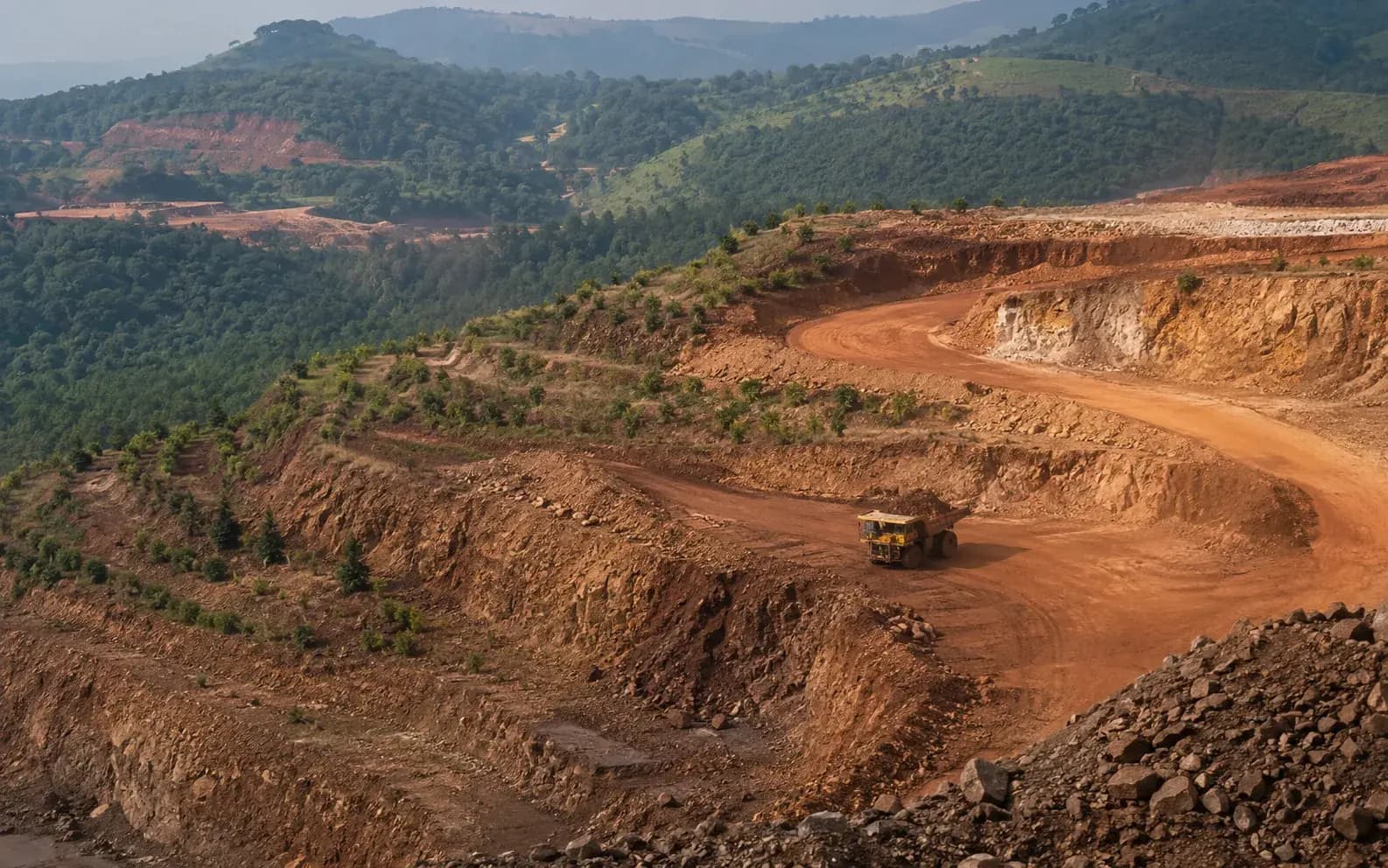
KIPL works CER for mining backwards from the hearing record. Every commitment made at the public consultation is extracted, listed and costed; the CER budget is then built to cover the commitments first and the discretionary spend after, rather than the other way round. Interventions are located in the villages that actually bear the impact (the haul route, the blast-affected settlements, the wells inside the drawdown) because spend outside the affected area is the commonest reason a CER report is questioned. Each intervention is set up with an implementation partner, a completion definition and a documentation trail that can be filed with the half-yearly compliance report. This is experience-led work: KIPL's QCI-NABET accreditation covers sectors 5(f), 5(g), 5(j), 8(a) and 8(b), not item 1(a) mining, and mining assignments are coordinated by a QCI-NABET approved mining Project Coordinator. The failures are consistent: money spent in the wrong villages, assets built with nobody responsible for maintaining them, and a hearing commitment that quietly disappears between the EIA and the first compliance report.
- CER OM 2018
A clearance obligation graded to capital cost
Corporate Environment Responsibility is fixed as a proportion of project capital cost under the 2018 Office Memorandum and enforced as a clearance condition, reported half-yearly.
- MMDR
DMF is a separate statutory payment
The District Mineral Foundation contribution is a prescribed share of royalty spent through the district. It is not CER, not CSR, and cannot be reported against either.
The public hearing record is the benchmark
Undertakings given at a mining public hearing are read back at appraisal and written into the clearance. What was promised in the hall is what compliance is measured against.
What you receive
Written for mining & minerals, not adapted from a template.
- 01Extraction of every commitment from the public hearing record, listed and costed
- 02CER budget built to the capital-cost basis, with commitments funded before discretionary spend
- 03Village-level intervention plan for the affected settlements: haul route, blast-affected and drawdown-affected
- 04Separation note distinguishing CER, DMF contributions and Companies Act CSR
- 05Implementation partner arrangements with completion definitions and maintenance responsibility
- 06Expenditure and outcome documentation formatted for half-yearly compliance reporting
Questions from mining & minerals
What mining & minerals ask before appointing us.
Answered against the regulation as it stands, not as a sales pitch. If your situation is not here, ask us directly.
Ask a question →Is KIPL accredited for mining?
No. KIPL's QCI-NABET accreditation covers sectors 5(f), 5(g), 5(j), 8(a) and 8(b); item 1(a) mining is not on the certificate. CER implementation is not an accredited activity, NABET accreditation governs who may author an EIA report for appraisal. On mining KIPL works from delivered project experience, coordinated by Dr. Pramod Chaudhari, QCI-NABET approved as a Project Coordinator for mining projects, and we state that plainly rather than let it be inferred.
Is DMF the same as CER for a mining project?
No. The District Mineral Foundation contribution is a statutory payment under the Mines and Minerals (Development and Regulation) Act, calculated as a prescribed share of royalty and spent through the district administration for people and areas affected by mining. CER is a clearance obligation set against project capital cost and delivered by the proponent, reported in the half-yearly compliance report. They are different obligations to different authorities, and the same expenditure cannot be reported against both.
Can CER spend be counted as CSR under the Companies Act?
They are governed by different instruments and reported to different authorities, and the safe working assumption is that they are separate budgets. Some activities may be eligible under both frameworks, but treating CER as a subset of the CSR spend is a position that invites questions from both the appraisal authority and the auditors. We keep the two accounted separately and let each be reported on its own terms.
Why do public hearing commitments matter so much for mining?
Because mining hearings are contested and the record is read at appraisal. Undertakings given in the hall to settle the room (a school building, a water supply, employment preference, a road repaired) are picked up by the committee and converted into clearance conditions. They then have to be funded and reported like any other condition, so it is far better to cost them before they are offered than after.
Where should mining CER be spent?
In the settlements that actually bear the impact, within the study area defined by the clearance: the villages along the haul route, those within the blast and dust envelope, and those whose wells fall inside the dewatering drawdown. Spend directed outside the affected area, however worthy, is the commonest reason a CER report is questioned at compliance review.
What is the most common CER failure at a mine?
Building an asset with no one responsible for running it. A water treatment unit, a school block or a community hall handed over without a maintenance arrangement is non-functional within a few years, and the compliance report then records a completed commitment that the village will tell any inspecting officer does not work. Completion has to be defined to include who operates and maintains the asset afterwards.
Stage by stage
How csr / cer advisory actually runs, step by step.
Also for mining & minerals
The rest of the environmental brief for this sector.
Primary sources
Verify any of this at the source.

Relevant proof
MCGM GARDEN DEVELOPMENT- MIYAWAKI PLANTATION
Miyawaki dense forestation across 27 locations in 7 wards using native species, delivered under the municipal greening programme.
- Area
- ~74,000 m²
- Trees
- ≈1,10,000
- CO₂ (est.)
- 2,052 t
Where we do this
CSR / CER Advisory for mining & minerals, city by city.
Other sectors
Who else we run csr / cer advisory for.
Next step
Tell us the project, and we will tell you the category and the route.
Screening is the cheapest stage to get right and the most expensive to get wrong. We will say plainly what csr / cer advisory your mining & minerals project needs, and what it does not.





























































Start the conversation