









Sewage Treatment Plant consultants: from DPR to operating data.
At a glance
STP- Authority
- CPCB / MPCB discharge norms · EC & building bye-law condition
- Typical timeline
- DPR in weeks; build & commissioning by project schedule
- Who needs it
- Townships, high-rises, campuses, hotels, hospitals, industrial colonies
- sewage treatment plant consultant
- STP design DPR
- STP turnkey EPC
- SBR MBBR MBR
- cost per KLD
- STP O&M
- treated water reuse
What it is
Sewage Treatment Plants, without the guesswork.
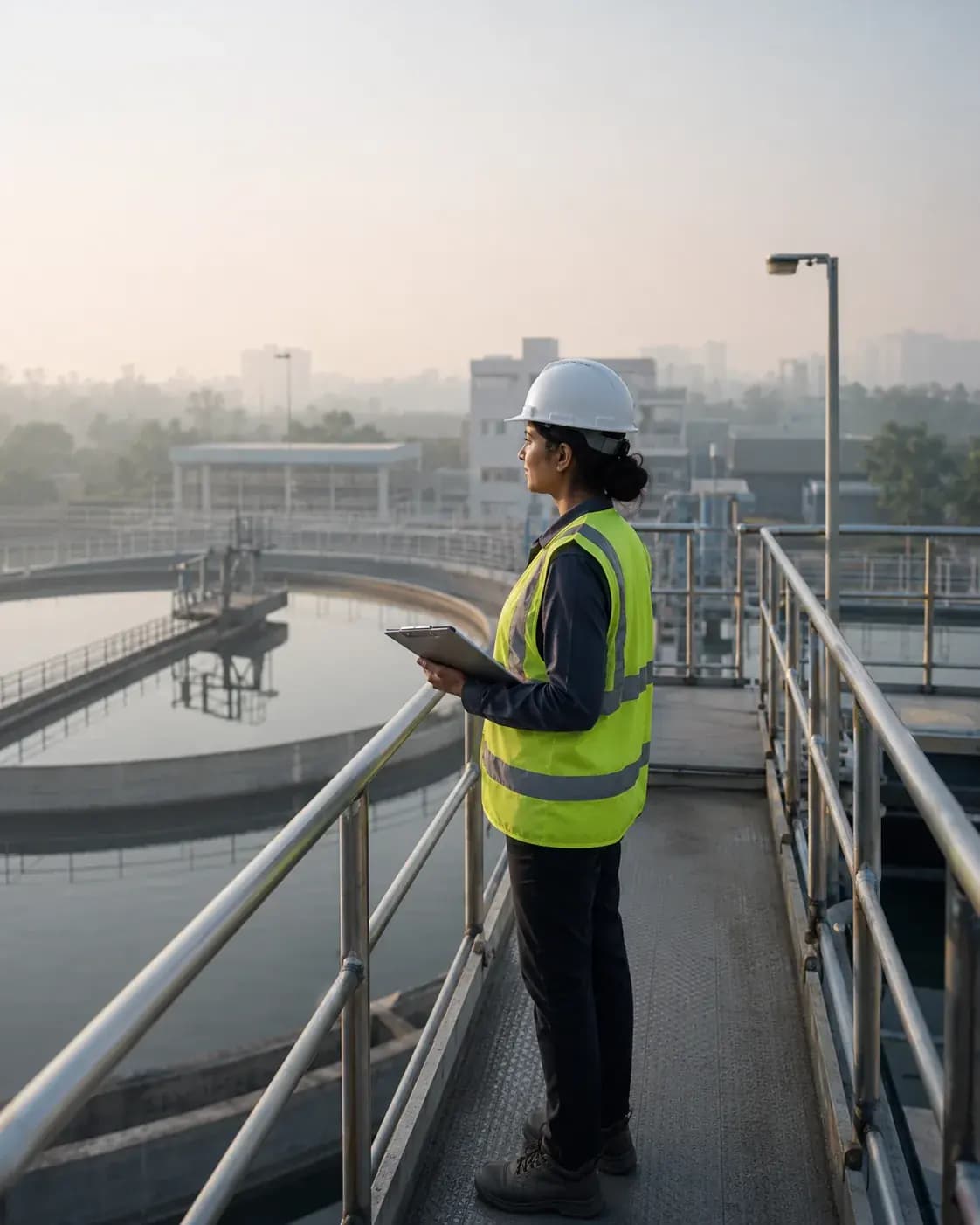
A sewage treatment plant is a permission to occupy as much as a piece of engineering. For most large buildings, townships and campuses in Maharashtra, an operating STP that meets the pollution-control board's discharge norms is a condition of the environment clearance, the building completion certificate and the consent to operate. KIPL designs, builds, commissions and runs those plants, and produces the monitored effluent data that shows they work.
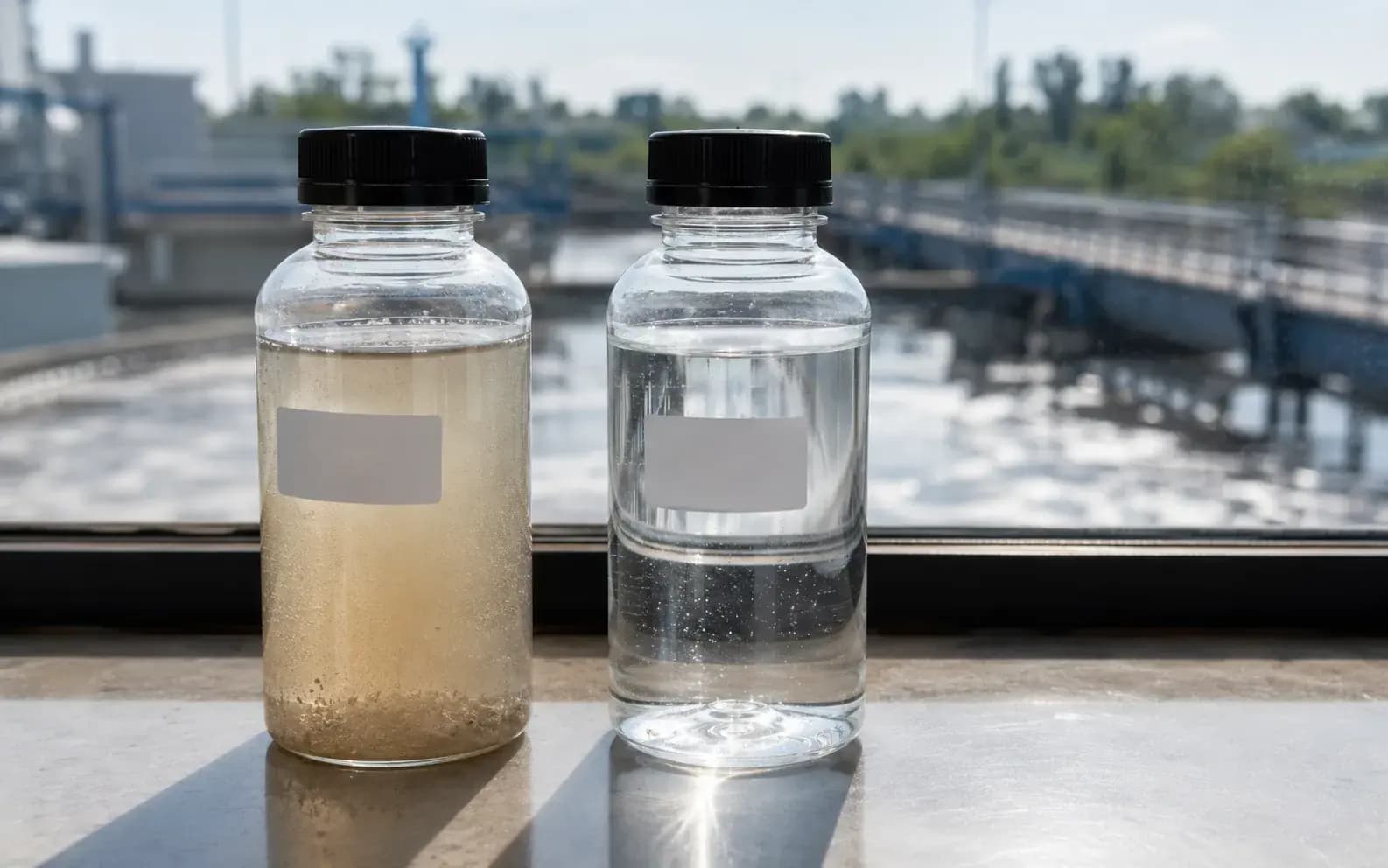
We size and select technology for the load and the footprint: sequencing batch reactor (SBR), moving-bed biofilm reactor (MBBR), membrane bioreactor (MBR) or fluidised aerobic bioreactor (FAB), each a different trade-off in land, power and output quality. The target is not merely a plant that runs, but treated water clean enough to reuse for flushing and landscaping, closing the loop a modern building's water balance now assumes.
What’s included
Every component of sewage treatment plants.
8 components, each a service in its own right: open any one, or bring us the whole scope and one team carries it.
One accountable team, start to finish
The process
How the file moves.
You see the whole route on day one; then one accountable team holds it, stage after stage.
Load & technology selection
Design flow and organic load worked out from occupancy, then the SBR / MBBR / MBR / FAB choice that fits the land, power and reuse target.
Design & DPR
Process design, hydraulics, civil and MEP, and a detailed project report with a defensible cost per KLD.
Build & install (EPC)
Turnkey construction, equipment supply and installation, integrated with the building's plumbing and reuse network.
Commissioning & testing
Seeding, stabilisation and performance testing against the design outlet quality before handover.
Operations & monitoring
O&M with routine sampling and the effluent records that keep the consent and EC compliance defensible.
Sewage Treatment Plants
Commissioning is the start, not the finish. The proof is the operating data, month after month.

Why KIPL
Credentials you can check.
A firm that sells regulatory compliance has to be beyond reproach on its own. Every credential below is verifiable, and every figure traces to a document.
Proof
The same practice, on the ground.

Shapoorji Pallonji · Kanpur & Unnao, Uttar Pradesh
NAMAMI GANGE PROGRAMME
Environmental & Social Impact Assessment and EHS reporting for existing and proposed sewage treatment plants on the Ganga.
Straight answers
Sewage Treatment Plants: the questions clients ask first.
01Is an STP mandatory for my building?
In Maharashtra, an on-site sewage treatment plant is generally required for large residential and commercial developments, those crossing the built-up-area thresholds of the EIA Notification or the local building bye-laws. And is a standing condition of the environment clearance and the consent to operate. The trigger is set by the project's size and category, which we confirm at the design stage.
02Which STP technology is best, SBR, MBBR or MBR?
There is no single best; it is a trade-off. SBR is compact and forgiving on variable load; MBBR is simple to operate and to retrofit; MBR gives the cleanest, most reuse-ready output but costs more in membranes and power. We select on the load, the available footprint and how clean the treated water must be for reuse.
03Can treated sewage be reused?
Yes: that is usually the point. Treated to the board's reuse standard, STP output is used for toilet flushing, landscape irrigation and cooling make-up, cutting fresh-water demand. Reaching reuse quality reliably is a design and operations question, which is why the operating data matters as much as the plant.
04What capacity range does KIPL execute?
From roughly 100 KLD building-scale plants up to multi-MLD township and industrial-colony systems, including retrofitting and capacity expansion of existing plants where the load has outgrown the original design.
Where we work
Filed where your project is.
Sewage Treatment Plants, carried with the deepest roots across the Mumbai Metropolitan Region and Maharashtra: and wherever a good project needs it. Every filing lands on the right desk, argued by named, accredited people.
Home turf
Mumbai Metropolitan Region- Navi Mumbai
- Mumbai
- Thane
- Panvel
- Kalyan-Dombivli
- Vasai-Virar
- Mira-Bhayandar
- Bhiwandi
- Ulhasnagar
- Ambernath
- Badlapur
- Uran
- Taloja
- Kharghar
By state
State-wide pagesNot listed? We carry sewage treatment plants across the region all the same, tell us where your project is.
Who we do this for
The same filing reads differently by industry.
What sewage treatment plants demands of a data centre is not what it demands of a distillery. These set out the item code, the conditions that bite and the evidence each sector is asked for.
Trusted by
The builders, industry and public bodies we file for.












Bring us your sewage treatment plants file.
One conversation to map the route, and the team that will carry it.