









STP operations and maintenance: keeping a plant in compliance every day, not just on inspection day.
Most STPs that fail their discharge standard were built correctly and operated badly, O&M is where compliance is either produced daily or lost quietly.
What it is
Running an STP is process control, not caretaking. It means holding dissolved oxygen and mixed-liquor solids in range, wasting sludge on schedule and dewatering it, dosing and verifying disinfection, keeping blowers, diffusers, pumps and screens serviceable, testing the treated water on a defined frequency, and recording all of it in a log that stands up when the board asks. Neglect any one of those and the outlet drifts out of consent long before anything visibly breaks.
KIPL operates plants under contract with trained operators, a defined preventive-maintenance schedule, laboratory monitoring against the consent parameters, and a compliance record maintained continuously rather than assembled before an inspection. Where reuse is a clearance condition, the reuse quantities and quality are logged too, because that is the evidence a compliance report will need.
What you get
The deliverables, in hand.
- Authority
- Consent to Operate conditions · CPCB / SPCB monitoring norms
- Typical timeline
- Annual contract, typically renewed
- Trained operators on a shift pattern suited to the plant
- Daily process control, DO, MLSS, sludge wasting, dosing, flow logging
- Preventive maintenance schedule for blowers, pumps, diffusers, screens
- Laboratory monitoring against consent parameters at agreed frequency
- Sludge dewatering, storage and disposal through an authorised route
- Compliance records, monthly reports and support at board inspections
Straight answers
Operations & Maintenance: common questions.
01What does an STP O&M contract actually cover?
Manning the plant, day-to-day process control, routine and preventive maintenance, chemical and consumable management, laboratory testing at the agreed frequency, sludge handling and disposal, record-keeping, and reporting. Major equipment replacement, civil repairs and power charges are usually outside the contract and should be defined explicitly rather than assumed either way.
02How many operators does a plant need?
It depends on capacity, the degree of automation and whether the plant runs continuously. Even a small automated plant needs a trained operator responsible for it daily, not a security guard who switches a pump; larger municipal plants need shift coverage with a supervisor and laboratory staff. What matters more than headcount is that the person on site can read the process and act on it.
03What testing is required, and how often?
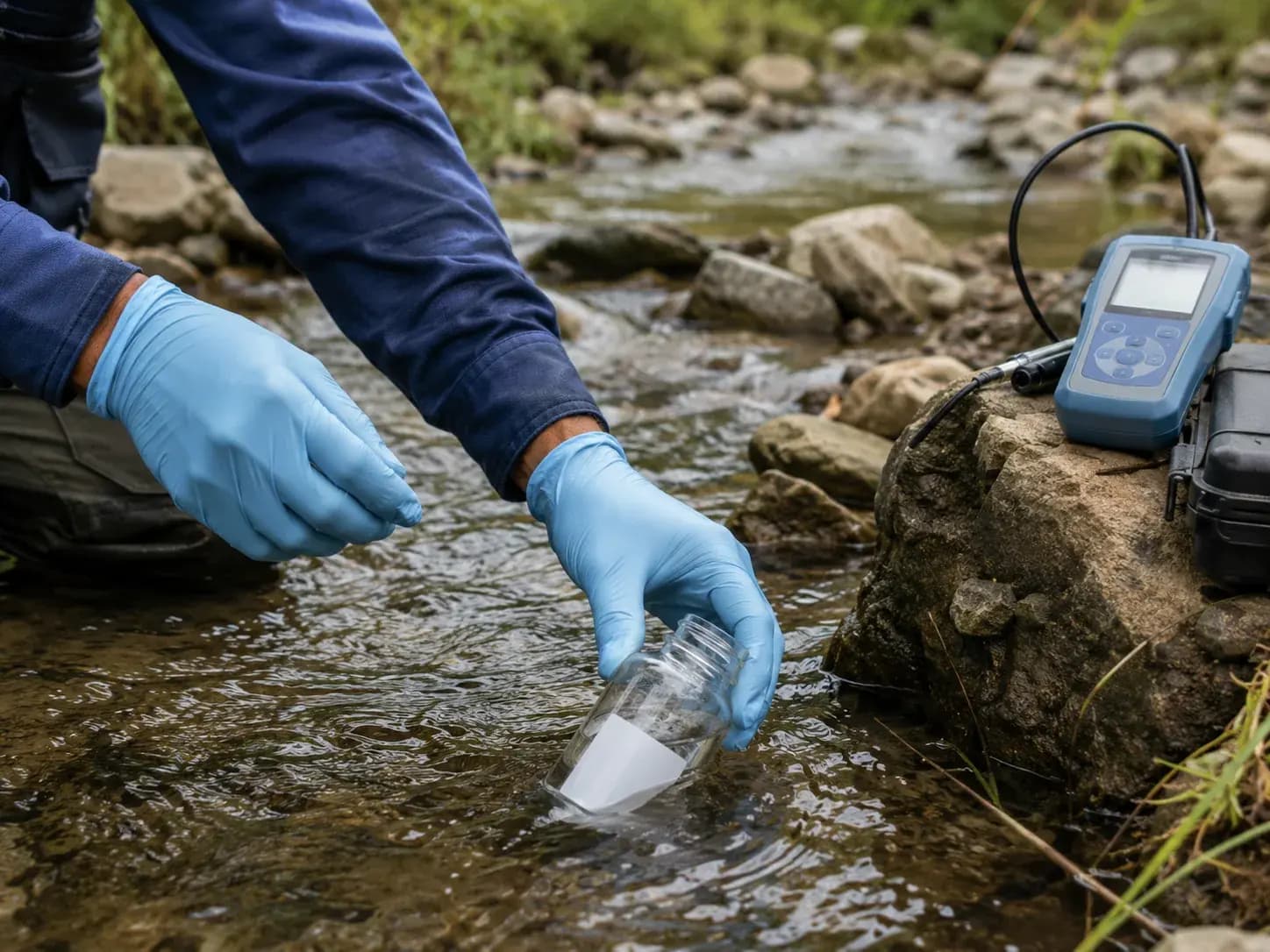
The consent conditions set the parameters and frequency, typically covering pH, BOD, COD, TSS, oil and grease and residual chlorine or equivalent disinfection check, with ammoniacal nitrogen and other parameters where the consent specifies. Daily operational checks are run in-house; periodic analysis is done at an appropriately recognised laboratory so the results carry weight in the compliance record.
04What are the most common causes of non-compliance?
Sludge not being wasted and dewatered, so solids carry over to the outlet; aeration shortfall from worn blowers or choked diffusers; hydraulic overload at peak hours; disinfection dosing that is not verified; and tertiary units bypassed to save power or chemicals. Each one is preventable with routine process control, which is precisely the point of a real O&M regime.
05What has to happen to the sludge?
It has to be wasted at the right rate to keep the biology in balance, thickened and dewatered, stored without nuisance, and disposed of through an authorised route in the manner the consent permits. Sludge management is the part of O&M most often deferred, and deferring it is what pushes suspended solids and BOD at the outlet out of range.
06Is online monitoring required on an STP?
Online continuous monitoring is mandated for specified categories and capacities under CPCB and State Board directions, and where it applies the data is transmitted to the board's server. Whether a particular plant is covered is determined by its consent conditions and the applicable direction, so the requirement is checked against the plant's own consent rather than assumed.
07What records should a plant maintain?
Daily logs of flow, dissolved oxygen, mixed-liquor solids, sludge wasting, chemical and power consumption, and equipment running hours; laboratory results against consent parameters; maintenance and breakdown history; sludge disposal manifests; and, where reuse is a clearance condition, the quantity and quality of treated water reused. This is the file an inspection or a compliance report is built from.
08Should the O&M contractor be the same firm that built the plant?
Not necessarily, but continuity helps in the first years, when design intent and early defects still matter. Where O&M passes to a different contractor, the handover should include as-built drawings, the O&M manual, the commissioning record and the maintenance history: without them, a new operator spends the first months rediscovering the plant.
Within Sewage Treatment Plants
Part of the whole route, the other components.
Primary sources
Check it at source.
This page describes Consent to Operate conditions · CPCB / SPCB monitoring norms. The regulation and the filing portal are public, these are the official endpoints, not our summary of them.
Relevant proof
Where this stage has already been delivered.

Shapoorji Pallonji · Kanpur & Unnao, Uttar Pradesh
NAMAMI GANGE PROGRAMME
Environmental & Social Impact Assessment and EHS reporting for existing and proposed sewage treatment plants on the Ganga.
Where we do this
Sewage Treatment Plants on the ground.
The authority, the timeline and the local ground differ by city. These pages set out how sewage treatment plants actually runs in each.
Featured projects
Work that carries its own evidence.
Our expertise
One team across the whole environmental brief.
Operations & Maintenance is one stage of one practice. Most projects need several, and the commitments made at clearance are the ones we build and maintain.
Who we do this for
Sewage Treatment Plants reads differently by industry.
- 01
Real Estate & ConstructionCore
The EC and the consent both commit a residential project to on-site sewage treatment meeting discharge norms, sized to real occupancy rather than to the brochure.
Sewage Treatment Plants for Real Estate & Construction - 02
Townships & Area DevelopmentCore
Township sewage is assessed as a system across phases, with treated-water reuse for flushing and landscape written into the clearance.
Sewage Treatment Plants for Townships & Area Development - 03
Hospitality, Healthcare & EducationCore
Occupancy runs 365 days, so the STP carries a live daily load that inspection sampling tests against consent discharge norms.
Sewage Treatment Plants for Hospitality, Healthcare & Education - 04
Municipal CorporationsCore
ULB sewage schemes are built and upgraded against CPCB discharge norms and NGT directions on untreated urban sewage.
Sewage Treatment Plants for Municipal Corporations - 05
Industrial Corridors & MIDCCore
Shared sewage infrastructure with treated-water reuse is designed at node scale, ahead of the tenants who will load it.
Sewage Treatment Plants for Industrial Corridors & MIDC - 06
River & Water MissionsCore
Untreated urban sewage is the dominant load on a river, so STP capacity, upgradation and performance are the programme's spine.
Sewage Treatment Plants for River & Water Missions - 07
Corporate CampusesCore
Campus sewage treatment with full reuse for flushing, cooling and landscape is what a zero-discharge campus claim actually rests on.
Sewage Treatment Plants for Corporate Campuses - 08
Data Centres & IT Parks
Campus sewage must be treated and reused for cooling make-up and landscape to hold the zero-discharge position taken in the EC.
Sewage Treatment Plants for Data Centres & IT Parks
Trusted by
The organisations this work is done for.












In the press