









STP technology selection: choosing between MBBR, SBR, MBR and FAB on evidence, not preference.
The right sewage treatment technology is the one that meets your discharge standard within the land, power and operating budget you actually have: which is a comparison, not a default.
What it is
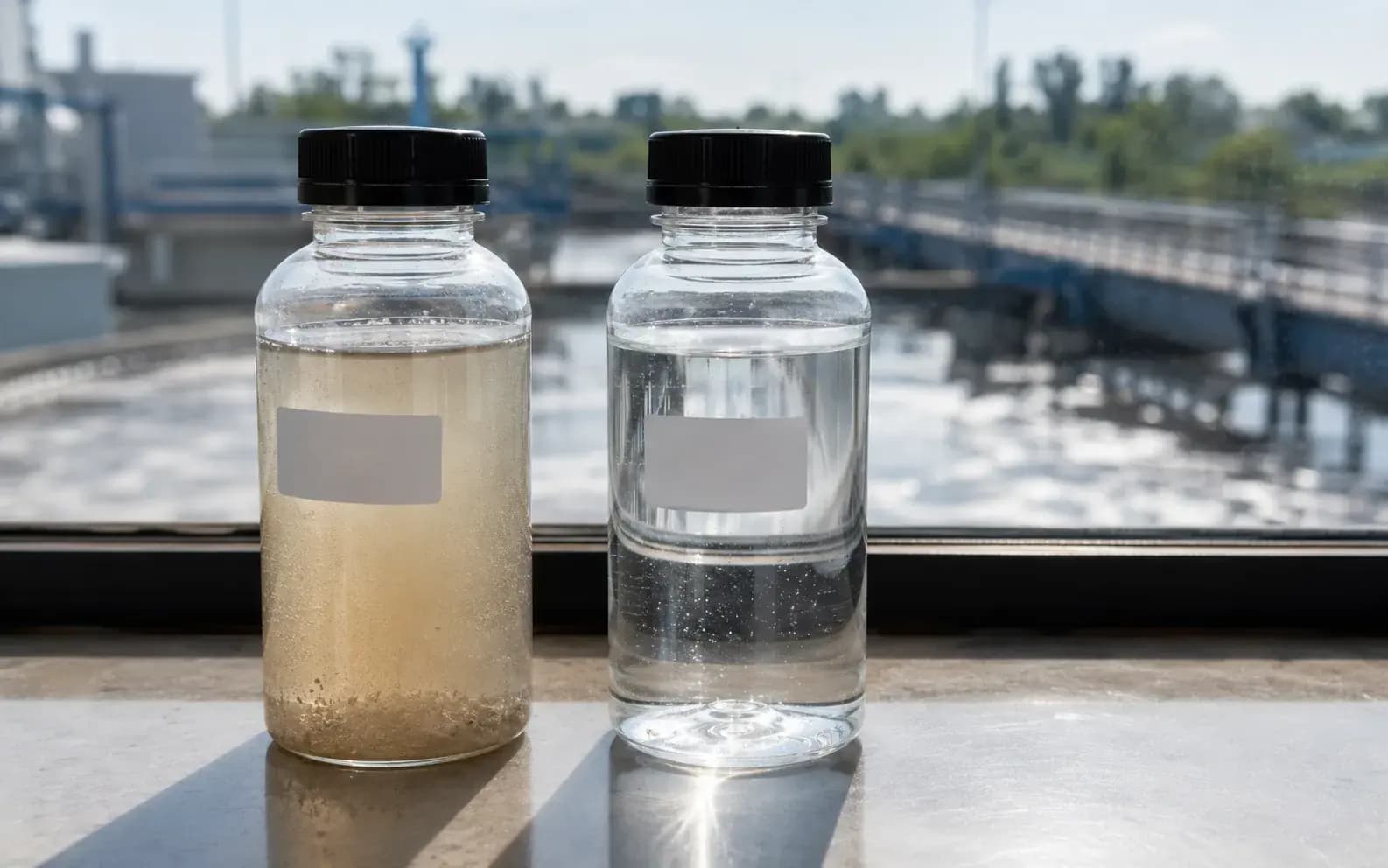
The realistic options for most Indian projects are conventional activated sludge (ASP), attached-growth systems such as MBBR and FAB, the batch-operated SBR, and the membrane-based MBR. They differ in footprint, in the effluent quality they reliably produce, in power draw, in sludge yield, in tolerance of variable load, and in how much operator skill they demand. None is universally better; each is better under particular constraints.
KIPL selects on those constraints in the open: available plot and headroom, the consented discharge standard and the reuse quality required, expected load variation through the day and the season, power tariff and reliability, sludge disposal route, and the operating team the client will actually have. The comparison is documented so a client can see why a technology was chosen and what it will cost to run, rather than being handed a recommendation that happens to match a supplier's product line.
What you get
The deliverables, in hand.
- Authority
- Selection against CPCB / SPCB consent conditions and reuse norms
- Typical timeline
- Days to weeks, alongside the design basis
- Technology comparison matrix against the project's real constraints
- Footprint and headroom check for each shortlisted option
- Indicative power, chemical and sludge implications per option
- Effluent quality achievable against the consent and reuse requirement
- Lifecycle view, capital versus operating cost over the plant's life
- Documented recommendation with the basis of selection stated
Straight answers
Technology Selection: common questions.
01What is the difference between MBBR and SBR?
MBBR is an attached-growth process: biomass grows on free-moving plastic carriers in a continuously flowing aeration tank, so it handles fluctuating load well and keeps a compact footprint. SBR is a suspended-growth process operated in timed batches (fill, react, settle, decant) in a single tank, which removes the need for a separate secondary clarifier and gives good control over nitrogen removal. MBBR suits variable, smaller flows in tight spaces; SBR suits larger, steadier flows where automation and nutrient control matter.
02When is an MBR justified over conventional treatment?
When effluent quality or footprint leaves no alternative. A membrane bio-reactor replaces settling with membrane filtration, so it produces a consistently clear, low-turbidity effluent well suited to reuse, in the smallest area of any option. The trade-off is higher power draw, membrane fouling management, periodic chemical cleaning and eventual membrane replacement, real recurring costs that should be priced in before the technology is selected.
03What is a FAB reactor and how does it compare to MBBR?
FAB, fluidised aerobic bed: is an attached-growth process in the same family as MBBR, with biomass carried on media kept in suspension by aeration. In practice the two are close relatives and the choice between them often comes down to media type, supplier and hydraulic design rather than a fundamental process difference. Both are chosen for compactness and tolerance of intermittent load.
04Does conventional activated sludge still make sense?
Where land is available and flow is large and steady, municipal plants in particular, ASP remains a proven, well-understood and relatively low-capital option with operators everywhere who know how to run it. Its disadvantages are footprint and sensitivity to shock loading. It is displaced on constrained sites, not on principle.
05How much does technology choice change operating cost?
Substantially, and mostly through power. Aeration is the dominant electrical load in every aerobic process, and membrane systems add permeate pumping and cleaning chemicals on top. Sludge yield and disposal, chemical dosing for tertiary polishing, and the skill level of the operating team also move the number. A technology selected only on capital cost frequently loses the difference back over a few years of operation.
06Can the Pollution Control Board dictate which technology we use?
The board sets the discharge standard and the consent conditions; the technology is the proponent's choice provided it demonstrably meets those conditions. In practice, boards and appraisal committees do question a technology that looks unlikely to achieve the required quality for the site or the load, so a documented basis of selection is useful at consent and clearance stage.
07How does the reuse requirement affect the choice?
It raises the bar. Treated sewage used for flushing and landscape irrigation is expected to be clear, low in suspended solids and disinfected, which pushes the design towards tertiary filtration and disinfection regardless of the biological process, and makes MBR attractive where quality must be consistent without operator intervention. Where reuse is a clearance condition, that condition, not the general norm, is what the selection is judged against.
Within Sewage Treatment Plants
Part of the whole route, the other components.
Primary sources
Check it at source.
This page describes Selection against CPCB / SPCB consent conditions and reuse norms. The regulation and the filing portal are public, these are the official endpoints, not our summary of them.
Relevant proof
Where this stage has already been delivered.

Shapoorji Pallonji · Kanpur & Unnao, Uttar Pradesh
NAMAMI GANGE PROGRAMME
Environmental & Social Impact Assessment and EHS reporting for existing and proposed sewage treatment plants on the Ganga.
Where we do this
Sewage Treatment Plants on the ground.
The authority, the timeline and the local ground differ by city. These pages set out how sewage treatment plants actually runs in each.
Featured projects
Work that carries its own evidence.
Our expertise
One team across the whole environmental brief.
Technology Selection is one stage of one practice. Most projects need several, and the commitments made at clearance are the ones we build and maintain.
Who we do this for
Sewage Treatment Plants reads differently by industry.
- 01
Real Estate & ConstructionCore
The EC and the consent both commit a residential project to on-site sewage treatment meeting discharge norms, sized to real occupancy rather than to the brochure.
Sewage Treatment Plants for Real Estate & Construction - 02
Townships & Area DevelopmentCore
Township sewage is assessed as a system across phases, with treated-water reuse for flushing and landscape written into the clearance.
Sewage Treatment Plants for Townships & Area Development - 03
Hospitality, Healthcare & EducationCore
Occupancy runs 365 days, so the STP carries a live daily load that inspection sampling tests against consent discharge norms.
Sewage Treatment Plants for Hospitality, Healthcare & Education - 04
Municipal CorporationsCore
ULB sewage schemes are built and upgraded against CPCB discharge norms and NGT directions on untreated urban sewage.
Sewage Treatment Plants for Municipal Corporations - 05
Industrial Corridors & MIDCCore
Shared sewage infrastructure with treated-water reuse is designed at node scale, ahead of the tenants who will load it.
Sewage Treatment Plants for Industrial Corridors & MIDC - 06
River & Water MissionsCore
Untreated urban sewage is the dominant load on a river, so STP capacity, upgradation and performance are the programme's spine.
Sewage Treatment Plants for River & Water Missions - 07
Corporate CampusesCore
Campus sewage treatment with full reuse for flushing, cooling and landscape is what a zero-discharge campus claim actually rests on.
Sewage Treatment Plants for Corporate Campuses - 08
Data Centres & IT Parks
Campus sewage must be treated and reused for cooling make-up and landscape to hold the zero-discharge position taken in the EC.
Sewage Treatment Plants for Data Centres & IT Parks
Trusted by
The organisations this work is done for.












In the press