









STP commissioning and performance testing: proving the plant meets its design before handover.
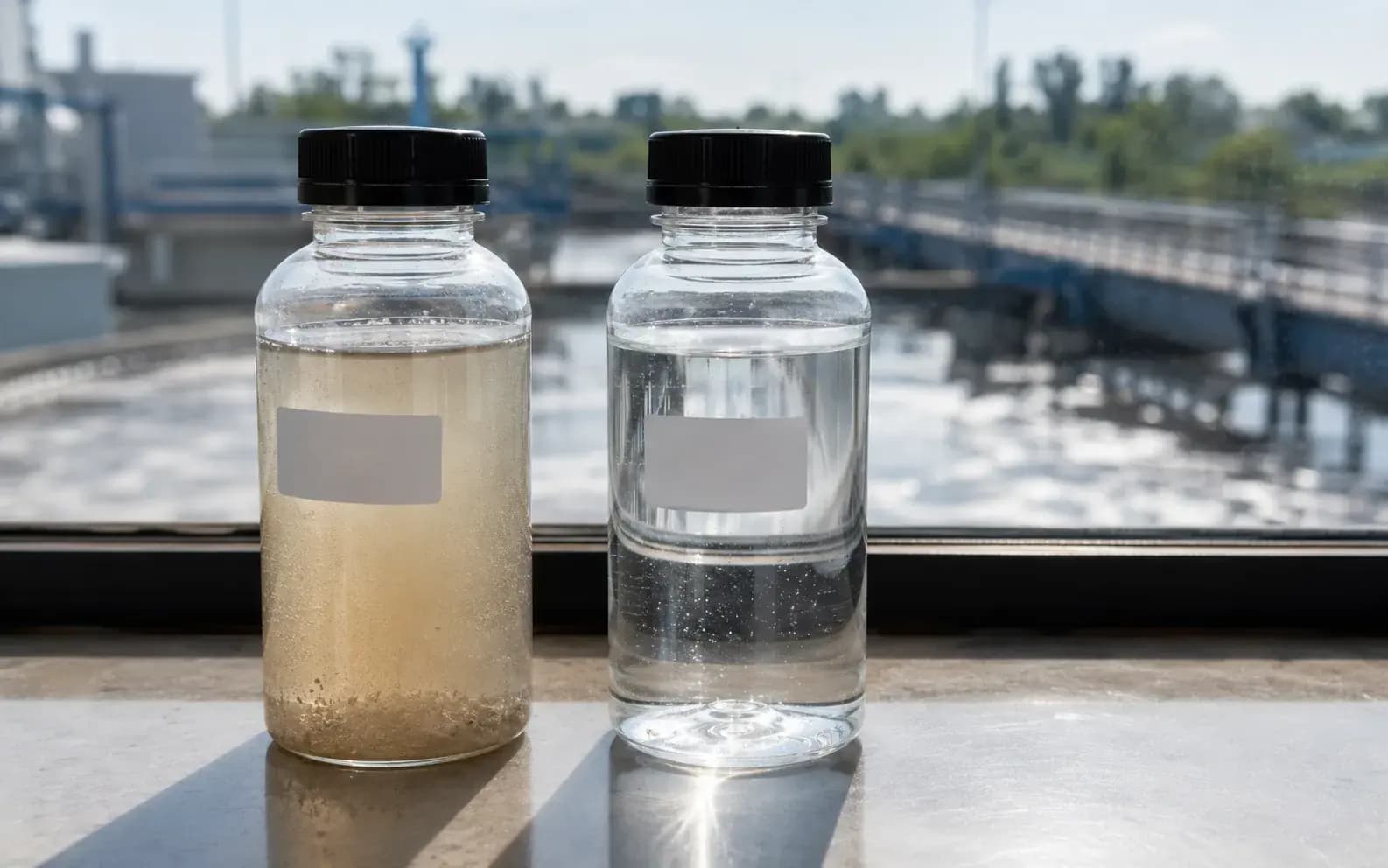
Commissioning is where an STP stops being a construction package and becomes a working process: brought to stable biology and then demonstrated, on record, against the treated-water quality it was contracted to achieve.
What it is
Commissioning runs in sequence: pre-commissioning checks on every mechanical and electrical item, hydraulic testing of tanks and lines, no-load and load trials on equipment, instrument calibration, then seeding of the biological stage and the weeks of stabilisation during which biomass establishes and the process is tuned. Only after stabilisation is a performance test meaningful, because a plant sampled before its biology has matured tells you nothing about the plant.
KIPL commissions to a written protocol and closes out with a performance demonstration against the contracted parameters, sampled and analysed in the manner the contract specifies, at or near design flow. Handover then carries the commissioning record, as-built drawings, the O&M manual with set points and control philosophy, the spares list, and training for the operating team, the documentation the plant's Consent to Operate and every later inspection will rest on.
What you get
The deliverables, in hand.
- Authority
- Tested against contracted parameters and consent standards
- Typical timeline
- Weeks; biological stabilisation sets the pace
- Pre-commissioning checklists for mechanical, electrical and instrumentation items
- Hydraulic and leak testing of tanks, piping and interconnections
- Seeding, biomass stabilisation and process tuning to set points
- Performance guarantee test against contracted treated-water parameters
- Commissioning report with test data and analysis certificates
- As-built drawings, O&M manual, spares list and operator training
Straight answers
Commissioning & Performance Testing: common questions.
01What is the difference between commissioning and a performance test?
Commissioning brings the plant into stable operation: checks, trials, calibration, seeding and tuning. The performance test is the demonstration afterwards, in which treated water is sampled over a defined run at or near design flow and analysed against the contracted parameters. One makes the plant work; the other proves it, on record.
02What is seeding, and how long does biomass take to stabilise?
Seeding introduces active biomass, usually sludge from an operating plant. So the biological stage does not have to grow a culture from nothing. Stabilisation then takes weeks rather than days, and depends on temperature, the consistency of incoming load, and how promptly the process is tuned. It is the stage of a project least amenable to compression, and testing before it completes produces misleading results.
03What parameters are tested in a performance guarantee test?
Those written into the contract, which normally mirror the consent: BOD, COD, total suspended solids, pH, oil and grease, residual disinfection, and where relevant ammoniacal nitrogen and turbidity for reuse quality. The test run duration, sampling points and frequency, and the analysing laboratory should be specified alongside the parameters.
04Can a plant be tested at partial flow?
It can be run and tuned at partial flow, and often has to be on a development that is still filling up, but a guarantee test at a fraction of design flow does not demonstrate design capacity. Where full flow is genuinely unavailable at handover, the contract should say how the test will be conducted and what obligation survives until design load arrives.
05Who should witness the test?
The client or the client's consultant, with sampling and analysis by an appropriately recognised laboratory rather than by the contractor alone. Witnessed sampling and third-party analysis are what make the result usable later: with the board, in a compliance report, or in any dispute over the guarantee.
06What documents should be handed over?
As-built drawings, the commissioning report with all test data and analysis certificates, equipment manuals and warranty certificates, the O&M manual with the control philosophy and set points, the recommended spares list, the calibration records, and evidence of operator training. Plants handed over without this documentation are markedly harder and costlier to operate afterwards.
07What happens if the plant fails its performance test?
The contract should already say. Normally the contractor identifies and rectifies the cause and the test is repeated, with the guarantee period running from successful demonstration. Failure is often traced to influent characteristics differing from the design basis rather than to the plant, which is why the design basis and the test conditions both belong in the contract from the start.
Within Sewage Treatment Plants
Part of the whole route, the other components.
Relevant proof
Where this stage has already been delivered.

Shapoorji Pallonji · Kanpur & Unnao, Uttar Pradesh
NAMAMI GANGE PROGRAMME
Environmental & Social Impact Assessment and EHS reporting for existing and proposed sewage treatment plants on the Ganga.
Where we do this
Sewage Treatment Plants on the ground.
The authority, the timeline and the local ground differ by city. These pages set out how sewage treatment plants actually runs in each.
Featured projects
Work that carries its own evidence.

Our expertise
One team across the whole environmental brief.
Commissioning & Performance Testing is one stage of one practice. Most projects need several, and the commitments made at clearance are the ones we build and maintain.
Who we do this for
Sewage Treatment Plants reads differently by industry.
- 01
Real Estate & ConstructionCore
The EC and the consent both commit a residential project to on-site sewage treatment meeting discharge norms, sized to real occupancy rather than to the brochure.
Sewage Treatment Plants for Real Estate & Construction - 02
Townships & Area DevelopmentCore
Township sewage is assessed as a system across phases, with treated-water reuse for flushing and landscape written into the clearance.
Sewage Treatment Plants for Townships & Area Development - 03
Hospitality, Healthcare & EducationCore
Occupancy runs 365 days, so the STP carries a live daily load that inspection sampling tests against consent discharge norms.
Sewage Treatment Plants for Hospitality, Healthcare & Education - 04
Municipal CorporationsCore
ULB sewage schemes are built and upgraded against CPCB discharge norms and NGT directions on untreated urban sewage.
Sewage Treatment Plants for Municipal Corporations - 05
Industrial Corridors & MIDCCore
Shared sewage infrastructure with treated-water reuse is designed at node scale, ahead of the tenants who will load it.
Sewage Treatment Plants for Industrial Corridors & MIDC - 06
River & Water MissionsCore
Untreated urban sewage is the dominant load on a river, so STP capacity, upgradation and performance are the programme's spine.
Sewage Treatment Plants for River & Water Missions - 07
Corporate CampusesCore
Campus sewage treatment with full reuse for flushing, cooling and landscape is what a zero-discharge campus claim actually rests on.
Sewage Treatment Plants for Corporate Campuses - 08
Data Centres & IT Parks
Campus sewage must be treated and reused for cooling make-up and landscape to hold the zero-discharge position taken in the EC.
Sewage Treatment Plants for Data Centres & IT Parks
Trusted by
The organisations this work is done for.












In the press