










Sewage Treatment Plants consultants in Maharashtra.
Sewage Treatment Plants in Maharashtra, on the ground where the work actually is, a long Konkan shoreline, the Sahyadri crest, the Deccan plateau and the MIDC estates in nearly every district, carried by a QCI-NABET accredited team, end to end.
Why Maharashtra
The local ground sewage treatment plants sits on.
- Handled through
- SEIAA and SEAC Maharashtra · MPCB · MCZMA · Maharashtra Forest Department · Maharashtra State Wetland Authority · CGWA and GSDA
- Local ground
- The Konkan coast, the Sahyadri, the Desh plateau, Marathwada, Vidarbha and Khandesh
- Typically for
- Townships, high-rises, campuses, hotels, hospitals, industrial colonies
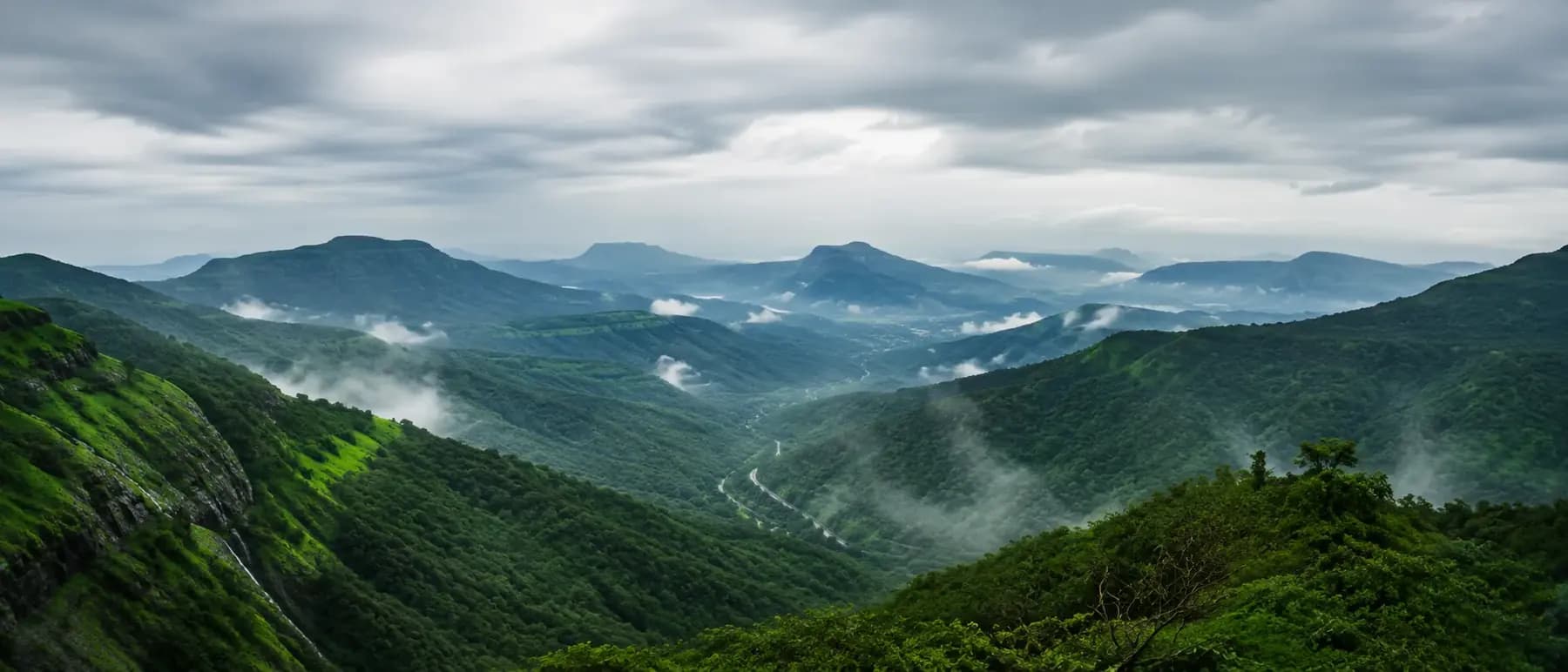
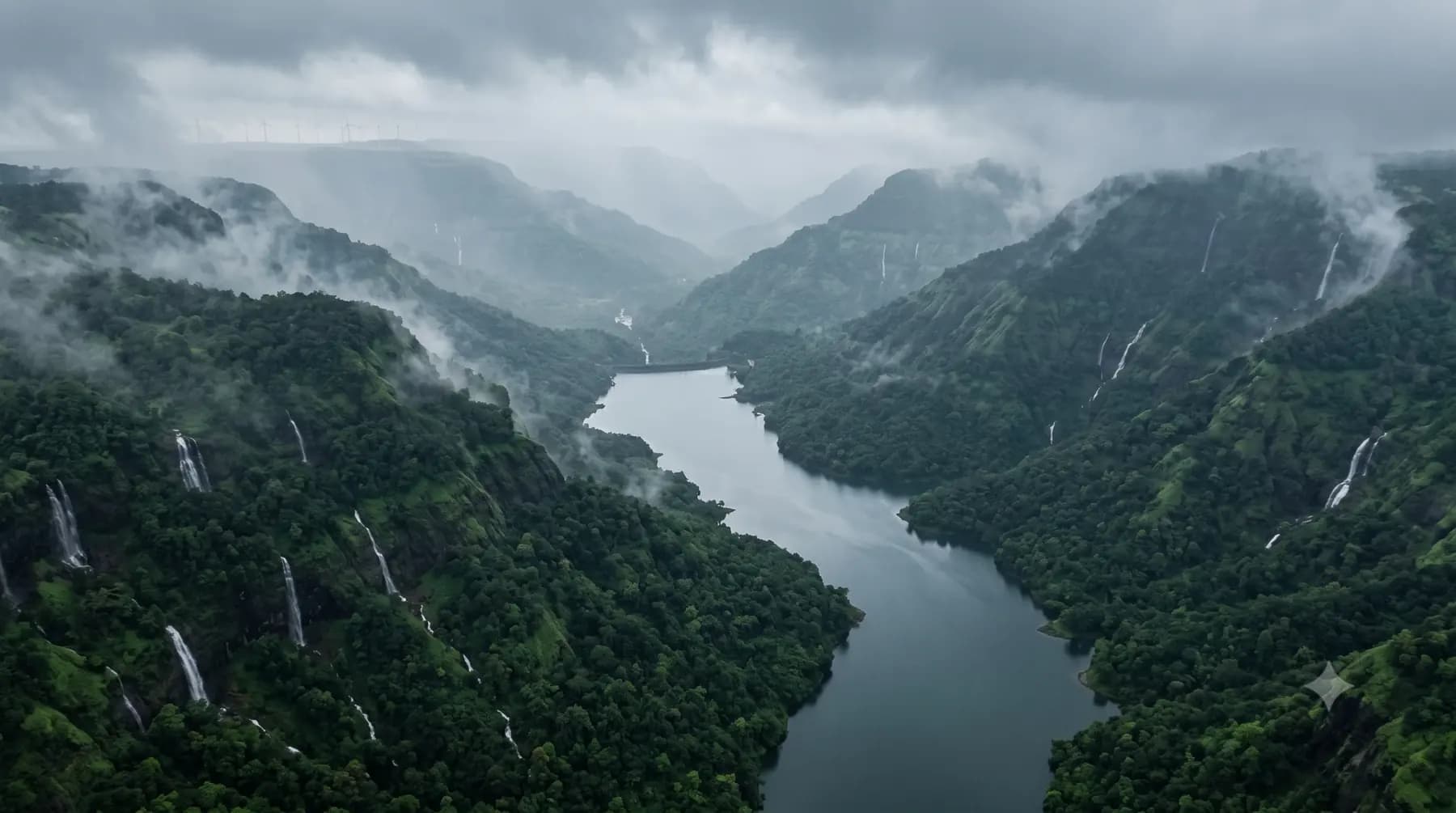
Maharashtra holds a heavy share of the country's regulated industry, spread across very different ground. The Konkan runs about 720 km of coast, creeks and mangroves from Dahanu down to Sindhudurg. Behind it rises the Sahyadri, the state's stretch of the Western Ghats: wet, forested and ringed with eco-sensitive zones. East of the crest lie the Desh plateau around Pune and Nashik, the drought country of Marathwada, Vidarbha with its coal, cotton, forests and tigers, and the Tapi valley of Khandesh. An approval here is read against whichever of these a site stands in.
KIPL carries sewage treatment plants from a base in the region: which matters when the work runs through SEIAA and SEAC Maharashtra · MPCB · MCZMA · Maharashtra Forest Department · Maharashtra State Wetland Authority · CGWA and GSDA. Comparable, accredited projects across western India are on the record: carried through to completion by named people, not passed down a chain.
Sewage Treatment Plants · Maharashtra
Commissioning is the start, not the finish. The proof is the operating data, month after month.
Local demand
What drives sewage treatment plants in Maharashtra.
Most approvals in the state pass through three desks in Mumbai. SEIAA Maharashtra, advised by its State Expert Appraisal Committee, decides Category B projects (the towers, townships and smaller industrial expansions) while Category A files go to the ministry's committees in Delhi. MPCB issues the consents to set up and to run a unit, through regional offices that stretch from Navi Mumbai to Chandrapur. MCZMA reads anything inside the coastal zone, from a Worli tower to a Konkan jetty. KIPL's own files show the range: a Category 8(b) EIA for an IT park in Juinagar MIDC, and EIA with CRZ clearance for a ship repair expansion at Jaigad, Ratnagiri.
Beyond those desks, the ground decides what else follows. A site in Gadchiroli, Chandrapur or the Melghat hills may hold forest land and need forest clearance; projects near the state's six tiger reserves or its Western Ghats sanctuaries often need the wildlife board's view. Groundwater is under strain across Marathwada and much of the Desh, so abstraction is watched closely. Water conditions then ride on every consent: large buildings must treat and reuse their sewage, distilleries and chemical units must meet discharge limits or run to zero liquid discharge, and bulk generators must compost or treat kitchen waste within their own premises. Rivers from the Mithi to the Godavari carry whatever those conditions miss.
How it works
Sewage Treatment Plants, the route to grant.
- 01/05
Load & technology selection
Design flow and organic load worked out from occupancy, then the SBR / MBBR / MBR / FAB choice that fits the land, power and reuse target.
- 02/05
Design & DPR
Process design, hydraulics, civil and MEP, and a detailed project report with a defensible cost per KLD.
- 03/05
Build & install (EPC)
Turnkey construction, equipment supply and installation, integrated with the building's plumbing and reuse network.
- 04/05
Commissioning & testing
Seeding, stabilisation and performance testing against the design outlet quality before handover.
- 05/05
Operations & monitoring
O&M with routine sampling and the effluent records that keep the consent and EC compliance defensible.
Local proof
Comparable work, near you.
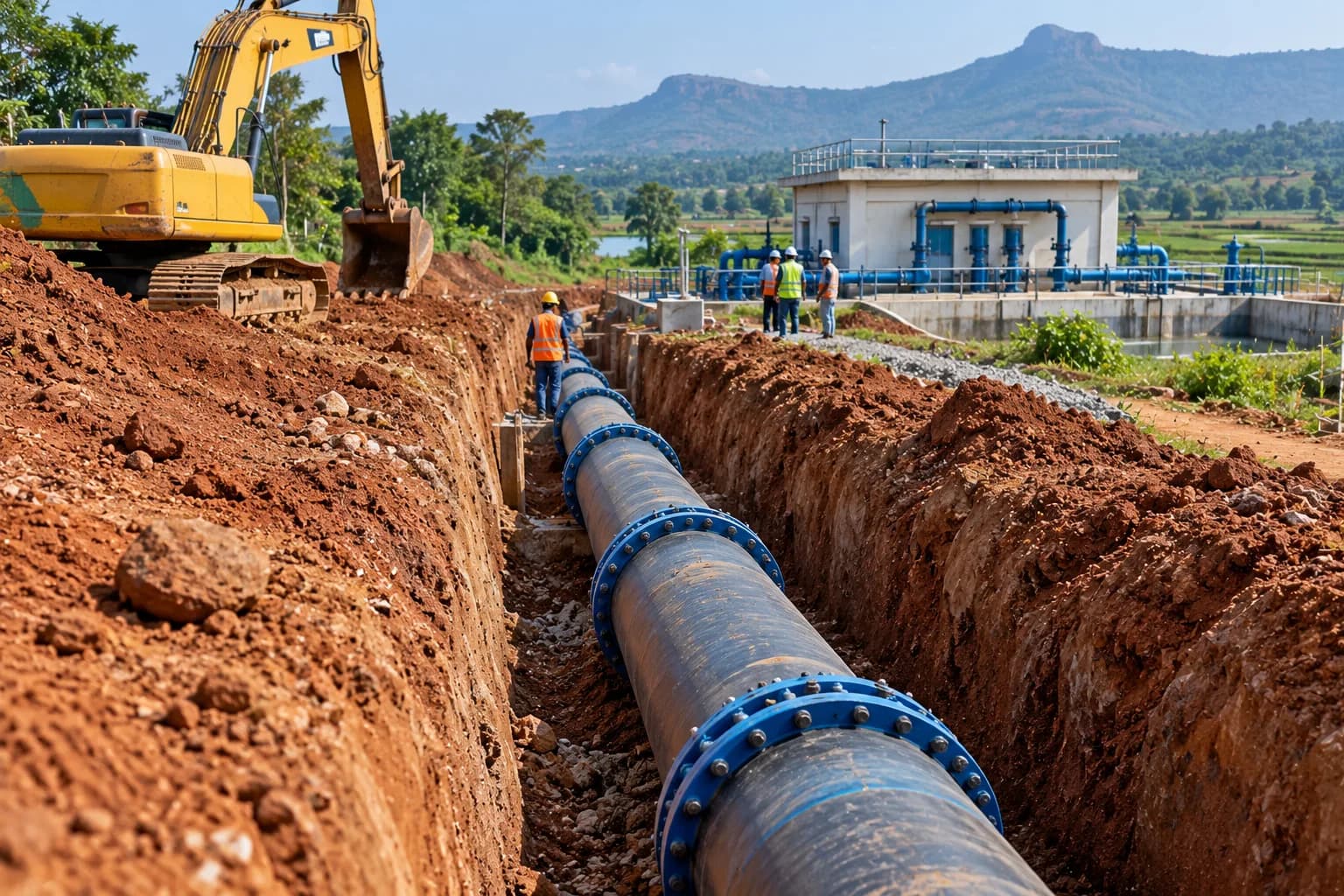
Maharashtra Jeevan Pradhikaran · Kolhapur, Maharashtra
WATER SUPPLY WORKS, MJP KOLHAPUR
Water supply infrastructure including intake well, pipeline and pumping systems, with a water treatment plant and elevated service reservoir.
The record
The work, project by project.
Mandate, method and measured outcome, written end to end for every project on this list.
CTE/CTO application, ToR application, baseline data collection, EIA report and appraisal before the EAC: Category 5(f), the sector KIPL holds Category A accreditation in.
Read the case studyOn the ground
Across Maharashtra, region by region.
A state is many grounds, not one. We read sewage treatment plants against the region a project sits in. And each city below has a page written for its own.
Regions of Maharashtra
Straight answers
Sewage Treatment Plants in Maharashtra: common questions.
01Is a Maharashtra project decided by SEIAA, or by the Union ministry?
It turns on the project's category in the EIA Notification, 2006. Category B work (most building and township projects, plus many smaller industrial ones) is appraised by the state's expert committee and decided by SEIAA Maharashtra. Category A projects go to the Expert Appraisal Committee in Delhi, and so can some B projects sited near protected areas, critically polluted areas or a state border. We settle the category from the schedule before any Form 1 is drafted.
02Who reviews a project on Maharashtra's coast?
MCZMA checks it against the state's sanctioned coastal zone plan under the CRZ Notification, 2019. It decides smaller works within its own delegated powers and recommends the rest onward, alongside any environment clearance. Much of the state's mangrove land is notified as forest and looked after by a dedicated mangrove unit within the Forest Department, which adds its own permission where a site touches it. We map the site on the plan before anything is designed.
03Must a building in Maharashtra treat its own sewage and wet waste?
Most larger ones must. Clearance conditions for buildings and townships usually require an on-site STP, with treated water reused for flushing and gardens, and many planning authorities ask for it in the building permission too. Large societies, campuses and hotels count as bulk waste generators under the 2016 solid waste rules and are expected to compost or treat their wet waste where it arises. We size both to the occupancy the building will actually carry.
04Who handles sewage treatment plants for a Maharashtra project, and how long does it take?
SEIAA and SEAC Maharashtra · MPCB · MCZMA · Maharashtra Forest Department · Maharashtra State Wetland Authority · CGWA and GSDA are the bodies a Maharashtra project deals with. Timelines depend on the project's category and scale, dpr in weeks; build & commissioning by project schedule. KIPL prepares and carries the work through, tracked to the outcome, and maps a realistic Maharashtra timeline at the screening stage, with comparable work on the record such as WATER SUPPLY WORKS, MJP KOLHAPUR.
By industry
The same filing, read for your sector.
- 01
Real Estate & ConstructionCore
The EC and the consent both commit a residential project to on-site sewage treatment meeting discharge norms, sized to real occupancy rather than to the brochure.
Sewage Treatment Plants for Real Estate & Construction - 02
Townships & Area DevelopmentCore
Township sewage is assessed as a system across phases, with treated-water reuse for flushing and landscape written into the clearance.
Sewage Treatment Plants for Townships & Area Development - 03
Hospitality, Healthcare & EducationCore
Occupancy runs 365 days, so the STP carries a live daily load that inspection sampling tests against consent discharge norms.
Sewage Treatment Plants for Hospitality, Healthcare & Education - 04
Municipal CorporationsCore
ULB sewage schemes are built and upgraded against CPCB discharge norms and NGT directions on untreated urban sewage.
Sewage Treatment Plants for Municipal Corporations - 05
Industrial Corridors & MIDCCore
Shared sewage infrastructure with treated-water reuse is designed at node scale, ahead of the tenants who will load it.
Sewage Treatment Plants for Industrial Corridors & MIDC - 06
River & Water MissionsCore
Untreated urban sewage is the dominant load on a river, so STP capacity, upgradation and performance are the programme's spine.
Sewage Treatment Plants for River & Water Missions - 07
Corporate CampusesCore
Campus sewage treatment with full reuse for flushing, cooling and landscape is what a zero-discharge campus claim actually rests on.
Sewage Treatment Plants for Corporate Campuses - 08
Data Centres & IT Parks
Campus sewage must be treated and reused for cooling make-up and landscape to hold the zero-discharge position taken in the EC.
Sewage Treatment Plants for Data Centres & IT Parks
In the press
Covers, features and conversations: the work, talked through.



Keep exploring
Where this connects.
The service
01Sewage Treatment Plants, in full: and the practices that run beside it.
- Sewage Treatment Plants: the full service
- Effluent Treatment Plants
- Integrated Solid Waste Management
- Organic Waste Converters
- Project Management Consultancy
Clients & partners
The work is trusted where the stakes are highest.
Two decades of clearances, treatment plants and green infrastructure delivered for India’s builders, industry and public bodies, and the global engineering firms beside them.





























































Sideways
Sewage Treatment Plants beyond Maharashtra, and what else we do there.
Also in Maharashtra
CGWA Groundwater NOCCivil EPCCRZ ClearanceCSR / CER AdvisoryEffluent Treatment PlantsEnvironment ClearanceEnvironment Management & Mitigation PlanEnvironmental AuditsESG Advisory & ReportingExtended Producer ResponsibilityForest ClearanceGreen Building CertificationIntegrated Solid Waste ManagementMPCB Consent
Sewage Treatment Plants in Maharashtra? Start with the file in front of you.
One conversation to screen your project and map the route to grant.