









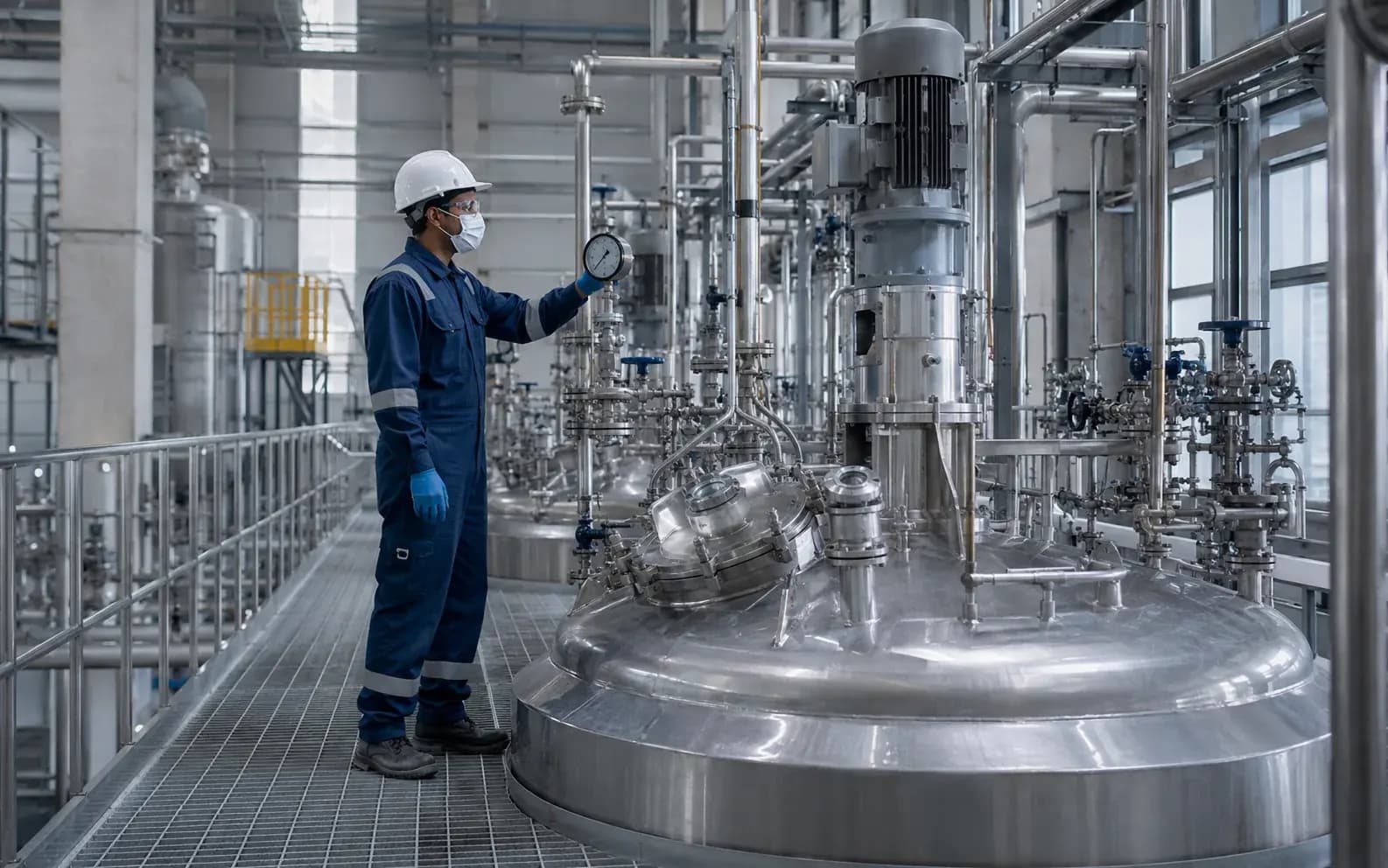
Sewage Treatment Plants · Chemical Industry
Sewage Treatment Plants for Chemical Units
At a chemical plant, domestic sewage has to be collected, treated and accounted for separately from process effluent: a separation consent conditions state explicitly and inspections check.
Screening view on your project, with the category and route named. No obligation.
What this means for chemical industry
The sewage from a chemical plant's canteen, toilets and change rooms is a modest volume next to the process effluent, which is exactly why it is often allowed to find its way into the effluent drain. That is a mistake with three consequences. It inflates the volume entering a treatment train designed for a chemical load, diluting the concentration that a stripping or evaporation stage depends on. It corrupts the mass balance that the consent, the EC water balance and any zero liquid discharge claim all rest on, since the effluent leaving the plant is then not the effluent that was characterised. And it is independently a consent breach, because MPCB conditions for these units specify separate collection and treatment of domestic sewage and its treated reuse or disposal route.
How KIPL runs it
KIPL designs the sewage plant to the plant's real occupancy (shift strength, contractor headcount, canteen load), rather than to a nominal per-capita figure, and keeps the drainage physically separate from the process network so the separation can be demonstrated and not merely asserted. Treated sewage is normally routed to green belt irrigation, dust suppression or cooling makeup where the consent permits it, which reduces fresh water demand and strengthens both the CGWA case and the water balance in the compliance report. What goes wrong otherwise is discovered at commissioning or at an inspection: a combined drain that cannot be untangled without civil work, a ZLD claim undermined by a stream nobody characterised, and a consent condition breached for the sake of a pipe run that was never separated.
- Consent condition
Separation is stated, not implied
MPCB consent conditions for industrial units specify separate collection and treatment of domestic sewage, with a defined route for the treated water.
- Mass balance
Mixing corrupts the effluent case
Sewage entering the process effluent stream changes the volume and characteristics the ETP, the consent and any ZLD commitment were built on.
- Reuse
Treated sewage reduces fresh water demand
Reuse for green belt irrigation, dust suppression or cooling makeup lowers abstraction, which supports both the CGWA case and the water balance reported half-yearly.
What you receive
Written for chemical industry, not adapted from a template.
- 01Sewage load assessment on real occupancy (shifts, contractor strength and canteen load), not a nominal per-capita figure
- 02Drainage segregation scheme keeping the domestic network physically separate from the process effluent network
- 03STP process design and sizing to the treated quality the intended reuse and the consent require
- 04Treated water reuse plan for green belt irrigation, dust suppression or cooling makeup, as the consent permits
- 05Sludge handling route, distinguished from hazardous ETP sludge in the records and the consent
- 06Construction, commissioning and operating records in the form the consent and compliance report require
Questions from chemical industry
What chemical industry ask before appointing us.
Answered against the regulation as it stands, not as a sales pitch. If your situation is not here, ask us directly.
Ask a question →Why can we not send sewage to the ETP?
Three reasons: the consent typically requires separate treatment, mixing dilutes a process effluent whose treatment depends on its concentration, and it makes the plant's water and effluent balance unverifiable. The volumes involved are small, but the effect on the effluent case and on compliance is not.
How is the STP sized for an industrial site?
On actual occupancy across shifts, including contract workers and canteen usage, rather than on a per-capita figure applied to the sanctioned headcount. Industrial sewage load is peaky and shift-driven, so equalisation matters more than the nominal daily volume suggests.
Can treated sewage be reused inside a chemical plant?
Commonly for green belt irrigation and dust suppression, and for cooling tower makeup where the treated quality supports it and the consent permits the use. Reuse reduces fresh water abstraction, which is worth documenting because it appears in both the CGWA position and the water balance in the compliance report.
Is STP sludge hazardous waste?
Sludge from a domestic sewage plant is not, provided the stream is genuinely domestic, which is another reason the drainage must be separate. Sludge from the treatment of chemical process effluent is hazardous waste under the Hazardous and Other Wastes Rules 2016, and the two must not be commingled in handling or in records.
Does an STP appear in our consent?
Yes. The consent addresses domestic sewage quantity, its treatment and the disposal or reuse route for the treated water, alongside the process effluent conditions. Both are inspected, and the sewage side is the one more often found unbuilt or bypassed.
We already mix the streams: how is that corrected?
By tracing and separating the drainage network, building or restoring the sewage plant, and then re-establishing the effluent characterisation on the segregated process stream. It is civil work, and it is cheaper done deliberately than after an inspection has recorded the position.
Stage by stage
How sewage treatment plants actually runs, step by step.
Also for chemical industry
The rest of the environmental brief for this sector.
Primary sources
Verify any of this at the source.

Relevant proof
NAMAMI GANGE PROGRAMME
Environmental & Social Impact Assessment and EHS reporting for existing and proposed sewage treatment plants on the Ganga.
- Largest existing STP
- 130 MLD
- Assessed
- 5 plants
Where we do this
Sewage Treatment Plants for chemical industry, city by city.
Other sectors
Who else we run sewage treatment plants for.
Next step
Tell us the project, and we will tell you the category and the route.
Screening is the cheapest stage to get right and the most expensive to get wrong. We will say plainly what sewage treatment plants your chemical industry project needs, and what it does not.





























































Start the conversation