









STP design and DPR: the engineering a sewage treatment plant is actually built from.
An STP design fixes the flow and load a plant must carry, selects the process that will meet the applicable discharge standard, and turns both into drawings, specifications and a costed Detailed Project Report.
What it is
The design begins with a design basis: design flow in KLD or MLD, peak factors, and the influent characteristics the plant will receive: BOD, COD, TSS, oil and grease, ammoniacal nitrogen. From that basis follow the process design and mass balance, unit sizing, the hydraulic profile through the train, civil and structural drawings, equipment data sheets, and the electrical and instrumentation scheme. The Detailed Project Report wraps that engineering in a BOQ, a capital cost estimate, an implementation schedule and an operating cost projection, the document a client sanctions and tenders on.
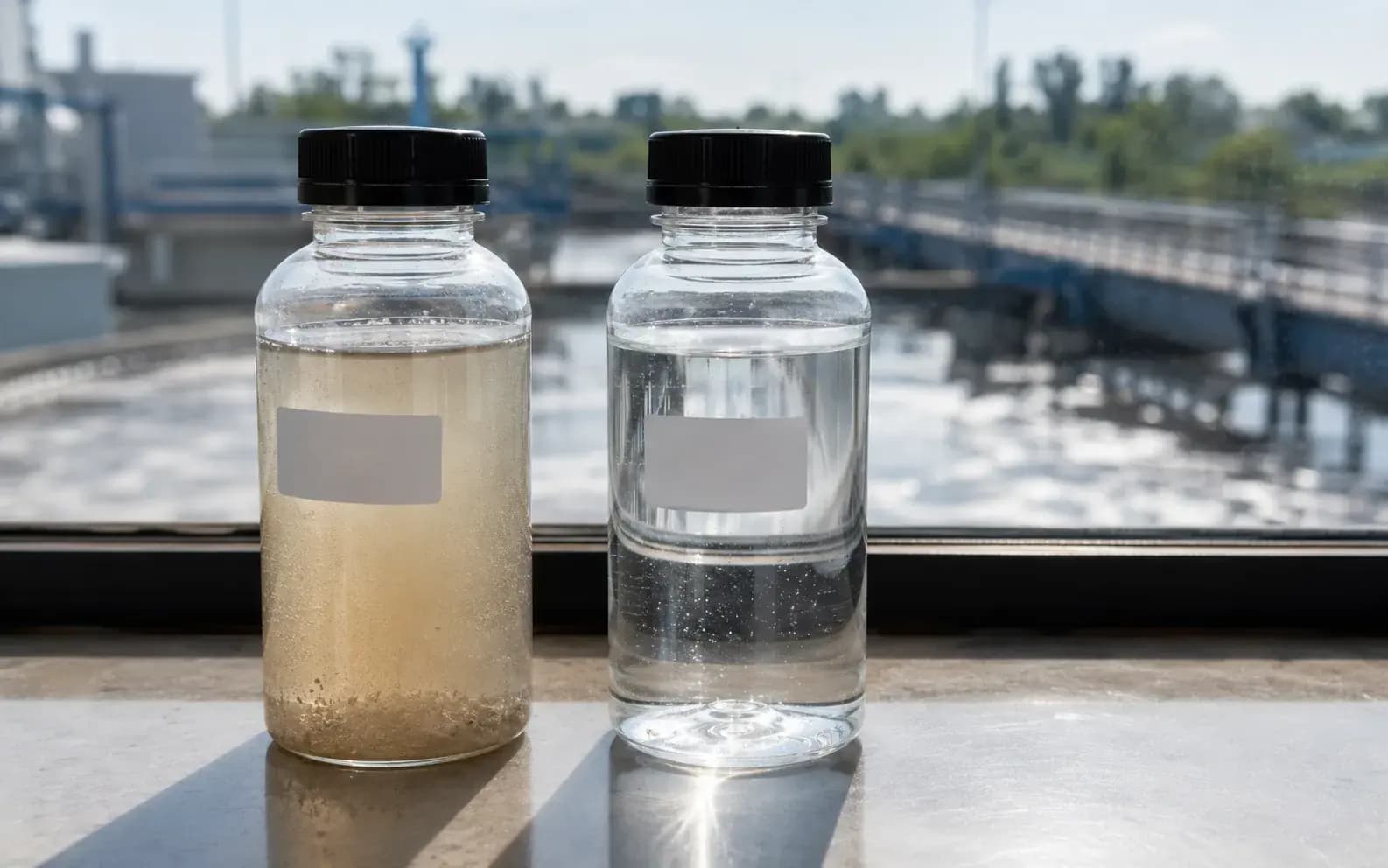
KIPL designs to the sewage a site will realistically generate rather than to a generic per-capita template, because a plant sized on optimistic occupancy or understated organic load is exactly the plant that fails when consent conditions are tested. Where the clearance or the local building bye-law requires treated sewage to be reused for flushing and landscape irrigation, we carry the tertiary train, treated-water storage and the dual-plumbing interface through the design rather than leaving reuse as an afterthought bolted on at commissioning.
What you get
The deliverables, in hand.
- Authority
- CPCB / SPCB discharge standards · CPHEEO sewerage manual
- Typical timeline
- Weeks; driven by site survey and influent data availability
- Design basis report: design flow in KLD/MLD, peak factors, influent characteristics
- Process design and mass balance for the selected technology
- Hydraulic profile, unit sizing and civil/structural general arrangement drawings
- Electrical, instrumentation and control scheme with equipment data sheets
- BOQ, capital cost estimate and tender-ready technical specifications
- Detailed Project Report with implementation schedule and O&M cost projection
Straight answers
Design & DPR: common questions.
01What does an STP Detailed Project Report contain?
A design basis, the process design and mass balance, unit sizing and hydraulic profile, civil and structural drawings, equipment specifications and data sheets, the electrical and instrumentation scheme, a BOQ with capital cost estimate, an implementation schedule and a projection of operating cost. It is the document on which a plant is sanctioned, tendered and later built.
02How is STP capacity decided, and why KLD rather than MLD?
Capacity follows design flow: the population or occupancy served, the per-capita water supply, the fraction returning as sewage, and a peak factor for the diurnal pattern. Building, campus and industrial-township plants are usually a few hundred to a few thousand KLD, so KLD is the natural unit; municipal plants run to several MLD and are stated in MLD. The same calculation underlies both.
03Which discharge standard does the design have to meet?
The standard set in the plant's Consent to Operate, which follows the CPCB general standards as adopted or tightened by the State Pollution Control Board and by the mode of disposal: land, surface water, sewer or reuse. Reuse-linked conditions in a building Environment Clearance are frequently stricter than the general discharge norm, so the design is fixed against the consent and clearance together, not against a textbook number.
04How much land does an STP need?
It depends almost entirely on the technology and the extent of covering. Attached-growth and membrane processes such as MBBR and MBR are compact and are what basement and podium installations are usually built on; conventional activated sludge and pond-based systems need considerably more area. Land availability is often the constraint that decides technology rather than the other way round, which is why footprint is settled in the design basis.
05Does the design have to include treated-water reuse?
For most building, township and campus projects, yes in practice. Reuse of treated sewage for flushing and landscape irrigation is a routine condition of the Environment Clearance and of many municipal building bye-laws, so the design carries a tertiary polishing train, treated-water storage and a separate flushing line. Retrofitting dual plumbing after the building is up is far more expensive than designing it in.
06Do we still need a DPR if the plant is going out on a turnkey basis?
A DPR remains worth having, because it is what lets a client compare turnkey bids on a common design basis instead of on whatever each vendor chose to assume. Without it, quotations differ in capacity assumptions, influent load and scope, and the lowest number usually turns out to be the smallest plant rather than the best value.
07What data is needed before design can start?
The served population or occupancy and water-supply figures, an influent characterisation where existing sewage can be sampled, the disposal or reuse route, the discharge standard from the consent, the available plot and its levels, and the power supply position. Where the plant serves a new development and no sewage exists to sample, design load is derived from established per-capita norms and stated explicitly as an assumption.
Within Sewage Treatment Plants
Part of the whole route, the other components.
Primary sources
Check it at source.
This page describes CPCB / SPCB discharge standards · CPHEEO sewerage manual. The regulation and the filing portal are public, these are the official endpoints, not our summary of them.
Relevant proof
Where this stage has already been delivered.

Shapoorji Pallonji · Kanpur & Unnao, Uttar Pradesh
NAMAMI GANGE PROGRAMME
Environmental & Social Impact Assessment and EHS reporting for existing and proposed sewage treatment plants on the Ganga.
Where we do this
Sewage Treatment Plants on the ground.
The authority, the timeline and the local ground differ by city. These pages set out how sewage treatment plants actually runs in each.
Featured projects
Work that carries its own evidence.
Our expertise
One team across the whole environmental brief.
Design & DPR is one stage of one practice. Most projects need several, and the commitments made at clearance are the ones we build and maintain.
Who we do this for
Sewage Treatment Plants reads differently by industry.
- 01
Real Estate & ConstructionCore
The EC and the consent both commit a residential project to on-site sewage treatment meeting discharge norms, sized to real occupancy rather than to the brochure.
Sewage Treatment Plants for Real Estate & Construction - 02
Townships & Area DevelopmentCore
Township sewage is assessed as a system across phases, with treated-water reuse for flushing and landscape written into the clearance.
Sewage Treatment Plants for Townships & Area Development - 03
Hospitality, Healthcare & EducationCore
Occupancy runs 365 days, so the STP carries a live daily load that inspection sampling tests against consent discharge norms.
Sewage Treatment Plants for Hospitality, Healthcare & Education - 04
Municipal CorporationsCore
ULB sewage schemes are built and upgraded against CPCB discharge norms and NGT directions on untreated urban sewage.
Sewage Treatment Plants for Municipal Corporations - 05
Industrial Corridors & MIDCCore
Shared sewage infrastructure with treated-water reuse is designed at node scale, ahead of the tenants who will load it.
Sewage Treatment Plants for Industrial Corridors & MIDC - 06
River & Water MissionsCore
Untreated urban sewage is the dominant load on a river, so STP capacity, upgradation and performance are the programme's spine.
Sewage Treatment Plants for River & Water Missions - 07
Corporate CampusesCore
Campus sewage treatment with full reuse for flushing, cooling and landscape is what a zero-discharge campus claim actually rests on.
Sewage Treatment Plants for Corporate Campuses - 08
Data Centres & IT Parks
Campus sewage must be treated and reused for cooling make-up and landscape to hold the zero-discharge position taken in the EC.
Sewage Treatment Plants for Data Centres & IT Parks
Trusted by
The organisations this work is done for.












In the press