










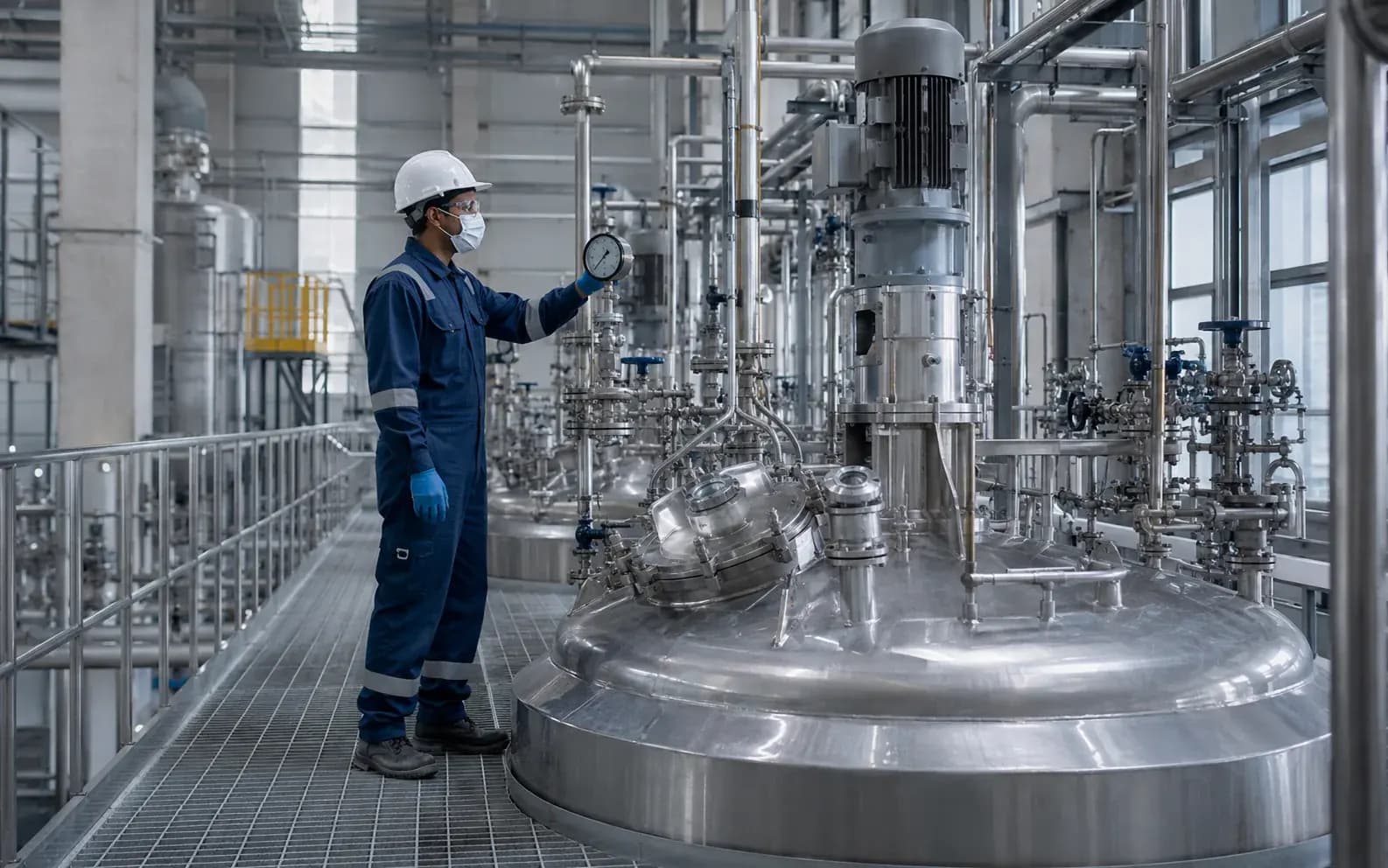
Environment Clearance · Distilleries & Ethanol
Environment Clearance for Distilleries and Ethanol Projects: item 5(g)
A distillery or ethanol project takes its Environment Clearance under item 5(g) of the EIA Notification 2006, and the appraisal turns almost entirely on one question: where the spent wash goes.
Screening view on your project, with the category and route named. No obligation.
What this means for distilleries & ethanol
Item 5(g) treats distilleries as a listed activity, and the schedule draws its line by feedstock and scale: molasses-based distilleries are appraised centrally, while cane juice and non-molasses distilleries fall either side of a capacity threshold. Whichever forum hears it, the file is decided by the effluent. Distillation produces spent wash at several litres for every litre of alcohol, at a COD and BOD strength an order of magnitude above ordinary industrial effluent, and no amount of well-argued air quality modelling or socio-economic analysis compensates for a disposal route that does not hold together. Committees appraising these projects know the sector's weak proposals by pattern: a storage lagoon sized on optimistic assumptions, a bio-methanation stage with no answer for what leaves it, an incineration boiler shown on a flow diagram with no fuel or ash balance behind it.
How KIPL runs it
KIPL builds the 5(g) case from the spent wash outward. The quantity is derived from the feedstock and the design capacity rather than quoted as a ratio; the treatment route is set out stage by stage with the volume and strength entering and leaving each (bio-methanation and biogas recovery, concentration in a multiple-effect evaporator, concentrated spent wash to the incineration boiler, condensate polishing and reuse) and the storage that bridges the gaps is sized against the days the regulator permits, in lined and monitored lagoons. Around that sit the things that follow from it: odour, boiler emissions, ash management, groundwater monitoring around storage, and the green belt buffer the surrounding villages will ask for at the public hearing. What goes wrong otherwise is a clearance either refused or granted on conditions the plant cannot operate to, which is the worse of the two outcomes.
- 5(g)
Schedule I, item 5(g)
Distilleries are a listed activity, with molasses-based units appraised centrally and cane juice and non-molasses units categorised by capacity: the feedstock decision therefore sets the appraisal forum.
- Spent wash
The effluent decides the case
Several litres of very high strength spent wash per litre of alcohol means the disposal route is the substance of the appraisal, not a chapter within it.
- ZLD
Zero liquid discharge is the expectation
For molasses-based distillation the regulator's default position is zero liquid discharge, and the file has to show the concentration and incineration or equivalent route that achieves it.
What you receive
Written for distilleries & ethanol, not adapted from a template.
- 01Category determination under item 5(g) by feedstock and capacity, and Form-1 with the distillation configuration stated accurately
- 02Spent wash quantification from feedstock and capacity, with strength characterisation for each stream including spent lees and condensate
- 03Stage-by-stage treatment and disposal case: bio-methanation and biogas, evaporation and concentration, incineration boiler and ash
- 04Storage design and days of holding, with lining, leachate protection and groundwater monitoring around the lagoons
- 05Odour, boiler emission and ash management assessment, and green belt buffer proposal for the surrounding settlements
- 06Public-hearing preparation on the odour and groundwater concerns the villages will raise, and appraisal support to the clearance letter
Questions from distilleries & ethanol
What distilleries & ethanol ask before appointing us.
Answered against the regulation as it stands, not as a sales pitch. If your situation is not here, ask us directly.
Ask a question →What decides whether a distillery is Category A or B?
The schedule to the EIA Notification 2006 splits item 5(g) by feedstock and capacity: molasses-based distilleries are appraised centrally, while cane juice and non-molasses based units are placed either side of a capacity threshold. The feedstock and capacity chosen for the project therefore determine the appraisal forum before anything else about the file does.
Why does spent wash dominate the appraisal?
Because of its volume and strength. Distillation produces several litres of spent wash for every litre of alcohol, at a COD far above ordinary industrial effluent, and there is no dilution or discharge route available for it. A file without a credible, staged disposal route has no case, regardless of the quality of the rest of the study.
Is zero liquid discharge mandatory for a distillery?
For molasses-based distillation it is the regulator's default expectation, and the treatment train has to demonstrate how it is reached: typically bio-methanation, concentration in a multiple-effect evaporator and incineration of the concentrate, with condensate polished and reused. The precise requirement is set by the conditions imposed on the project, so the clearance and consent are the authority for it.
Our sugar mill is adding ethanol capacity: is a fresh clearance needed?
New or expanded distillation capacity is assessed under item 5(g) in its own right, even where it sits on an existing mill's premises. It is scoped against the existing footprint, and the mill's own compliance record and shared utilities (water, boiler, effluent) form part of the assessment.
Is KIPL accredited for distilleries?
Yes. Distilleries under item 5(g) is one of the sectors on KIPL's QCI-NABET certificate, alongside the sugar industry under item 5(j), which matters where a mill is taking both files forward together. The certificate is public and can be verified on the NABET register.
How long does a distillery clearance take?
It depends on the appraisal forum, the baseline season required by the Terms of Reference and the public-hearing calendar. What is within the applicant's control is the spent wash case: files that arrive with a stage-wise balance and a defensible storage and incineration route move in fewer appraisal cycles than files that leave the disposal route to be argued in committee.
Stage by stage
How environment clearance actually runs, step by step.
Also for distilleries & ethanol
The rest of the environmental brief for this sector.
Primary sources
Verify any of this at the source.

Relevant proof
Cyber Square IT Park, Nerul
Category B1 under Schedule 8(b): EIA and EMP prepared and carried through SEIAA appraisal for the expansion at Nerul.
- Built-up
- 2,85,592.45 m²
- EC granted
- 07.10.2026
Where we do this
Environment Clearance for distilleries & ethanol, city by city.
Other sectors
Who else we run environment clearance for.
Next step
Tell us the project, and we will tell you the category and the route.
Screening is the cheapest stage to get right and the most expensive to get wrong. We will say plainly what environment clearance your distilleries & ethanol project needs, and what it does not.





























































Start the conversation