










Baseline data collection: the measured environment an EIA is built on.
An impact assessment is only as credible as its baseline: the measured state of the environment before a project, against which every predicted impact is judged.
What it is
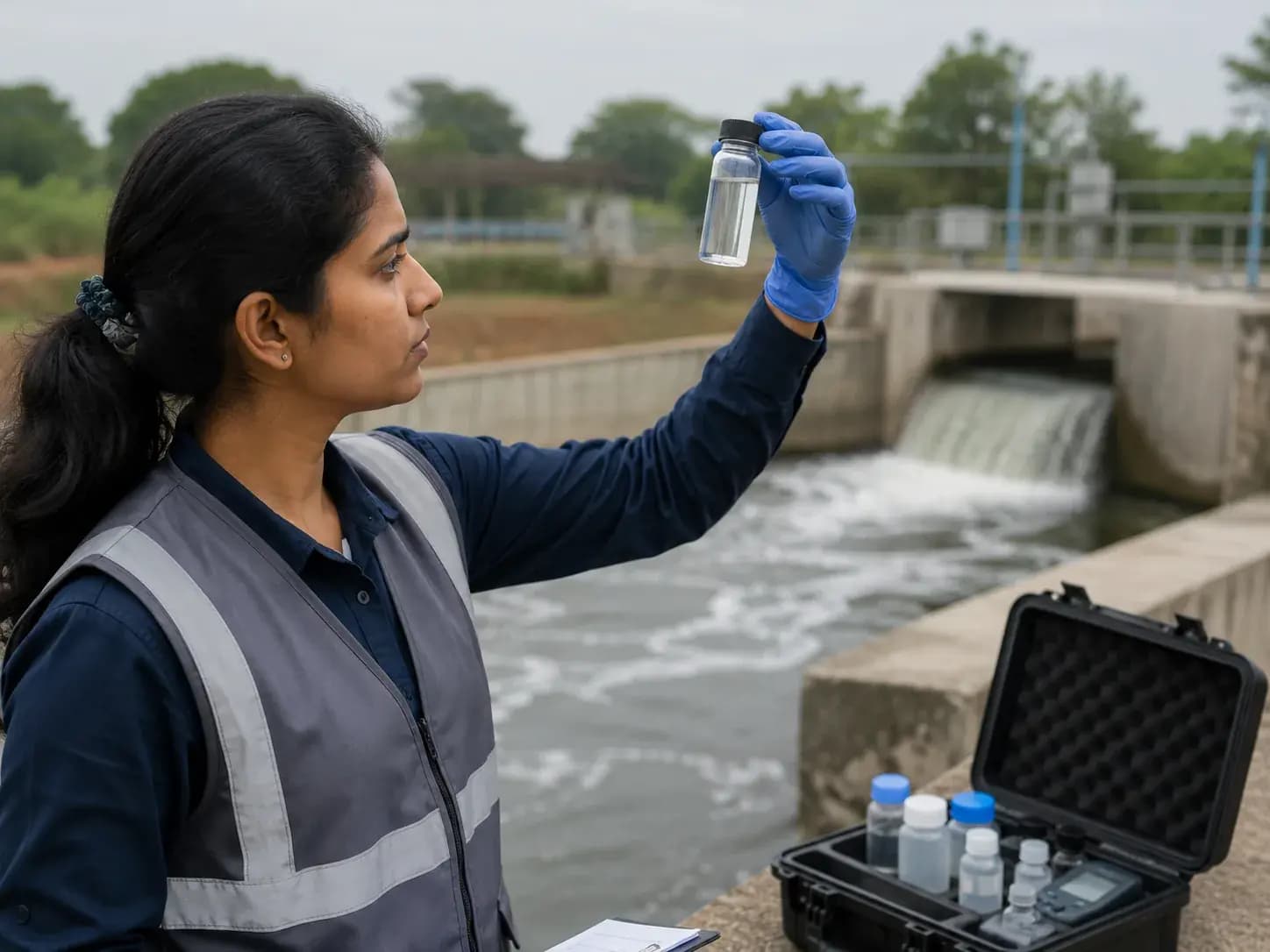
Baseline data collection records the existing environmental conditions around a site: ambient air quality, water quality, noise, soil, meteorology, ecology and the socio-economic setting. It is typically gathered over a full season (excluding monsoon for many parameters), because a single reading is not a baseline, a representative period is.
KIPL collects baseline data to the granted Terms of Reference through proper sampling, accredited-laboratory analysis and field survey, so the numbers hold up under appraisal. Weak or thin baseline data is the most common reason an EIA is questioned; a robust baseline is quietly what makes the rest of the assessment defensible.
What you get
The deliverables, in hand.
- Authority
- To the granted ToR · accredited-laboratory analysis
- Typical timeline
- One season (about three months); longer if annual
- Ambient air-quality monitoring across the study area
- Surface- and ground-water quality sampling
- Noise, soil and meteorological monitoring
- Ecological and biodiversity survey
- Socio-economic baseline of the study area
Straight answers
Baseline Data Collection: common questions.
01Why is baseline data collected over a season?
Because environmental conditions vary through the year, a single reading isn't representative. A season of monitoring (commonly one non-monsoon quarter, sometimes a full year) captures a defensible picture of the pre-project environment, which is the reference every predicted impact is measured against.
02What does environmental baseline data include?
Ambient air quality, surface and ground water quality, noise levels, soil characteristics, meteorology, ecology and biodiversity, and the socio-economic profile of the study area: the full state of the environment before the project, to the extent the Terms of Reference require.
03Why does baseline quality matter at appraisal?
Because the whole impact assessment is built on it. Thin, non-representative or poorly analysed baseline data is the most common weakness an appraisal committee flags, sending the EIA back. Robust, properly sampled and lab-analysed baseline data is what lets the assessment stand.
Within Environment Clearance
Part of the whole route, the other components.
Relevant proof
Where this stage has already been delivered.

Greenscape IT Park LLP · MIDC, Nerul, Navi Mumbai
Cyber Square IT Park, Nerul
Category B1 under Schedule 8(b): EIA and EMP prepared and carried through SEIAA appraisal for the expansion at Nerul.
Where we do this
Environment Clearance on the ground.
The authority, the timeline and the local ground differ by city. These pages set out how environment clearance actually runs in each.
Featured projects
Work that carries its own evidence.

Our expertise
One team across the whole environmental brief.
Baseline Data Collection is one stage of one practice. Most projects need several, and the commitments made at clearance are the ones we build and maintain.
Who we do this for
Environment Clearance reads differently by industry.
- 01
Real Estate & ConstructionCore
Built-up area above the item 8(a) threshold means no foundation until SEIAA grants EC, so the clearance sits on the RERA critical path.
Environment Clearance for Real Estate & Construction - 02
Townships & Area DevelopmentCore
Above 150,000 sq.m or 50 ha the project is appraised under item 8(b) as a settlement, on cumulative water, waste, traffic and air load.
Environment Clearance for Townships & Area Development - 03
Data Centres & IT ParksCore
Hyperscale halls and IT park blocks cross the item 8(a) built-up threshold, with backup-fuel storage and cooling water driving the appraisal.
Environment Clearance for Data Centres & IT Parks - 04
Hospitality, Healthcare & EducationCore
Hotels, hospitals and institutional campuses above the item 8(a) built-up threshold are appraised on water demand and waste streams, not floor count.
Environment Clearance for Hospitality, Healthcare & Education - 05
Chemical IndustryCore
Item 5(f) synthetic organic chemicals draw the highest appraisal scrutiny in Schedule I, and Category A cases are judged by the MoEF&CC's EAC.
Environment Clearance for Chemical Industry - 06
Distilleries & EthanolCore
Item 5(g) appraisal turns almost entirely on spent wash: no credible disposal route, no clearance, regardless of how the rest of the file reads.
Environment Clearance for Distilleries & Ethanol - 07
Sugar IndustryCore
Crushing capacity increases reopen the item 5(j) clearance, and cogeneration or distillation alongside it changes the category and the scale.
Environment Clearance for Sugar Industry - 08
Mining & MineralsCore
Item 1(a) covers major and minor minerals alike, with cluster assessment for sand ghats and intense baseline and public-hearing scrutiny.
Environment Clearance for Mining & Minerals
Trusted by
The organisations this work is done for.















In the press