









CGWA Groundwater NOC · Mining & Minerals
CGWA Groundwater NOC for Mine Dewatering
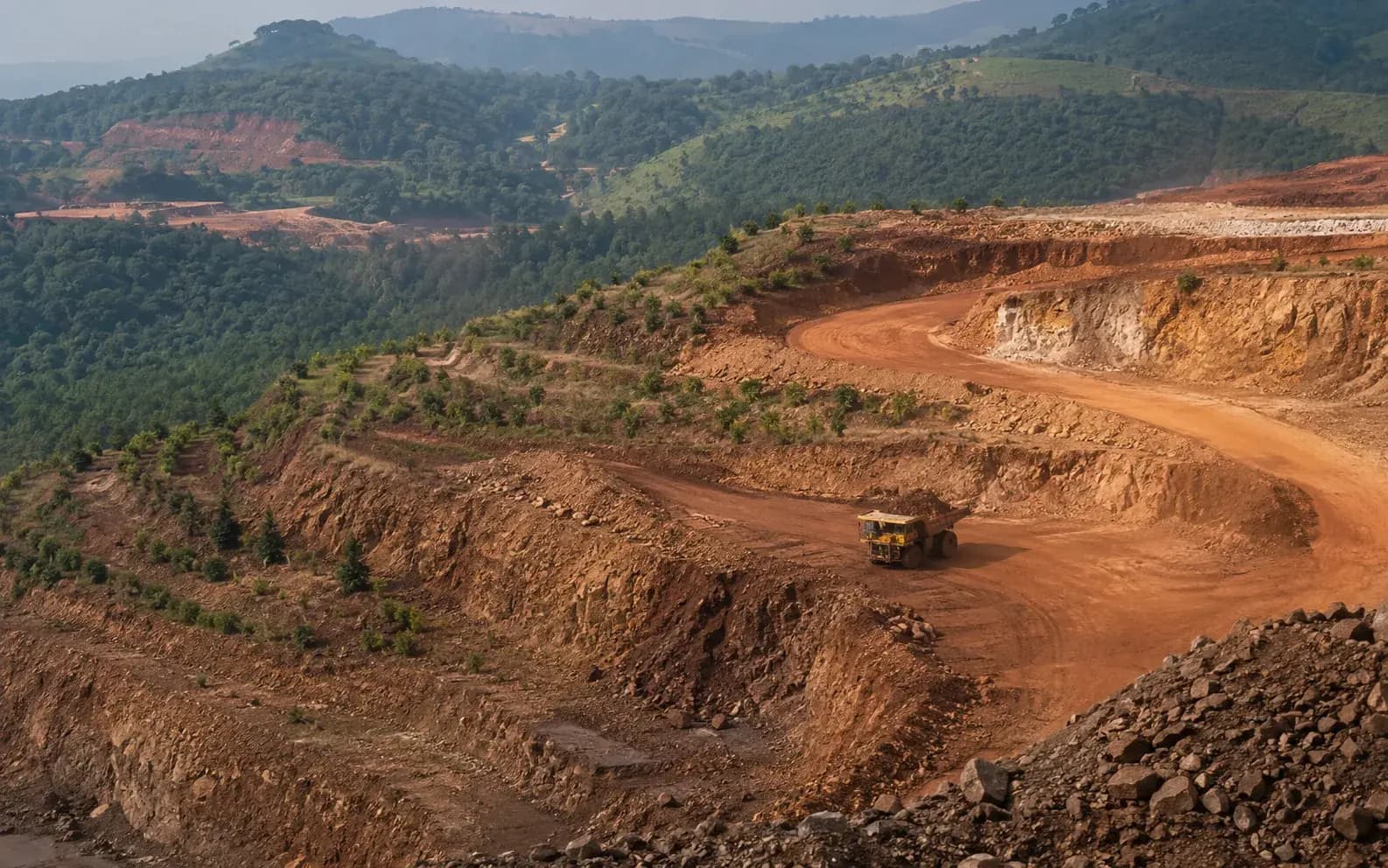
A mine that intersects the water table is abstracting groundwater whether or not it uses a drop of it, and that makes pit dewatering a Central Ground Water Authority question long before it is a pumping question.
Sector experience, not sector accreditation. KIPL has delivered work in this sector under an approved project coordinator. It is outside our QCI-NABET accredited scope, and we say so before any appointment.
Screening view on your project, with the category and route named. No obligation.
What this means for mining & minerals
Most mining clearances carry a condition restricting extraction to above the water table and requiring the Authority's permission before mining below it. That condition is where a great many operating mines quietly sit in breach, because the pit reaches the water table in the ordinary course of deepening and the dewatering starts as an operational necessity rather than as a decision anyone takes. The regulatory position is straightforward: water pumped out of a pit and discharged is abstraction, it is assessed on volume, and the assessment turns on the cone of depression it creates. What the Authority examines for a mine is different from what it examines for a factory: not how much water the project needs, but how far the drawdown extends, whether village wells and irrigation sources within that radius are affected, whether the discharge is being wasted or made available for community and agricultural use, and how the pit will behave after closure when pumping stops and the void fills. The application runs through the Bhuneer portal, which replaced the earlier NOCAP system, and the categorisation of the assessment unit as safe, semi-critical, critical or over-exploited shapes what is achievable.
How KIPL runs it
KIPL builds the hydrogeological case around the pit rather than around the borewell. That means the local aquifer characterised from the mine's own bore data and the surrounding wells, dewatering volumes estimated year by year against the mine plan's pit development rather than as a single figure, the predicted drawdown mapped against the village wells inside it, a piezometer network placed to measure the prediction, and a stated position on the post-closure void. Where dewatered water can be routed to village supply or irrigation, that is a stronger element of the application than any mitigation commitment. This is experience-led work: KIPL's QCI-NABET accreditation covers sectors 5(f), 5(g), 5(j), 8(a) and 8(b), not item 1(a) mining, and mining assignments are coordinated by a QCI-NABET approved mining Project Coordinator. The failure that costs most is deepening the pit past the water table without permission: because the resulting position is a clearance condition breached, an abstraction unauthorised, and a village well complaint with no monitoring data to answer it.
Dewatering is abstraction
Water pumped from a pit is regulated whether it is used or discharged. Volume, drawdown and impact on nearby sources drive the assessment, not the mine's own water demand.
- EC condition
Below-water-table mining needs permission
Mining clearances routinely restrict working to above the water table unless the Authority permits otherwise. A pit that deepens past it without that permission is in breach of its clearance.
- Bhuneer
The portal and the block category
Applications run through Bhuneer, which superseded NOCAP, and the safe, semi-critical, critical or over-exploited status of the assessment unit shapes what can be permitted.
What you receive
Written for mining & minerals, not adapted from a template.
- 01Hydrogeological report for the lease and its surroundings, built on mine bore data and local wells
- 02Year-wise dewatering volume estimate keyed to the mine plan's pit development
- 03Cone of depression modelling with village and irrigation wells identified inside the drawdown
- 04Piezometer network design and baseline water-level record
- 05Bhuneer application, abstraction charge assessment and NOC follow-through
- 06Dewatered water utilisation plan: dust suppression, community supply or irrigation release
Questions from mining & minerals
What mining & minerals ask before appointing us.
Answered against the regulation as it stands, not as a sales pitch. If your situation is not here, ask us directly.
Ask a question →Is KIPL accredited for mining?
No. KIPL's QCI-NABET accreditation covers sectors 5(f), 5(g), 5(j), 8(a) and 8(b); item 1(a) mining is not on the certificate. A groundwater NOC is a separate application to the Central Ground Water Authority that NABET accreditation does not attach to. On mining KIPL works from delivered project experience (GMDC's bauxite leases, the Kawatha manganese mine and district sand ghats) coordinated by Dr. Pramod Chaudhari, QCI-NABET approved as a Project Coordinator for mining projects.
Does a mine need a groundwater NOC even if it does not use the water?
Yes. The regulated activity is abstraction, and pumping water out of a pit is abstraction regardless of whether the water is consumed, discharged to a nallah or given away. The assessment is based on the volume removed and the drawdown it creates, so a mine that discharges everything it pumps still needs to be authorised for it.
What does mining below the water table require?
Specific permission. Mining clearances typically restrict working to above the water table and require the Central Ground Water Authority's approval before going below it, supported by a hydrogeological assessment of the drawdown and its effect on surrounding sources. The permission has to be in place before the pit reaches that level, not applied for once dewatering has started.
What is the cone of depression and why does it decide the application?
It is the drawdown surface created around a pit or well by continuous pumping, deepest at the pit and diminishing outward. Its radius determines which village wells, irrigation sources and surface water bodies are affected, and that is the question the Authority is actually deciding. A well-documented cone with a piezometer network to verify it is a far stronger application than an assurance that no impact is expected.
What happens to the pit after closure?
Once pumping stops the void fills and stabilises at or near the recovered water table, which is why the closure plan has to state what the final void will be: a water body with defined use and safety measures, or backfilled ground. The Authority and the closure plan are asking the same question from different directions, so the post-closure position should be consistent in both documents.
Can dewatered water be supplied to nearby villages?
Where the quality permits it and a distribution arrangement exists, yes, and it usually strengthens both the groundwater application and the project's standing at the public hearing. It has to be set up as a real arrangement with a responsible party and a maintenance commitment, however, because a supply that stops after two years is worse for the project's credibility than one never promised.
Stage by stage
How cgwa groundwater noc actually runs, step by step.
Also for mining & minerals
The rest of the environmental brief for this sector.
Primary sources
Verify any of this at the source.

Relevant proof
NAMAMI GANGE PROGRAMME
Environmental & Social Impact Assessment and EHS reporting for existing and proposed sewage treatment plants on the Ganga.
- Largest existing STP
- 130 MLD
- Assessed
- 5 plants
Where we do this
CGWA Groundwater NOC for mining & minerals, city by city.
Other sectors
Who else we run cgwa groundwater noc for.
Next step
Tell us the project, and we will tell you the category and the route.
Screening is the cheapest stage to get right and the most expensive to get wrong. We will say plainly what cgwa groundwater noc your mining & minerals project needs, and what it does not.





























































Start the conversation