









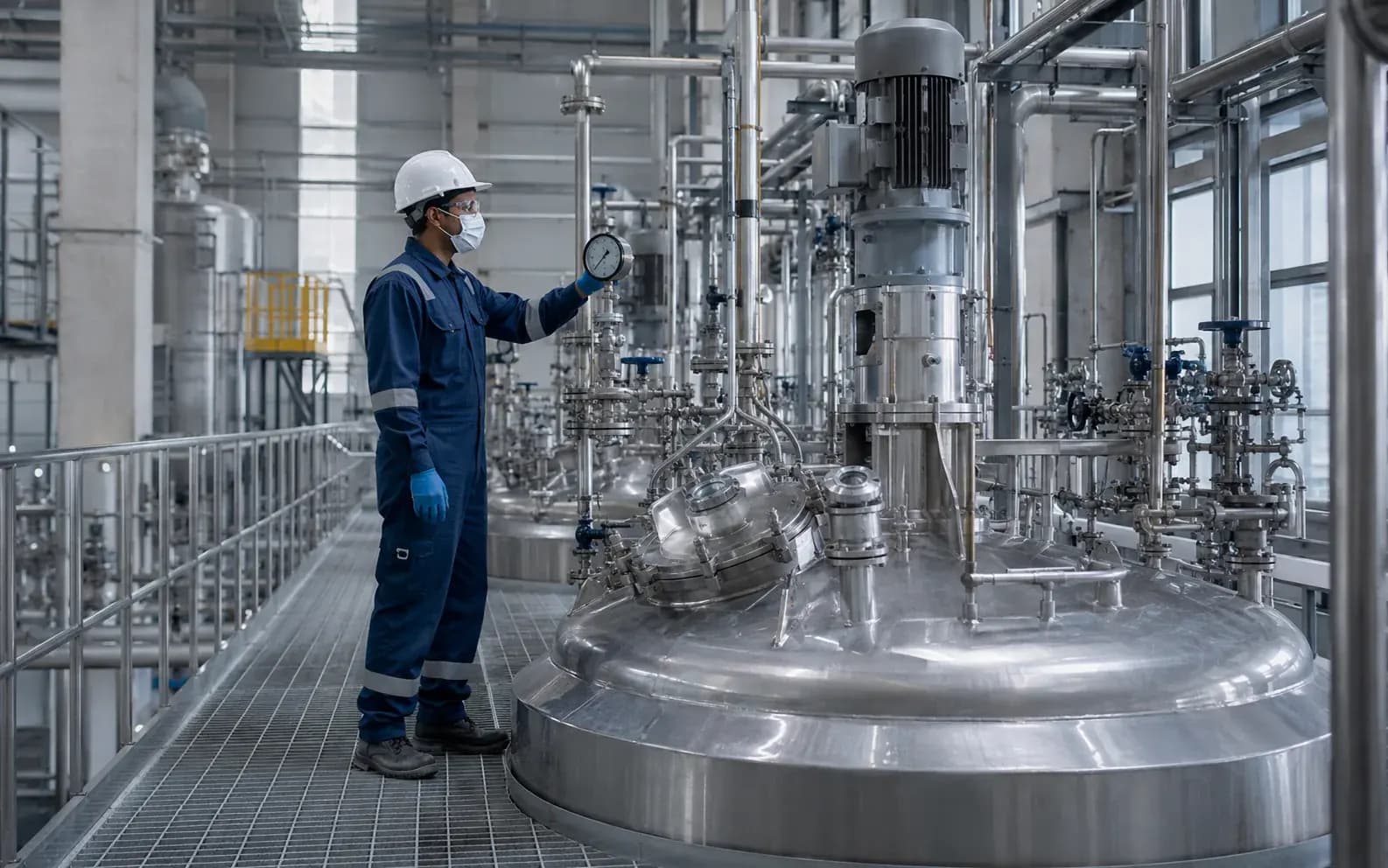
CGWA Groundwater NOC · Distilleries & Ethanol
CGWA Groundwater NOC for Distilleries
A distillery's fermentation, cooling and boiler water demand is substantial, and much of India's sugar belt sits in stressed groundwater blocks: which makes the CGWA NOC one of the harder permissions on an ethanol project.
Screening view on your project, with the category and route named. No obligation.
What this means for distilleries & ethanol
Groundwater abstraction for industrial use needs a No Objection Certificate from the Central Ground Water Authority, and the outcome depends heavily on how the assessment unit is categorised: safe, semi-critical, critical or over-exploited. The difficulty for distilleries is geographic as much as technical: cane growing areas are irrigation-intensive by definition, so the blocks where molasses is available are frequently the blocks where groundwater is already stressed. The plant's own demand is not trivial either, spread across fermentation and process make-up, cooling tower losses, boiler feed and the condensate and cleaning circuits. Applying for that demand as a single figure, in a stressed block, without a reduction case behind it, is how these applications stall.
How KIPL runs it
KIPL constructs the application around what the process itself can return. A distillery generates large volumes of evaporator condensate and, where the mill is attached, cane juice condensate: water that, polished appropriately, displaces a substantial part of the fresh water demand and is far more persuasive to the authority than a promise of efficiency. Cooling cycles of concentration, condensate recovery from the boiler, and recharge structures sized against the site's own catchment complete the case, alongside a hydrogeological report on the actual aquifer rather than a district-level description. Seasonality is stated openly, since a molasses distillery attached to a mill draws differently in and out of the crushing season. What goes wrong otherwise is a project cleared and consented for a capacity its water permission cannot support: the constraint that appears last and binds hardest.
- Block category
The sugar belt is often stressed
Cane-growing areas are irrigation-intensive, so distilleries are frequently sited in semi-critical, critical or over-exploited assessment units where abstraction is constrained.
- Process demand
Fermentation and cooling are water-intensive
Process make-up, cooling tower losses, boiler feed and cleaning circuits together produce a demand that has to be justified use by use rather than stated as a total.
- Condensate
The process returns water
Evaporator and, where a mill is attached, cane juice condensate are recoverable volumes that materially reduce fresh water demand and strengthen the application.
What you receive
Written for distilleries & ethanol, not adapted from a template.
- 01Water demand assessment by use (fermentation and process, cooling makeup, boiler feed, cleaning and domestic) with seasonal variation stated
- 02Condensate recovery and reuse case from the evaporator train and, where applicable, the attached sugar mill
- 03Hydrogeological report for the site, covering aquifer characteristics, existing abstraction and water-level behaviour
- 04Rainwater harvesting and recharge design sized to the site's catchment and rainfall
- 05NOC application on the CGWA portal with the demand reconciled to the EC water balance and the consent
- 06Compliance framework for NOC conditions: metering, water-level monitoring and periodic returns
Questions from distilleries & ethanol
What distilleries & ethanol ask before appointing us.
Answered against the regulation as it stands, not as a sales pitch. If your situation is not here, ask us directly.
Ask a question →Why are distillery water applications harder than most?
Because of where distilleries sit. Molasses supply ties them to cane-growing areas, which are irrigation-intensive and therefore frequently classified semi-critical, critical or over-exploited. The plant's demand is real and the block's headroom is limited, so the application has to lead with reduction and recovery rather than with the requirement.
Can condensate reuse actually reduce our demand significantly?
Yes: a distillery's evaporator train produces a substantial condensate volume, and where a sugar mill is attached, cane juice condensate adds to it. Polished appropriately, this displaces a large part of the fresh water requirement, and because it is a physical recovery rather than an efficiency promise it carries weight in the application.
How does seasonality affect the NOC?
A molasses distillery attached to a mill has a demand profile that differs sharply in and out of the crushing season, and stating that honestly is better than applying on an annualised average. The authority is assessing abstraction against aquifer stress, and a peak-season figure disclosed with its duration is easier to assess than an average that hides it.
What if the block is over-exploited?
Abstraction is significantly constrained and may not be permitted at the volume sought. The realistic route combines maximum condensate and cooling recovery, an alternate supply for part of the load where one exists, and firm recharge commitments: and, where the gap remains, a reassessment of the capacity the site can actually support.
Does the NOC have to match our Environment Clearance?
It has to be consistent with it. The abstraction sought, the water balance in the EIA and the effluent volumes in the consent describe the same water, and a divergence between them is visible to each authority. Reconciling the three before filing is the least expensive point at which to do it.
What obligations continue after the NOC is granted?
Typically metering of abstraction, periodic water-level monitoring and reporting, construction and maintenance of the committed recharge structures, and the water conservation fee where applicable. These are recurring, so they belong on the plant's compliance calendar with the consent and clearance conditions.
Stage by stage
How cgwa groundwater noc actually runs, step by step.
Also for distilleries & ethanol
The rest of the environmental brief for this sector.
Primary sources
Verify any of this at the source.

Relevant proof
NAMAMI GANGE PROGRAMME
Environmental & Social Impact Assessment and EHS reporting for existing and proposed sewage treatment plants on the Ganga.
- Largest existing STP
- 130 MLD
- Assessed
- 5 plants
Where we do this
CGWA Groundwater NOC for distilleries & ethanol, city by city.
Other sectors
Who else we run cgwa groundwater noc for.
Next step
Tell us the project, and we will tell you the category and the route.
Screening is the cheapest stage to get right and the most expensive to get wrong. We will say plainly what cgwa groundwater noc your distilleries & ethanol project needs, and what it does not.





























































Start the conversation