









Hydrogeological Report: the technical case that a proposed groundwater withdrawal is sustainable.
A hydrogeological report characterises the aquifer a project proposes to draw from and assesses what that withdrawal will do to it, the technical evidence a Central Ground Water Authority NOC is decided on.
What it is
The Central Ground Water Authority regulates groundwater abstraction under directions issued through the Environment (Protection) Act 1986. Above the withdrawal quantum specified in the applicable CGWA guidelines, and in areas where the assessment unit is semi-critical, critical, over-exploited or notified, an application must be supported by a hydrogeological study with an impact assessment. The study establishes the aquifer system and its parameters, the depth to water level and its trend, the existing abstraction structures in the vicinity, the yield the proposed structures can sustain, and the predicted drawdown on neighbouring users.
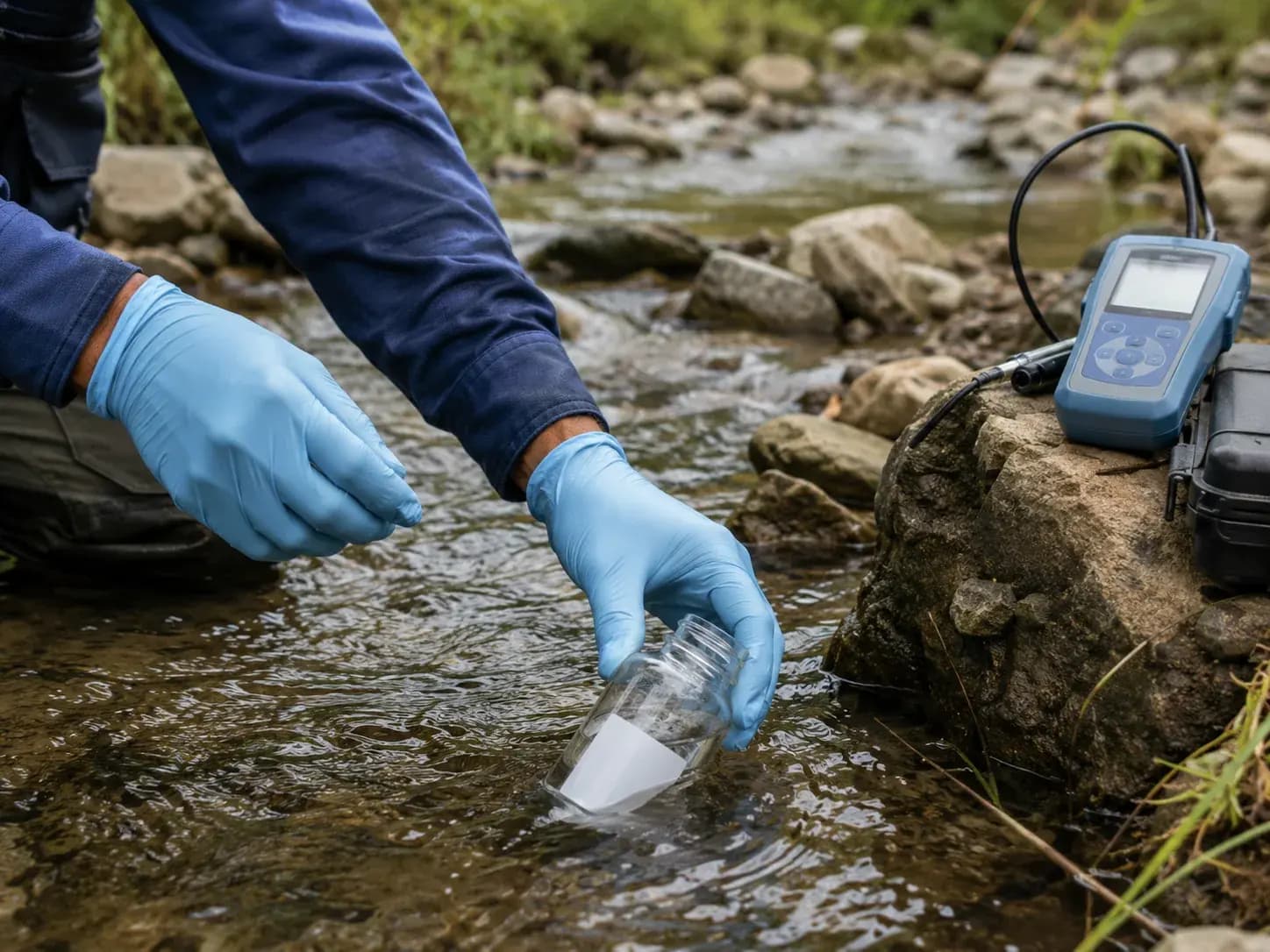
KIPL builds the report from field investigation and record, not from desk assumption: inventory of existing wells, water level measurement, pumping and recuperation tests where the setting allows, water quality analysis, and interpretation against the Central Ground Water Board assessment for the block or taluka. Applications are commonly returned because the abstraction proposed is not reconciled with the demand actually established, because no impact on existing users has been assessed, or because the recharge measures proposed have no hydrogeological basis at that site.
What you get
The deliverables, in hand.
- Authority
- CGWA guidelines · Environment (Protection) Act 1986 · CGWB assessment
- Typical timeline
- Field investigation plus interpretation; weeks, longer where tests are extensive
- Aquifer characterisation and hydrogeological setting of the site
- Well inventory, water level measurement and trend interpretation
- Pumping and recuperation test data with aquifer parameters derived
- Groundwater quality analysis for the proposed source
- Impact assessment, predicted drawdown and effect on existing users
- Recharge and mitigation measures sized to the site, with conclusions for the NOC file
Straight answers
Hydrogeological Report: common questions.
01When is a hydrogeological report required for a CGWA NOC?
It is required where the proposed abstraction exceeds the quantum specified in the applicable CGWA guidelines, and generally wherever the project falls in a semi-critical, critical, over-exploited or notified assessment unit. Smaller withdrawals in safe areas may be processed on a simpler basis, so the requirement should be checked against the category of the block and the volume proposed.
02What does the report have to establish?
That the aquifer can sustain the proposed withdrawal, and that the withdrawal will not unacceptably affect existing users or the resource. That means aquifer parameters, water level behaviour, sustainable yield of the proposed structures, predicted drawdown, water quality, and mitigation or recharge measures appropriate to the hydrogeology of the site.
03How is it different from a water balance study?
A water balance study works from the demand side: how much water the project needs, from which sources, and how much it recycles and discharges. The hydrogeological report works from the resource side, whether the aquifer can supply the abstraction sought without unacceptable impact. A complete NOC application needs both, and the two must agree on the same abstraction figure.
04Who assesses the block category?
The Central Ground Water Board carries out the periodic dynamic groundwater resource assessment, jointly with the States, which classifies each assessment unit as safe, semi-critical, critical or over-exploited on its stage of extraction. CGWA applies that classification when deciding an NOC, so the current category of the block is the starting point of the report.
05Are pumping tests always required?
Not in every case, but where the abstraction is significant or the setting is stressed, field-derived aquifer parameters are what make the impact assessment credible. Reports resting entirely on published regional data, without site measurement, are the ones most likely to be queried on their conclusions.
06Who can prepare the report?
CGWA expects the hydrogeological investigation and impact assessment to be carried out by an agency or professional competent in groundwater investigation, and the applicable guidelines specify the accreditation or empanelment expected. It is worth confirming that position before commissioning the study, because a report from an unrecognised source can be rejected on that ground alone.
07What happens to the report after the NOC is granted?
It becomes the technical basis of the NOC conditions: the permitted abstraction quantum, the recharge measures to be implemented, the piezometer and metering obligations, and the water level monitoring to be reported. The commitments made in the report are therefore obligations the project carries for the life of the NOC.
Within CGWA Groundwater NOC
Part of the whole route, the other components.
Primary sources
Check it at source.
This page describes CGWA guidelines · Environment (Protection) Act 1986 · CGWB assessment. The regulation and the filing portal are public, these are the official endpoints, not our summary of them.
Relevant proof
Where this stage has already been delivered.

Shapoorji Pallonji · Kanpur & Unnao, Uttar Pradesh
NAMAMI GANGE PROGRAMME
Environmental & Social Impact Assessment and EHS reporting for existing and proposed sewage treatment plants on the Ganga.
Where we do this
CGWA Groundwater NOC on the ground.
The authority, the timeline and the local ground differ by city. These pages set out how cgwa groundwater noc actually runs in each.
Featured projects
Work that carries its own evidence.



Our expertise
One team across the whole environmental brief.
Hydrogeological Report is one stage of one practice. Most projects need several, and the commitments made at clearance are the ones we build and maintain.
Who we do this for
CGWA Groundwater NOC reads differently by industry.
- 01
Real Estate & ConstructionCore
Borewells for construction water and flushing supply need a CGWA NOC through Bhuneer, and most Mumbai-belt talukas sit in semi-critical or over-exploited blocks.
CGWA Groundwater NOC for Real Estate & Construction - 02
Townships & Area DevelopmentCore
The township water balance has to reconcile municipal supply, groundwater abstraction and reuse before CGWA will issue an NOC on the abstraction component.
CGWA Groundwater NOC for Townships & Area Development - 03
Distilleries & EthanolCore
Fermentation and cooling water demand is high and the sugar belt sits in stressed blocks, so groundwater abstraction is scrutinised at NOC stage.
CGWA Groundwater NOC for Distilleries & Ethanol - 04
Data Centres & IT Parks
Evaporative cooling makes a data centre a serious water consumer, and any groundwater component needs a Bhuneer NOC with a defensible water balance.
CGWA Groundwater NOC for Data Centres & IT Parks - 05
Hospitality, Healthcare & Education
Round-the-clock water demand for laundry, kitchens and cooling usually means a borewell, and therefore a CGWA NOC with a water balance behind it.
CGWA Groundwater NOC for Hospitality, Healthcare & Education - 06
Chemical Industry
Process and cooling water drawn from borewells needs a Bhuneer NOC, and the hydrogeological report must survive the same scrutiny as the EIA.
CGWA Groundwater NOC for Chemical Industry - 07
Sugar Industry
Mills in the Krishna and Godavari belts draw groundwater in blocks already assessed as semi-critical, so the NOC case has to be built carefully.
CGWA Groundwater NOC for Sugar Industry - 08
Industrial & Manufacturing
Units outside MIDC water supply run on borewells, and a Bhuneer NOC with a hydrogeological report is a precondition to consent.
CGWA Groundwater NOC for Industrial & Manufacturing
Trusted by
The organisations this work is done for.















In the press