









CGWA Groundwater NOC · Industrial Corridors & MIDC
CGWA Groundwater NOC for Industrial Corridors and MIDC Nodes
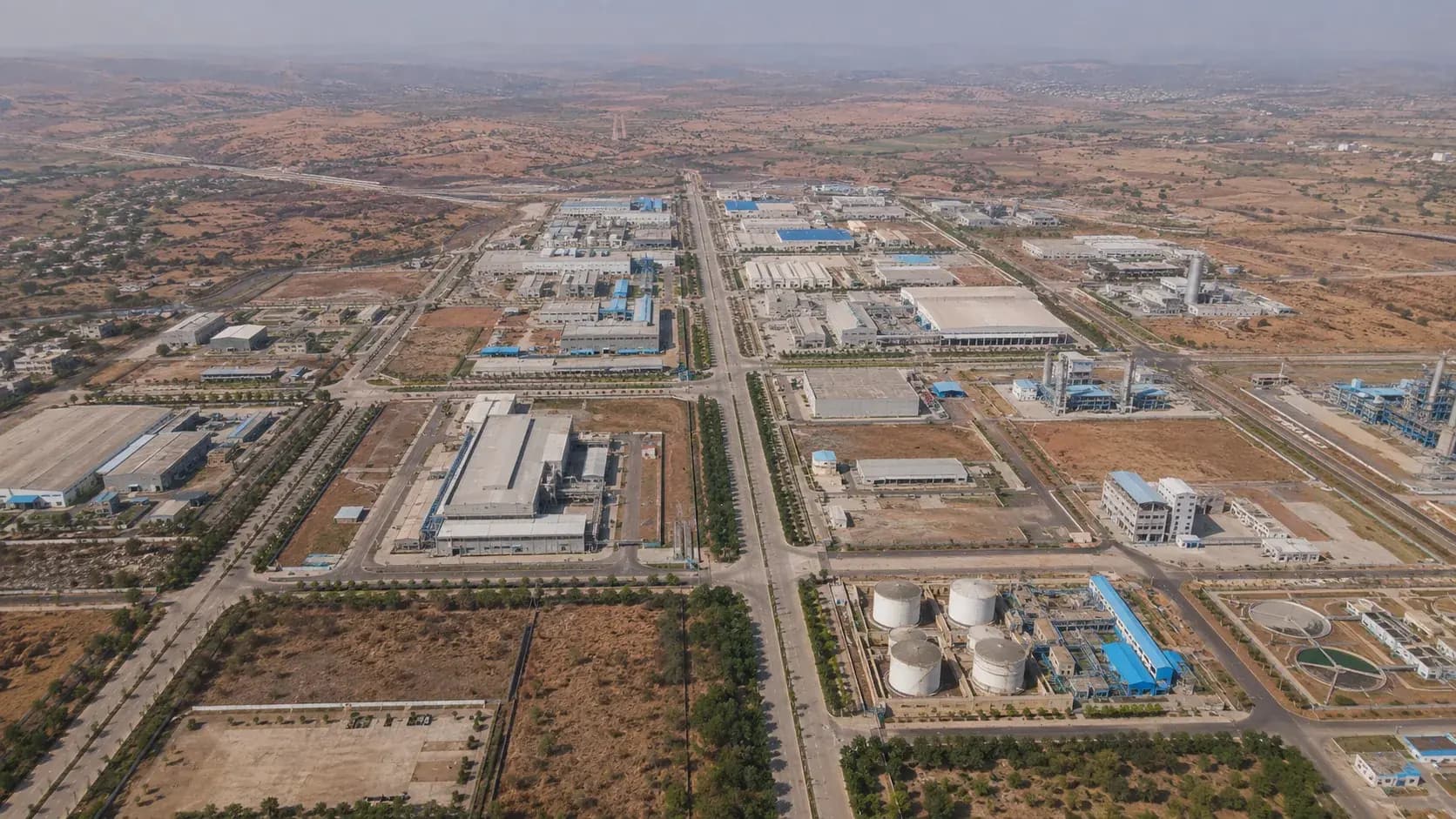
Groundwater assessment at node level decides whether a corridor authority can promise allottees any abstraction at all, because in a semi-critical, critical or over-exploited assessment unit the answer is constrained before any individual application is made.
Screening view on your project, with the category and route named. No obligation.
What this means for industrial corridors & midc
Industrial groundwater abstraction requires a no objection certificate, granted against the category of the assessment unit (safe, semi-critical, critical or over-exploited) as assessed for the block. For a corridor node this is a planning question rather than a permitting one: the authority is projecting water demand for hundreds of future units and must know how much of it groundwater can carry, because the balance has to come from surface allocation, treated water reuse, or a reduction in what the node offers. Where the state has its own groundwater regulator, as Maharashtra does under its groundwater legislation, the state regime applies alongside and can be the operative constraint.
How KIPL runs it
KIPL assesses this at the node scale and states the answer plainly, including when the answer is that abstraction cannot be relied on. The failure at greenfield nodes is a water balance built on assumed borewell capacity that the block category does not support, discovered when allottees begin applying individually and are refused, by which time plots have been sold on a supply assurance the authority cannot meet. Recharge and reuse work best when they are designed into the node's infrastructure at layout stage, not proposed as mitigation after the constraint is found.
- CGWA
Category of the assessment unit governs
The safe, semi-critical, critical or over-exploited categorisation of the block determines what abstraction can be permitted, and in constrained units industrial abstraction is restricted or refused regardless of the applicant.
State groundwater regulation applies alongside
Maharashtra regulates groundwater development and management under its own legislation, and in notified or over-exploited areas the state regime can be the binding constraint rather than the central one.
The node promises supply to plots it has not yet sold
Water assurance is part of the commercial proposition of an industrial plot. An authority that promises what the aquifer cannot support creates an obligation it will have to buy its way out of.
What you receive
Written for industrial corridors & midc, not adapted from a template.
- 01Assessment unit categorisation established for the node and its likely expansion area
- 02Node-level water demand projection by plot category and phase, against available sources
- 03Hydrogeological assessment supporting any groundwater component of the node's supply
- 04NOC applications for the authority's own abstraction, and guidance for allottee-level applications
- 05Recharge and reuse strategy designed into the node layout rather than added as mitigation
- 06A supply assurance the authority can defensibly state in allotment terms
Questions from industrial corridors & midc
What industrial corridors & midc ask before appointing us.
Answered against the regulation as it stands, not as a sales pitch. If your situation is not here, ask us directly.
Ask a question →Can allottees in a corridor node rely on borewells?
Only where the assessment unit category permits it. In semi-critical, critical and over-exploited units, industrial abstraction is restricted or refused, and an allottee's individual application will be decided on that basis regardless of what the node's brochure said. The authority should establish the category before it makes any supply representation.
Does the authority take one NOC for the whole node?
The authority takes an NOC for the abstraction it carries out itself, and individual units generally apply for their own abstraction. What the authority can do at node level is establish the hydrogeological position, design recharge and reuse into the common infrastructure, and be clear in allotment terms about what groundwater component, if any, an allottee can plan on.
How does the state regime interact with the central one?
Maharashtra regulates groundwater development and management under its own legislation, with restrictions in notified and over-exploited areas, and this operates alongside the central regulatory framework. For a node in a stressed area the state restriction is often the binding one, so the position under both has to be established rather than assuming the central NOC route settles it.
What is the alternative when groundwater is not available?
Surface water allocation from the irrigation or water resources authority, and treated water reuse from the node's own sewage and effluent infrastructure. Reuse is the component most within the authority's control, and at water-scarce nodes it frequently makes the difference between a water balance that closes and one that does not. It has to be designed into the trunk infrastructure early.
Does recharge earn abstraction?
Recharge and water conservation measures are part of what is expected of a user, and they improve both the application and the aquifer, but they do not convert a constrained assessment unit into a permissive one. Recharge should be treated as a genuine measure designed into the node layout, not as a device to obtain an abstraction permission that the category does not support.
When should this be assessed in a node's development?
Before the water balance is fixed and long before plots are marketed with a supply assurance. Establishing the assessment unit category and the realistic groundwater contribution at master-plan stage lets the authority size surface allocation and reuse correctly. Discovering it after allotment leaves the authority buying water to honour commitments it should not have made.
Stage by stage
How cgwa groundwater noc actually runs, step by step.
Also for industrial corridors & midc
The rest of the environmental brief for this sector.
Primary sources
Verify any of this at the source.

Relevant proof
NAMAMI GANGE PROGRAMME
Environmental & Social Impact Assessment and EHS reporting for existing and proposed sewage treatment plants on the Ganga.
- Largest existing STP
- 130 MLD
- Assessed
- 5 plants
Where we do this
CGWA Groundwater NOC for industrial corridors & midc, city by city.
Other sectors
Who else we run cgwa groundwater noc for.
Next step
Tell us the project, and we will tell you the category and the route.
Screening is the cheapest stage to get right and the most expensive to get wrong. We will say plainly what cgwa groundwater noc your industrial corridors & midc project needs, and what it does not.





























































Start the conversation