









MPCB, CPCB and SPCB filings: the applications, returns and renewals the boards actually want.
Almost every environmental permission an operating unit holds is granted by a State Pollution Control Board. And almost every recurring obligation is a filing back to it.
What it is
Consent to Establish and Consent to Operate are granted by the State Pollution Control Board under section 25 or 26 of the Water Act 1974 and section 21 of the Air Act 1981, along with authorisation to handle hazardous waste under the 2016 Rules. The board then receives the returns: the Form-V Environmental Statement, hazardous waste annual returns, monitoring data, and applications to renew, amend or transfer what it granted. The Central Pollution Control Board sits above this as the coordinating and standard-setting body, and separately runs the national registration portals for extended producer responsibility.
KIPL prepares and pursues these filings, in Maharashtra through the Maharashtra Pollution Control Board and equivalently through other state boards, with the documentation the board expects rather than the minimum the form asks for. Most consent delays are not decisions; they are queries against incomplete applications, water balances that do not reconcile, or effluent and emission figures that do not match the process. Filing them right is the whole of the work.

What you get
The deliverables, in hand.
- Authority
- State Pollution Control Boards · CPCB · Water Act 1974 & Air Act 1981
- Typical timeline
- By the board's processing cycle; apply well before expiry
- Consent to Establish and Consent to Operate applications and renewals
- Hazardous waste authorisation and amendment applications
- Form-V Environmental Statement and hazardous waste annual returns
- Consent amendment, expansion and transfer applications
- Query responses, board correspondence and hearing representation
- CPCB producer-responsibility registrations and returns where applicable
Straight answers
MPCB / CPCB / SPCB Filings: common questions.
01What is the difference between CPCB and a State Pollution Control Board?
The Central Pollution Control Board sets standards, coordinates state boards and issues national directions; the State Pollution Control Board is the authority that actually grants consents and authorisations and receives returns for units in its state. For a normal operating site, essentially every permission and every return goes to the SPCB, MPCB in Maharashtra. CPCB is where you go for national producer-responsibility registrations, not for your consent.
02What is the difference between Consent to Establish and Consent to Operate?
Consent to Establish is obtained before construction and is the board's permission to set up the unit as described. Consent to Operate is obtained before commencing operation and carries the conditions the unit will be regulated against: discharge standards, emission limits, waste quantities, monitoring. The CTE is a one-time gate; the CTO is renewed through the life of the unit.
03What do the Red, Orange, Green and White categories change?
The category, assigned on the CPCB classification by pollution potential, determines the consent validity period a board will grant, the level of scrutiny, siting restrictions and in some states the fee. White category units, the least polluting, are generally exempt from Consent to Operate and require only intimation. The category is decided by the industry type, so it is not negotiable, but it is worth confirming, since mis-categorisation changes the whole compliance load.
04Which registrations go to CPCB rather than the state board?
Extended producer responsibility registrations and returns (plastic packaging, e-waste, batteries and waste tyres) are handled centrally on CPCB portals by producers, importers and brand owners, with returns filed on those portals. This is the main class of obligation that bypasses the state board, and it is regularly missed by units that assume all environmental filing is an SPCB matter.
05How long does a consent application take?
It depends on the board, the category and above all on the completeness of the application. Boards work to their own service timelines, but the practical determinant is the query cycle, an application that draws two rounds of queries takes far longer than one filed complete. Renewals should be initiated months ahead of expiry so the unit is never operating on a lapsed consent.
06Can a consent be amended or transferred?
Yes. A consent can be amended for changes in product mix, capacity, effluent quantity or process, and it can be transferred on a change of ownership, so the permission follows the unit. Both are applications to the board with supporting justification. Operating outside the parameters written into a consent, without amending it, is itself a breach of the consent.
07What is OCEMS connectivity and who needs it?
Online continuous emission and effluent monitoring systems transmit stack and effluent data directly to CPCB and state board servers. CPCB directions require it for the highly polluting industry categories and for certain other units, and consent conditions commonly impose it. Where it applies, uptime and calibration become compliance obligations in their own right. A system installed but offline is treated as a lapse.
Within Statutory Compliance Management
Part of the whole route, the other components.
Primary sources
Check it at source.
This page describes State Pollution Control Boards · CPCB · Water Act 1974 & Air Act 1981. The regulation and the filing portal are public, these are the official endpoints, not our summary of them.
Relevant proof
Where this stage has already been delivered.

MIDC / AURIC · Shendra & Bidkin, Chhatrapati Sambhajinagar
SHENDRA AND BIDKIN INDUSTRIAL AREA, AURANGABAD
Environmental compliance audits, Consent to Establish and green certification support across two industrial nodes of the Delhi-Mumbai Industrial Corridor.
Where we do this
Statutory Compliance Management on the ground.
The authority, the timeline and the local ground differ by city. These pages set out how statutory compliance management actually runs in each.
- Ahmedabad
- Ambernath
- Andhra Pradesh
- Badlapur
- Bengaluru
- Bhiwandi
- Chennai
- Chhatrapati Sambhajinagar
- Delhi NCR
- Gandhinagar
- Goa
- Gujarat
- Gurugram
- Haryana
- Hyderabad
- Indore
- Jaipur
- Kalyan-Dombivli
- Karnataka
- Kerala
- Kharghar
- Kochi
- Kolhapur
- Kolkata
- Lucknow
- Madhya Pradesh
- Maharashtra
- Mira-Bhayandar
- Mormugao
- Mumbai
- Nagpur
- Nashik
- Navi Mumbai
- New Delhi
- Noida
- Panaji
- Panvel
- Pune
- Punjab
- Rajasthan
- Rajkot
- Solapur
- Surat
- Taloja
- Tamil Nadu
- Telangana
- Thane
- Ulhasnagar
- Uran
- Uttar Pradesh
- Vadodara
- Vasai-Virar
- Visakhapatnam
- West Bengal
Featured projects
Work that carries its own evidence.
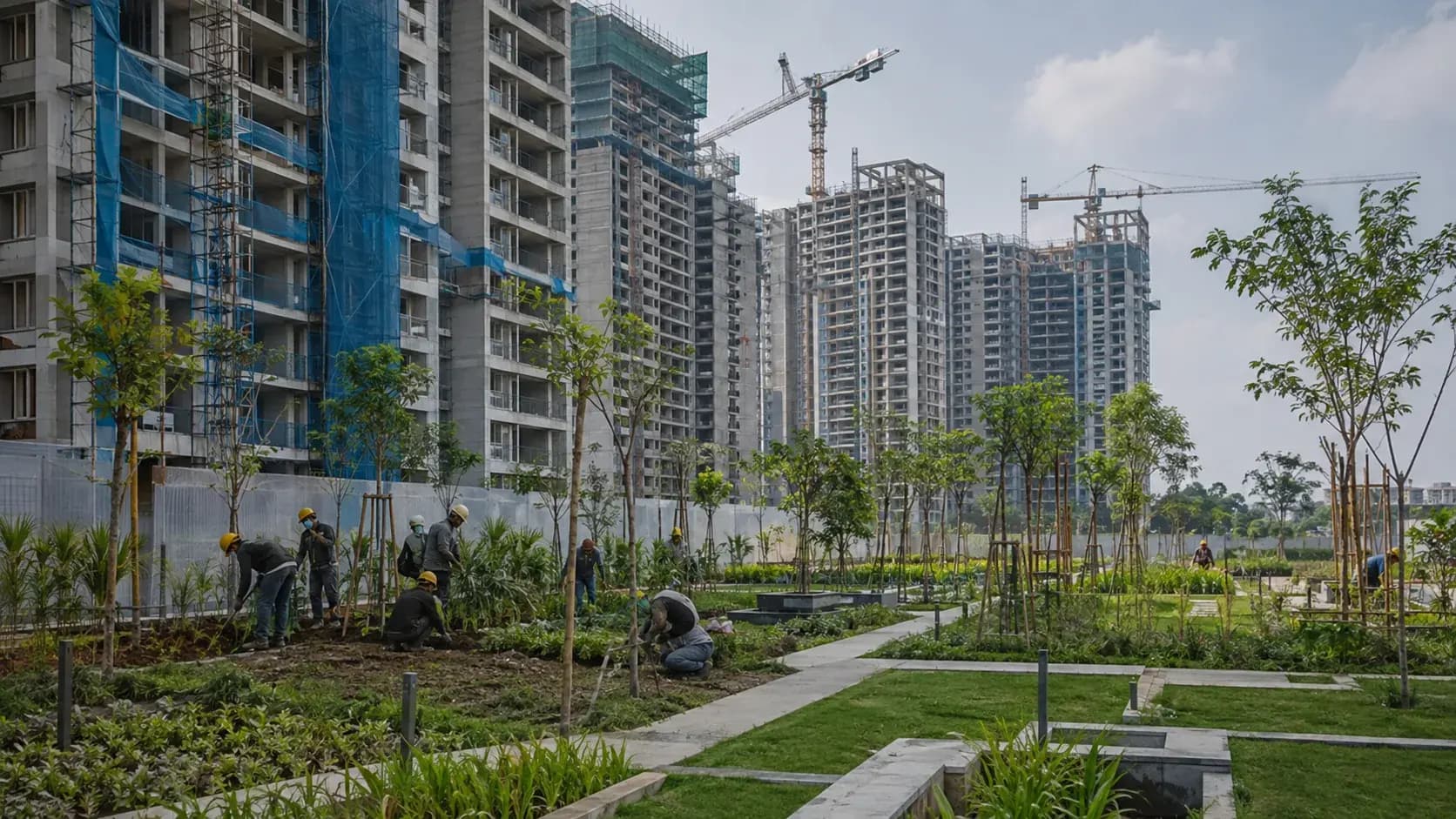
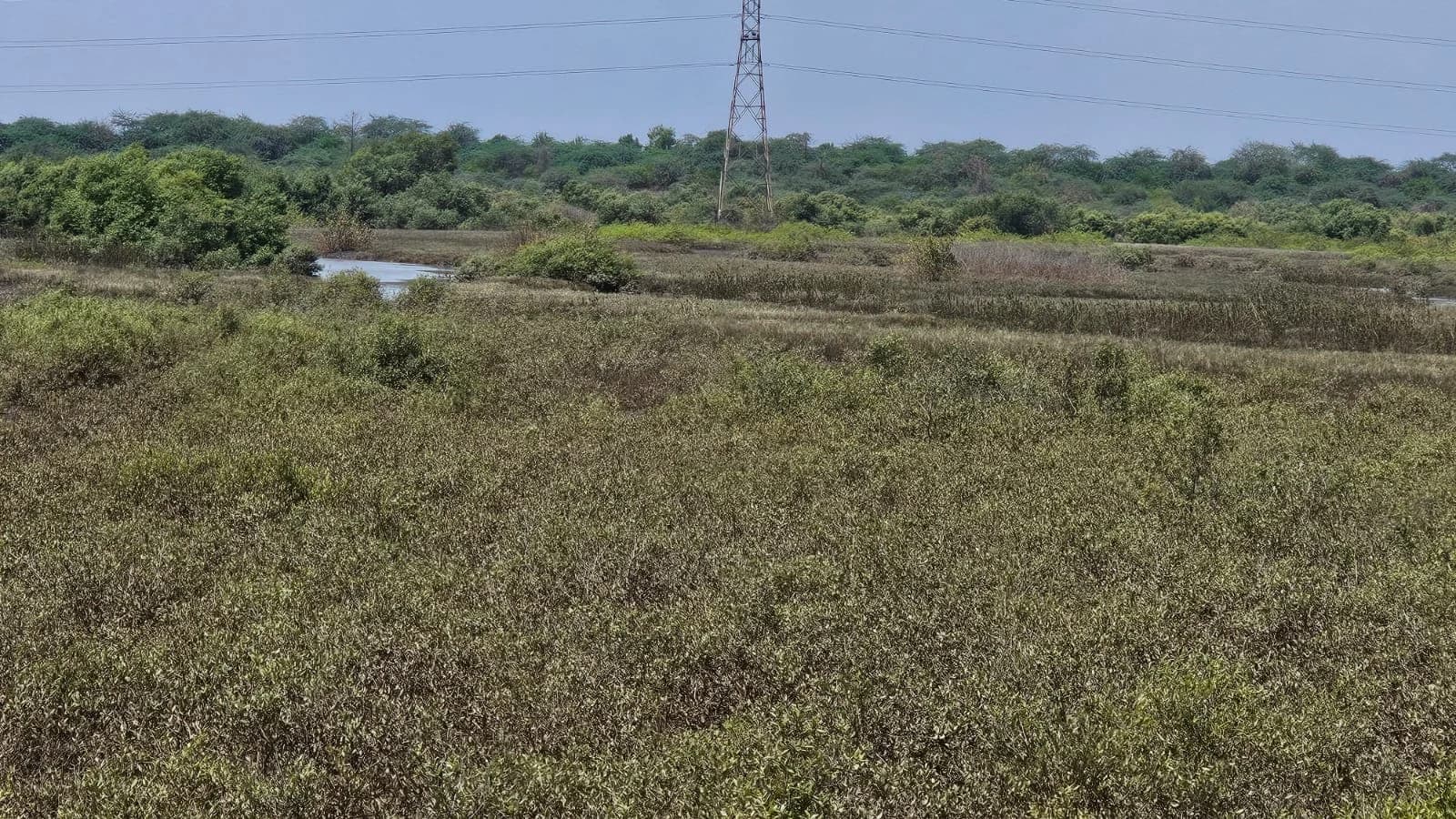

Our expertise
One team across the whole environmental brief.
MPCB / CPCB / SPCB Filings is one stage of one practice. Most projects need several, and the commitments made at clearance are the ones we build and maintain.
Who we do this for
Statutory Compliance Management reads differently by industry.
- 01
Hospitality, Healthcare & EducationCore
Bio-medical waste authorisation, consent renewal and Form-V returns run on fixed dates that a hospital administration cannot afford to miss.
Statutory Compliance Management for Hospitality, Healthcare & Education - 02
Industrial & ManufacturingCore
The failure mode is never a wrong answer; it is a missed date on a consent renewal, a Form-V or a hazardous-waste return found by an inspector.
Statutory Compliance Management for Industrial & Manufacturing - 03
Industrial Corridors & MIDCCore
An estate authority needs a compliance framework its allottees inherit, so that plot-level failures do not become the node's liability.
Statutory Compliance Management for Industrial Corridors & MIDC - 04
Environmental & Social Due DiligenceCore
A regulatory gap assessment across a portfolio tells the investment committee which assets are running on a lapsed consent or an unfiled return.
Statutory Compliance Management for Environmental & Social Due Diligence - 05
Real Estate & Construction
Consent renewals, Form-V returns and tree-NOC conditions run on separate calendars that a developer's project team is not built to track.
Statutory Compliance Management for Real Estate & Construction - 06
Data Centres & IT Parks
Used oil, spent batteries, consent renewals and ESZ conditions form a compliance calendar that a lean facilities team cannot carry alone.
Statutory Compliance Management for Data Centres & IT Parks - 07
Chemical Industry
Hazardous-waste authorisation, manifest returns, Form-V and consent renewal make a legal register and a compliance calendar unavoidable.
Statutory Compliance Management for Chemical Industry - 08
Distilleries & Ethanol
Consent renewal, Form-V and continuous effluent monitoring reporting run alongside an excise regime that leaves no slack in the calendar.
Statutory Compliance Management for Distilleries & Ethanol
Trusted by
The organisations this work is done for.









In the press