










Water infrastructure: storage, conveyance, treatment and reuse assets built to code.
Water infrastructure is unforgiving of poor workmanship: a tank that leaks, a main that fails a pressure test or a recharge pit that silts up is a defect that shows itself immediately and expensively.
What it is
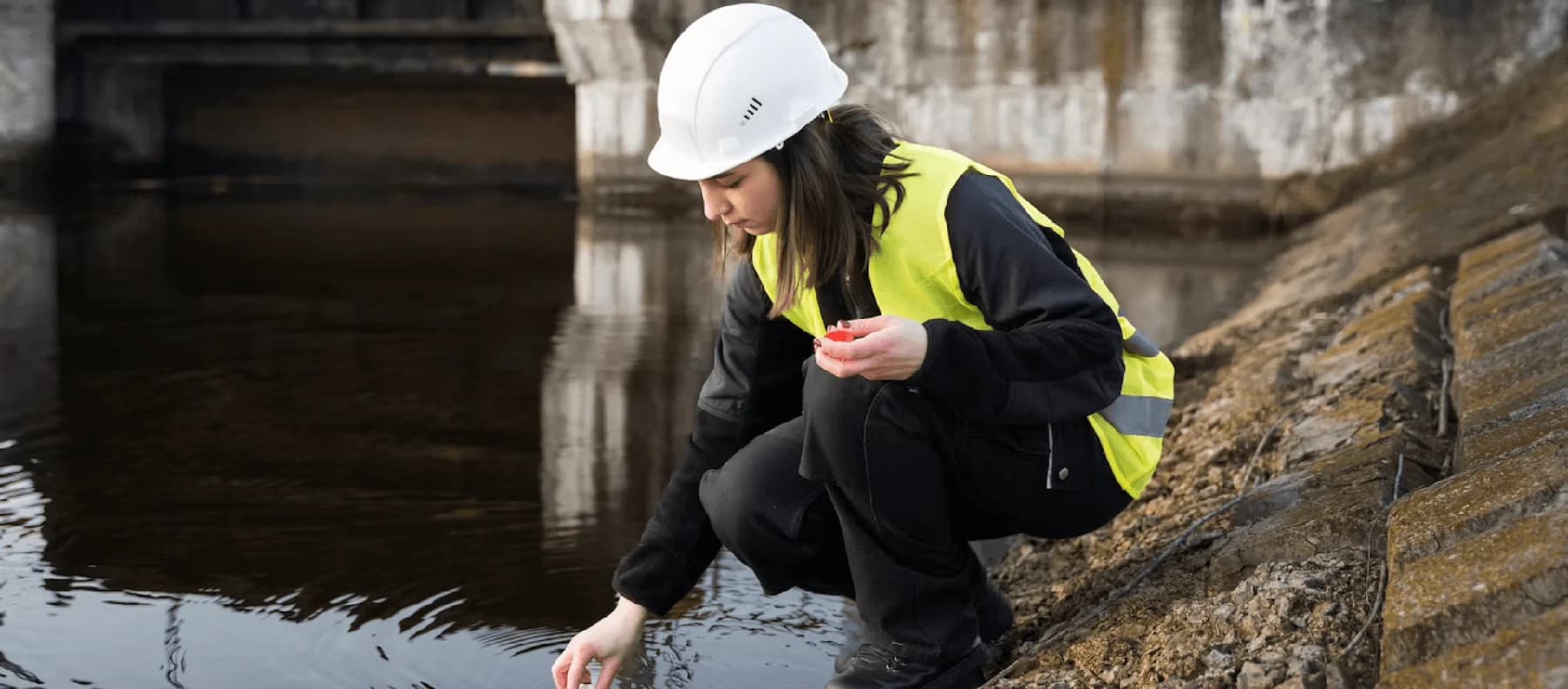
The scope covers underground sumps and overhead storage, pumping arrangements, transmission and distribution networks, the civil works for water and sewage treatment plants, dual plumbing for treated recycled water, and rainwater harvesting and groundwater recharge structures. Each element has an acceptance test (hydrostatic testing of tanks and mains, disinfection before a potable system is commissioned, infiltration performance for recharge structures) and those tests are the honest measure of the work.
KIPL builds to CPHEEO manual practice and the relevant IS codes, with construction joints, waterstops, concrete mix and cover detailed for water-retaining structures rather than borrowed from general building practice. Recycled water lines are kept physically separate and clearly identified from potable lines, without cross-connection, because a dual plumbing system that is not unambiguously distinguishable is a public health risk rather than a sustainability feature.
What you get
The deliverables, in hand.
- Authority
- CPHEEO manuals · IS 10500 · relevant IS codes · SPCB consent conditions
- Typical timeline
- Months, with testing and commissioning at the end of each system
- Sumps, overhead tanks and water-retaining structures with waterproofing detail
- Pumping, transmission and distribution network installation
- Civil works for water and sewage treatment plants
- Dual plumbing for treated recycled water, separated and identified
- Rainwater harvesting and groundwater recharge structures
- Hydrostatic testing, disinfection and commissioning records
Straight answers
Water Infrastructure: common questions.
01What makes water-retaining structures different from ordinary concrete work?
Crack control. Water-retaining concrete is designed and detailed for limited crack width: richer mixes, greater cover, controlled construction joints with waterstops, planned pour sequences and proper curing. A structure built to general building practice and then waterproofed from inside is the standard route to a tank that seeps for its whole life.
02How is a new water system tested before it is used?
Tanks and pipelines are hydrostatically tested to a specified pressure and held for a specified duration with permitted loss limits, and a potable system is then disinfected and flushed, with water quality confirmed against IS 10500 before it is put into service. Commissioning without documented testing and disinfection is not commissioning.
03How should recycled water lines be separated from potable lines?
Physically separate piping, distinct colour coding and permanent labelling, separate storage, and outlets marked as non-potable, with no cross-connection anywhere in the system. The risk being managed is not aesthetic; a cross-connection between treated recycled water and a potable line is a direct public health hazard.
04What determines the sizing of storage and pumping?
Demand, population or occupancy and consumption norms: plus the reliability of the supply source, fire-fighting storage requirements, and the pumping head and duty the layout imposes. CPHEEO manual practice provides the design basis. Sizing on an assumed occupancy that later changes is why so many systems run either starved or grossly oversized.
05Do rainwater harvesting structures need maintenance?
Yes, and it is the reason many stop working. Recharge pits and trenches silt up, filter media clog, and inlet channels collect debris; without periodic desilting and media replacement, infiltration falls away within a few seasons. A recharge structure is a maintained asset, not a one-time construction item, and the maintenance schedule should be handed over with it.
06What statutory approvals attach to water infrastructure?
It depends on the asset. Sewage treatment plants operate under State Pollution Control Board consent with conditions on effluent quality and monitoring; groundwater abstraction may require approval from the relevant groundwater authority; and many municipal bye-laws mandate rainwater harvesting and recycled water reuse for buildings above a stated size. The applicable set should be confirmed for the specific site.
07Who is responsible for the system after handover?
The owner, through an operation and maintenance arrangement: pumps, valves, treatment units and recharge structures all need scheduled attention. Handover should include as-built drawings, valve and chamber locations, testing and disinfection records, equipment manuals and a maintenance schedule, since a buried network without accurate as-builts becomes very expensive to operate.
Within Civil EPC
Part of the whole route, the other components.
Relevant proof
Where this stage has already been delivered.
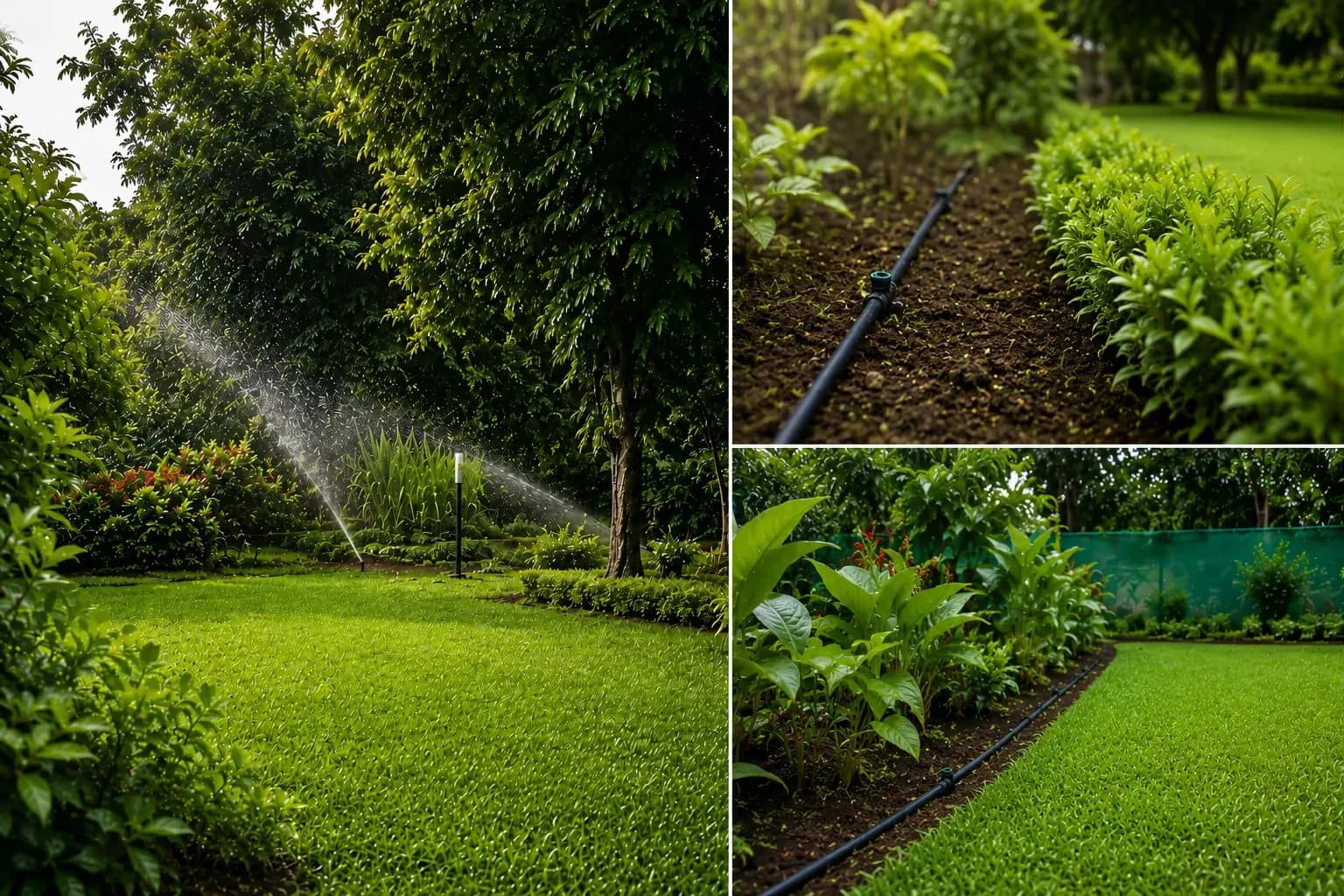
TCS, Banyan Park · Mumbai
IRRIGATION WORK AT TCS BANYAN PARK
Design and execution of an efficient drip-irrigation network across ~10,000 m² of landscape and plantation zones: pipeline, network and testing, completed in 45 days.
Where we do this
Civil EPC on the ground.
The authority, the timeline and the local ground differ by city. These pages set out how civil epc actually runs in each.
Featured projects
Work that carries its own evidence.

Our expertise
One team across the whole environmental brief.
Water Infrastructure is one stage of one practice. Most projects need several, and the commitments made at clearance are the ones we build and maintain.
Who we do this for
Civil EPC reads differently by industry.
- 01
Townships & Area Development
Internal roads, open spaces and playgrounds are the physical form of the layout commitments the clearance was granted against.
Civil EPC for Townships & Area Development - 02
Municipal Corporations
Playgrounds, garden works, roads and open spaces are tendered as civil packages that still have to deliver an environmental outcome.
Civil EPC for Municipal Corporations - 03
Industrial Corridors & MIDC
Roads, open spaces and water infrastructure are the physical trunk services that carry the node's environmental commitments.
Civil EPC for Industrial Corridors & MIDC - 04
River & Water Missions
Ghats, embankments, interception chambers and water infrastructure are the civil works through which the mission is actually visible.
Civil EPC for River & Water Missions
Trusted by
The organisations this work is done for.






In the press