










Civil EPC · River & Water Missions
Civil EPC for River & Water Mission Infrastructure
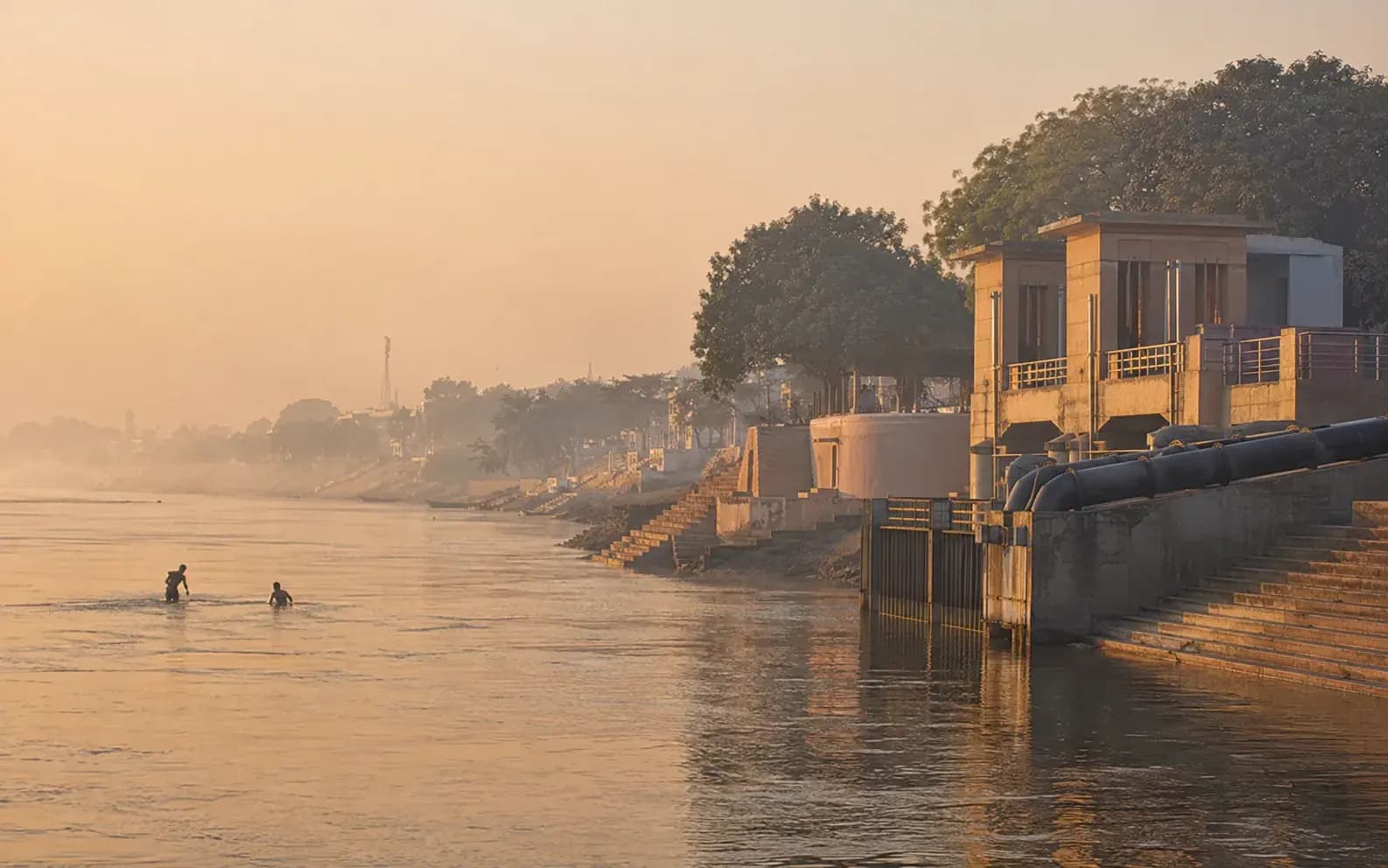
Ghats, embankments, interception chambers and river-front structures are the civil works through which a river mission becomes visible to the public that funds it, and they are built in the most constrained environment a contractor can work in.
Screening view on your project, with the category and route named. No obligation.
What this means for river & water missions
River-front civil work carries constraints ordinary urban construction does not. The site is a floodplain with a working season bounded by monsoon; the structure sits in or beside a live channel, so dewatering, cofferdams and silt control are permanent design considerations rather than temporary works; the ground is often filled or historically disturbed; and the public does not vacate the site: ghats remain in use for bathing and ritual throughout, which restricts working hours, access and methods. A programme that lets a package start late loses the season, not weeks.
How KIPL runs it
KIPL delivers civil and green infrastructure work and treats the environmental constraints as a design input from the beginning: staging that keeps a working reach of the ghat open, silt and dewatering control that holds during a rain event rather than on a dry day, spoil routed off the floodplain permanently, and material and finish choices that survive submergence and heavy public use. The failures we see on river-front packages are consistent: spoil stacked within the flood zone, dewatering discharged untreated into the channel, and finishes specified for a plaza rather than for a surface that will be under water each year.
A working season bounded by monsoon
In-channel and floodplain works have a narrow construction window, and a package that starts late loses the whole season rather than part of it.
- Water Act
Discharge to a live channel
Dewatering, silt-laden runoff and washings entering the river are regulated discharges under the Water Act 1974 and are the most common non-conformity on river-front works.
The site stays in public use
Ghats and river-front spaces remain in continuous bathing, ritual and recreational use, so staging, access and working hours are constrained throughout construction.
What you receive
Written for river & water missions, not adapted from a template.
- 01Construction staging that keeps a defined length of the ghat in public use throughout the works
- 02Dewatering, cofferdam and silt control design with a defined monsoon and rain-event response
- 03Spoil and construction waste routing off the floodplain, with disposal locations identified in advance
- 04Interception chamber, outfall and conveyance civil works coordinated with the treatment package they serve
- 05Embankment, revetment and bank protection works with riparian planting integrated rather than added later
- 06Materials and finishes selected for periodic submergence, silt loading and heavy public use
Questions from river & water missions
What river & water missions ask before appointing us.
Answered against the regulation as it stands, not as a sales pitch. If your situation is not here, ask us directly.
Ask a question →What makes river-front civil work different from ordinary urban construction?
A construction season bounded by monsoon, a live channel that constrains dewatering and silt control, filled or disturbed ground on the floodplain, and a site that the public does not vacate. Each of these changes method and programme, and each is a source of non-conformity if it is treated as a temporary-works detail rather than a design input.
How is public access maintained during ghat construction?
By staging the work so that a defined length of ghat stays open and safe throughout, with the sequence agreed in advance with the local body and the users. Closing an entire ghat for the convenience of the contractor is the fastest way to generate objections that stop the package.
Where does spoil from river-front works go?
Off the floodplain, to an identified disposal location agreed before work starts. Stacking spoil within the flood zone is the most common environmental finding on these packages, because it is mobilised into the channel at the first significant rain event.
Do these works need clearance in their own right?
They have to be screened on their own facts under the EIA Notification 2006, and where the reach is tidal, under the CRZ Notification 2019 as well. Proximity to a notified wetland brings the Wetlands Rules 2017 into play. Programme sanction does not answer any of these questions.
Can KIPL deliver both the civil works and the planting?
Yes. Bank protection and riparian planting perform better when they are designed and executed together, because planting placed after a revetment is complete usually gets the soil profile and the levels it is given rather than the ones it needs.
How is the works programme protected against monsoon?
By sequencing in-channel and low-level work into the dry season and shifting to above-flood-level activity during monsoon, and by having a rain-event protocol for exposed excavations and stockpiles. A programme that has no such split will either stop or produce a non-conformity.
Stage by stage
How civil epc actually runs, step by step.
Also for river & water missions
The rest of the environmental brief for this sector.
Relevant proof
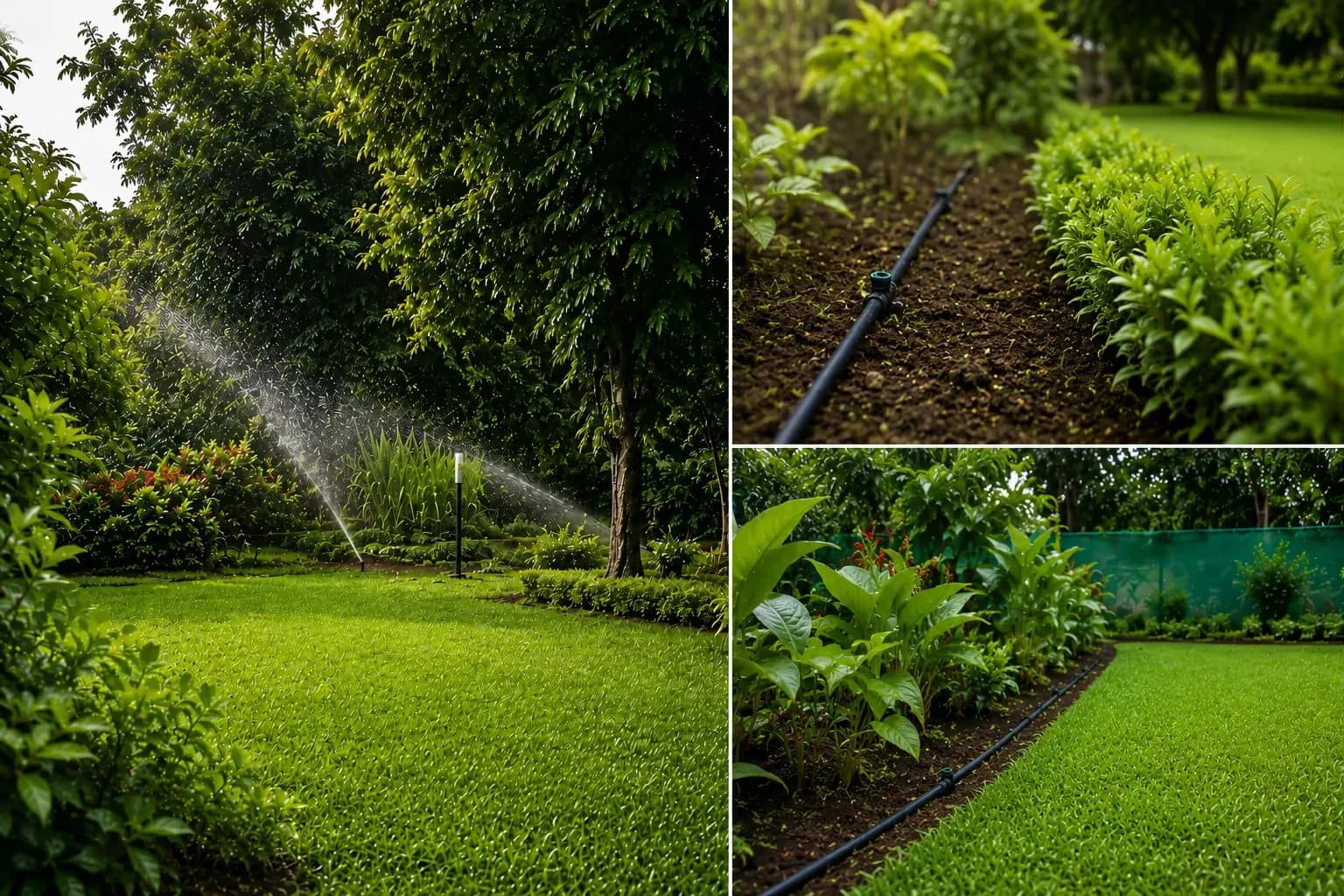
IRRIGATION WORK AT TCS BANYAN PARK
Design and execution of an efficient drip-irrigation network across ~10,000 m² of landscape and plantation zones: pipeline, network and testing, completed in 45 days.
- Area
- ~10,000 m²
- Delivery
- 45 days
Where we do this
Civil EPC for river & water missions, city by city.
Other sectors
Who else we run civil epc for.
Next step
Tell us the project, and we will tell you the category and the route.
Screening is the cheapest stage to get right and the most expensive to get wrong. We will say plainly what civil epc your river & water missions project needs, and what it does not.





























































Start the conversation