










Public garden development: horticulture, hardscape and irrigation delivered as one contract.
A public garden succeeds or fails on soil, water and maintenance: which is why it is delivered as one contract covering horticulture, hardscape and irrigation rather than three that meet at the boundary.
What it is
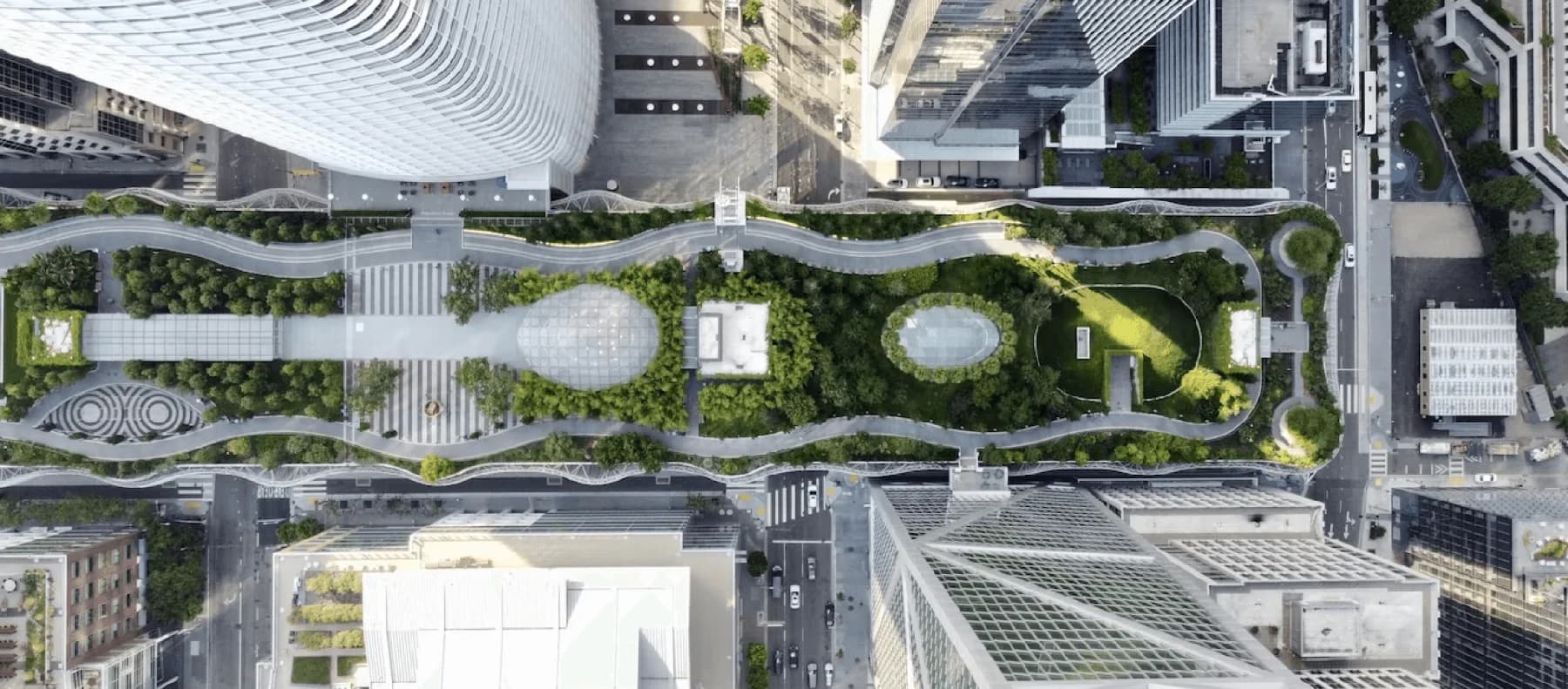
Garden development starts below ground: existing soil is assessed and amended, drainage is established, and the planting palette is chosen for the site's climate, soil, sun exposure and available water rather than for a rendering. Irrigation (drip for beds and shrubs, sprinkler where lawn is justified, with a source that may be treated or recycled water) is designed alongside the planting, because a scheme irrigated by hose and goodwill does not survive its first summer.
KIPL delivers the hardscape in the same package: pathways with proper base and edging, seating, lighting, drainage, and boundary treatment. We then carry an establishment and maintenance period after planting, which is the part that determines whether a garden is still there in two years. Species selection favours plants appropriate to the location and, where the client's intent supports it, native and low-water species that reduce the maintenance burden the owner inherits.
What you get
The deliverables, in hand.
- Authority
- Municipal horticulture specifications · NBC 2016 · local bye-laws
- Typical timeline
- Construction in months, plus an establishment period after planting
- Soil assessment, amendment and grading with subsurface drainage
- Planting design and species schedule appropriate to site and water availability
- Irrigation system design and installation with the agreed water source
- Hardscape works: pathways, edging, seating, lighting, boundary treatment
- Supply and planting of trees, shrubs, ground cover and turf
- Establishment and maintenance period with a handover maintenance schedule
Straight answers
Public Garden Development: common questions.
01Why is soil work the first item and not the planting?
Because plant failure in public landscapes is overwhelmingly a soil and drainage problem rather than a species problem: compacted subgrade left over from construction, poor drainage, and inadequate depth of usable soil. Amending and grading properly before planting is far cheaper than replacing plants twice.
02How is the planting palette chosen?
By site conditions (climate, soil, sun and shade, exposure, available water) and by the maintenance capacity the owner will realistically have. Native and locally adapted species reduce water and maintenance demand substantially. A palette that requires intensive irrigation and skilled care will decline as soon as the establishment period ends.
03Can treated or recycled water be used for irrigation?
Yes, and it is often the sensible source where a treatment plant is available on or near the site, subject to the water meeting the quality expected for landscape irrigation and to the distribution being kept separate and clearly identified from potable lines. The source has to be settled at design stage because it affects pipe material, filtration and emitter selection.
04What is an establishment period and why does it matter?
It is a defined period after planting during which the contractor waters, weeds, prunes, replaces failures and brings the planting to established condition. Plants are alive at handover but not yet independent; without an establishment obligation the failure risk transfers to an owner who has not yet organised maintenance, and losses in the first season are heavy.
05Who maintains the garden after handover?
The owner (commonly a municipal garden department, an estate or a society) usually through a horticulture maintenance contract. The handover should include the planting schedule, the irrigation layout and controller settings, and a season-by-season maintenance calendar, so that whoever takes over is not guessing at what was installed.
06What determines the cost of a public garden?
The proportion of hardscape to softscape, the extent and type of irrigation, the size and species of the plant material, lighting, and how much soil correction the site needs. Sites handed over compacted and full of construction debris cost significantly more to prepare, which is why an early site assessment changes the estimate more than the planting plan does.
07How is a garden contract kept from failing at the interfaces?
By delivering horticulture, irrigation and civil works under one responsibility. Split contracts fail where irrigation lines cross paths, where drainage was another party's scope, and where planting waits on hardscape. A single EPC scope removes the interface argument and puts one party accountable for the garden actually growing.
Within Civil EPC
Part of the whole route, the other components.
Relevant proof
Where this stage has already been delivered.
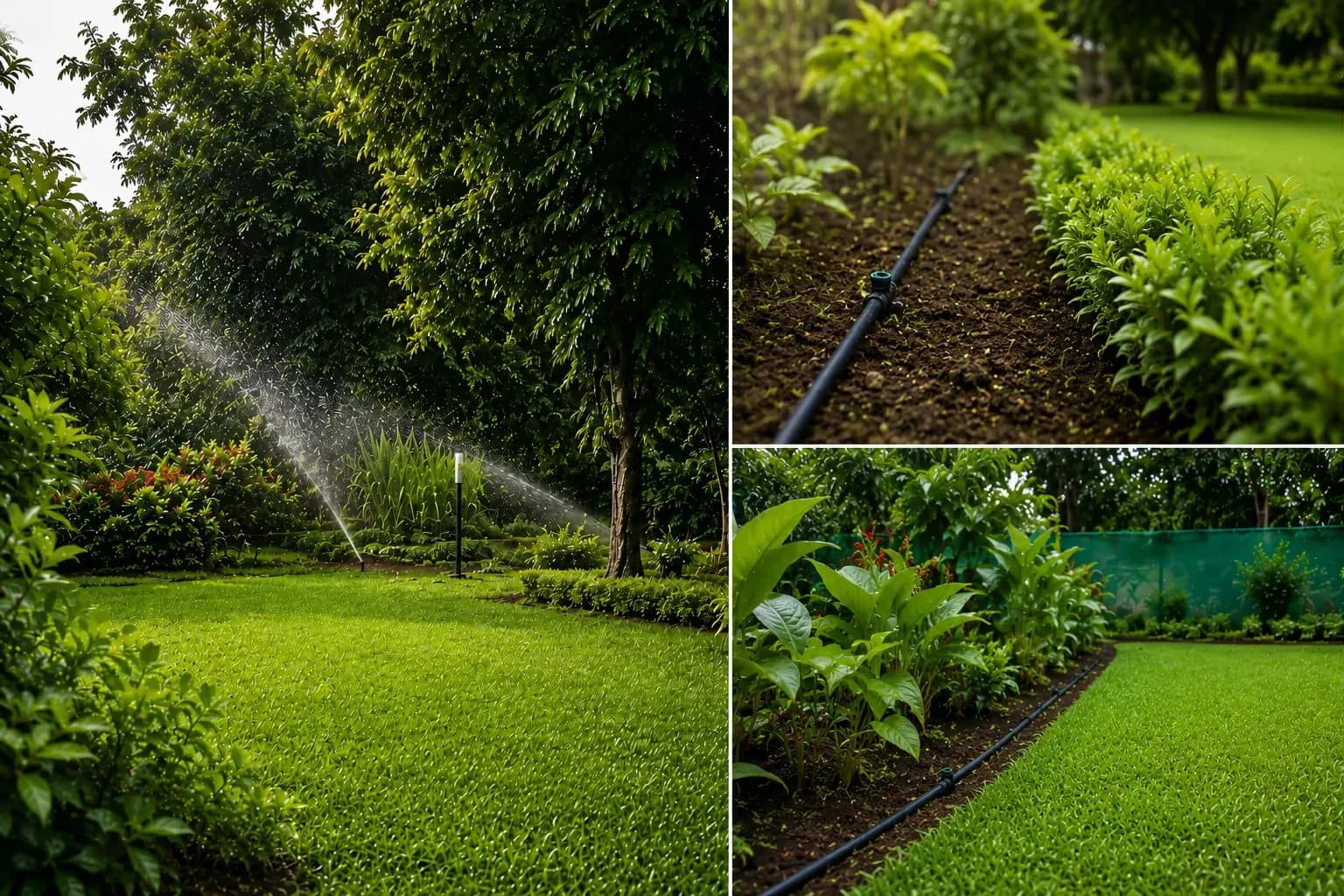
TCS, Banyan Park · Mumbai
IRRIGATION WORK AT TCS BANYAN PARK
Design and execution of an efficient drip-irrigation network across ~10,000 m² of landscape and plantation zones: pipeline, network and testing, completed in 45 days.
Where we do this
Civil EPC on the ground.
The authority, the timeline and the local ground differ by city. These pages set out how civil epc actually runs in each.
Featured projects
Work that carries its own evidence.
Our expertise
One team across the whole environmental brief.
Public Garden Development is one stage of one practice. Most projects need several, and the commitments made at clearance are the ones we build and maintain.
Who we do this for
Civil EPC reads differently by industry.
- 01
Townships & Area Development
Internal roads, open spaces and playgrounds are the physical form of the layout commitments the clearance was granted against.
Civil EPC for Townships & Area Development - 02
Municipal Corporations
Playgrounds, garden works, roads and open spaces are tendered as civil packages that still have to deliver an environmental outcome.
Civil EPC for Municipal Corporations - 03
Industrial Corridors & MIDC
Roads, open spaces and water infrastructure are the physical trunk services that carry the node's environmental commitments.
Civil EPC for Industrial Corridors & MIDC - 04
River & Water Missions
Ghats, embankments, interception chambers and water infrastructure are the civil works through which the mission is actually visible.
Civil EPC for River & Water Missions
Trusted by
The organisations this work is done for.






In the press