









GRIHA Certification: the national rating system, scored out of five stars.
GRIHA is India's national green building rating system, developed by TERI and adopted by the Ministry of New and Renewable Energy, awarding buildings a rating of one to five stars.
What it is
GRIHA, Green Rating for Integrated Habitat Assessment: is administered by the GRIHA Council, an independent body established by TERI with the support of the Ministry of New and Renewable Energy. A project is assessed against criteria spanning site planning, construction management, energy, occupant comfort, water, solid waste, sustainable building materials and socio-economic strategies, and receives a star rating according to the points it secures. Variants exist for existing buildings, large developments, affordable housing, small projects and cities.
KIPL takes a project through the full GRIHA cycle: registration, criteria-by-criteria compliance planning with the design team, the documentation each criterion demands, the due-diligence and site verification stages, and the appraisal that fixes the star rating. Because GRIHA rewards evidence gathered during construction (waste management, material sourcing, site practice) much of the work has to happen on site while the building goes up, not afterwards.
What you get
The deliverables, in hand.
- Authority
- GRIHA Council (TERI · MNRE)
- Typical timeline
- Spans construction; rating follows final appraisal
- GRIHA registration and applicable variant selection
- Criteria-wise compliance plan and points projection
- Design and construction-stage documentation against each criterion
- Energy, water and waste calculations supporting the claimed points
- Due-diligence submissions and site-visit coordination
- The awarded GRIHA star rating
Straight answers
GRIHA Certification: common questions.
01How does GRIHA rating work?
GRIHA scores a project against its criteria and converts the points earned into a rating of one to five stars, with five being the highest. Points are claimed criterion by criterion with supporting evidence, and the final star rating is fixed only after the GRIHA Council's appraisal: which includes verification, so claimed points and awarded points are not always the same.
02Who runs GRIHA?
The GRIHA Council, an independent body set up by The Energy and Resources Institute with support from the Ministry of New and Renewable Energy. That government association is why GRIHA is described as the national rating system and why it appears in central and state procurement requirements more often than other systems.
03GRIHA or IGBC, which should a project choose?
It depends on who has to be satisfied. GRIHA carries government standing through its MNRE association and is frequently the one specified in public-sector projects and CPWD works; IGBC is industry-led through CII and is common in commercial real estate and among developers. Where no one has specified, the choice turns on the building type, the criteria the project can realistically meet, and the audience for the certificate.
04What are the GRIHA variants?
Beyond the main rating for new buildings, the Council operates versions for existing buildings, for large developments and campuses, for affordable housing, a simplified version for small projects, and a framework for cities. Each has its own criteria set and thresholds, so registering under the correct variant materially changes what has to be documented.
05Why does GRIHA need work during construction?
Several criteria reward practices that only exist while the site is active: construction waste segregation and diversion, topsoil preservation, air and noise control on site, worker facilities, and documented sourcing of materials. Evidence for these cannot be reconstructed after handover, so a project that engages late simply forfeits those points.
06Is a GRIHA rating mandatory?
Not as a general legal requirement. It becomes binding when a client, tender condition or state incentive scheme specifies it, a number of government building programmes and state incentive frameworks require a minimum star rating, and that is where the obligation typically comes from.
07What happens if the appraisal awards fewer points than claimed?
The star rating drops to whatever band the verified points fall into. This is why documentation quality matters more than an optimistic scorecard: a criterion claimed without defensible evidence is not a criterion earned. We plan to a target with margin above the band threshold rather than sitting exactly on it.
08Does GRIHA cover energy compliance?
GRIHA has energy criteria that require demonstrating performance better than a reference case, and these draw on the same simulation work used for code compliance. It does not, however, discharge a project's obligation to comply with the Energy Conservation Building Code or its state-adopted version where that applies, that remains a separate demonstration to the local authority.
Within Green Building Certification
Part of the whole route, the other components.
Relevant proof
Where this stage has already been delivered.

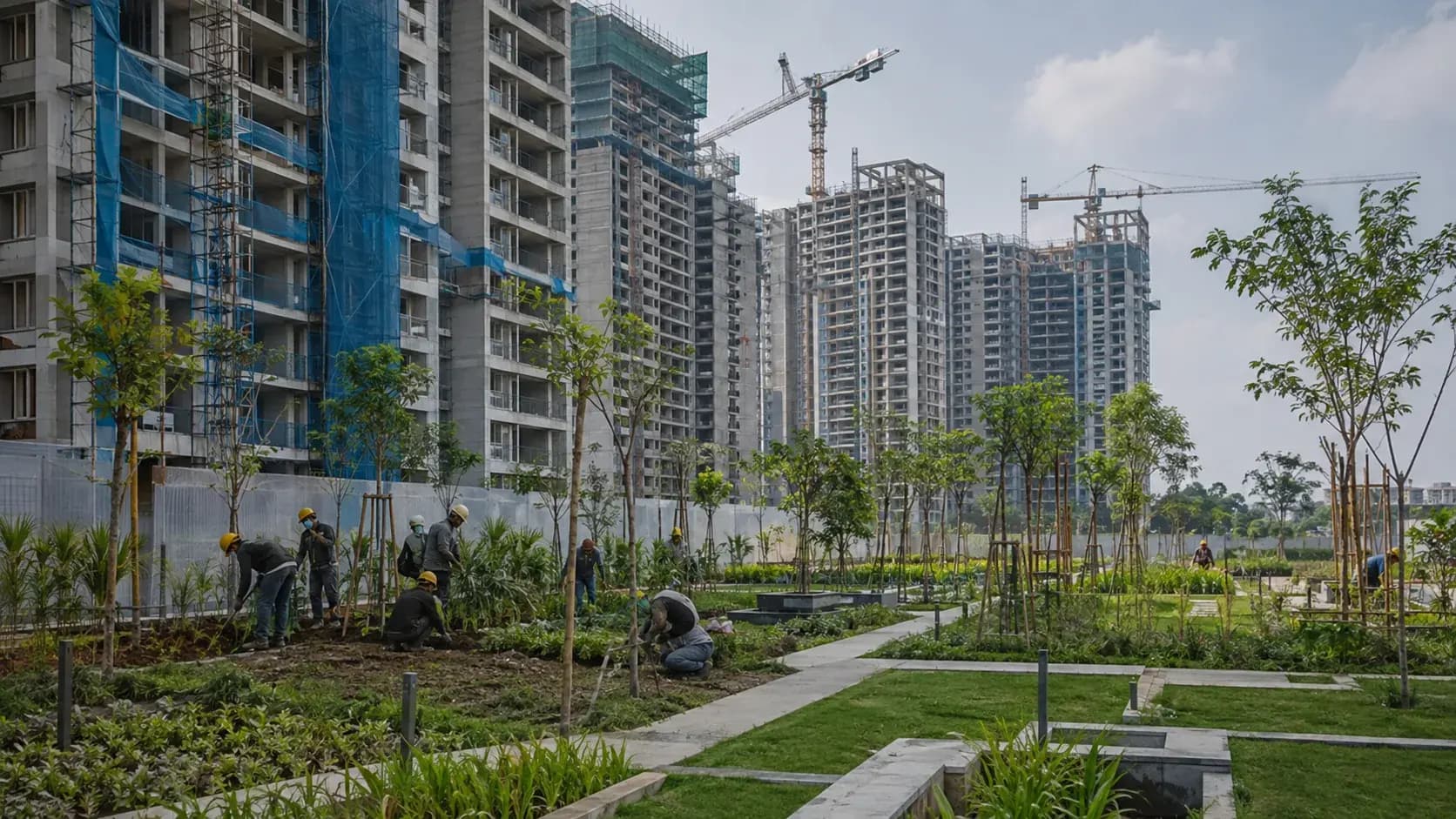
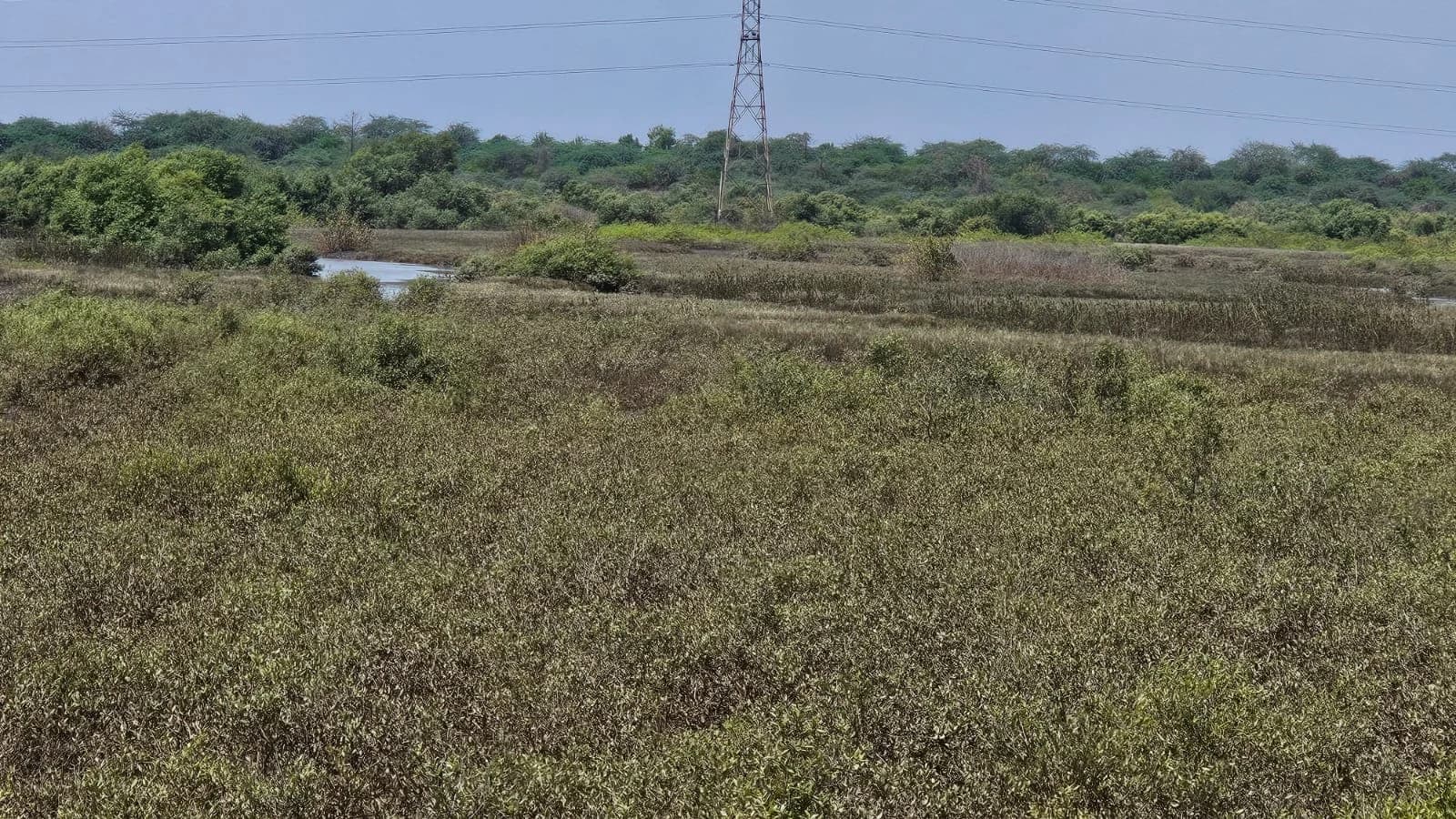
MIDC / AURIC · Shendra & Bidkin, Chhatrapati Sambhajinagar
SHENDRA AND BIDKIN INDUSTRIAL AREA, AURANGABAD
Environmental compliance audits, Consent to Establish and green certification support across two industrial nodes of the Delhi-Mumbai Industrial Corridor.
Where we do this
Green Building Certification on the ground.
The authority, the timeline and the local ground differ by city. These pages set out how green building certification actually runs in each.
- Ahmedabad
- Ambernath
- Andhra Pradesh
- Badlapur
- Bengaluru
- Bhiwandi
- Chennai
- Chhatrapati Sambhajinagar
- Delhi NCR
- Gandhinagar
- Goa
- Gujarat
- Gurugram
- Haryana
- Hyderabad
- Indore
- Jaipur
- Kalyan-Dombivli
- Karnataka
- Kerala
- Kharghar
- Kochi
- Kolhapur
- Kolkata
- Lucknow
- Madhya Pradesh
- Maharashtra
- Mira-Bhayandar
- Mormugao
- Mumbai
- Nagpur
- Nashik
- Navi Mumbai
- New Delhi
- Noida
- Panaji
- Panvel
- Pune
- Punjab
- Rajasthan
- Rajkot
- Solapur
- Surat
- Taloja
- Tamil Nadu
- Telangana
- Thane
- Ulhasnagar
- Uran
- Uttar Pradesh
- Vadodara
- Vasai-Virar
- Visakhapatnam
- West Bengal
Featured projects
Work that carries its own evidence.
Our expertise
One team across the whole environmental brief.
GRIHA Certification is one stage of one practice. Most projects need several, and the commitments made at clearance are the ones we build and maintain.
Who we do this for
Green Building Certification reads differently by industry.
- 01
Real Estate & ConstructionCore
IGBC or GRIHA pre-certification is now a sales asset and, in several ULBs, the route to additional FSI incentives.
Green Building Certification for Real Estate & Construction - 02
Data Centres & IT ParksCore
Hyperscale tenants contract for LEED or IGBC certification and PUE-linked energy modelling as a condition of the lease, not as a nicety.
Green Building Certification for Data Centres & IT Parks - 03
Hospitality, Healthcare & EducationCore
IGBC Green Healthcare, LEED and GRIHA ratings underwrite both the operating cost case and the institutional accreditation story.
Green Building Certification for Hospitality, Healthcare & Education - 04
Corporate CampusesCore
LEED, IGBC and EDGE ratings on campus buildings are the audited evidence behind the sustainability claims in the annual report.
Green Building Certification for Corporate Campuses - 05
Townships & Area Development
IGBC Green Townships and GRIHA Large Development ratings are assessed at master-plan level, alongside the 8(b) appraisal rather than after it.
Green Building Certification for Townships & Area Development - 06
Logistics & Ports
Grade-A warehousing is leased to occupiers who require IGBC or LEED certification of the shed as a condition of tenancy.
Green Building Certification for Logistics & Ports - 07
Environmental & Social Due Diligence
Green-housing and green-bond finance lines require a certification such as EDGE or IGBC on the financed asset as an eligibility test.
Green Building Certification for Environmental & Social Due Diligence
Trusted by
The organisations this work is done for.









In the press