









Green Building Certification · Townships & Area Development
Green Building Certification for Townships & Area Development: master-plan-level rating assessed alongside the 8(b) appraisal.
Township rating systems such as IGBC Green Townships and GRIHA's large-development framework are assessed at master-plan level, which means they are best run alongside the item 8(b) appraisal rather than as a separate exercise once the clearance is granted.
Screening view on your project, with the category and route named. No obligation.
What this means for townships & area development
A township rating is not a building rating applied many times. It assesses master-plan decisions: site selection and preservation of natural features, land use mix and density, connectivity and transport, the water strategy including reuse, the waste strategy, the green network, storm-water management and the infrastructure that supports all of it. That is very nearly the same list the 8(b) appraisal examines, drawn from the same technical work: the water balance, the treatment and reuse plan, the mapped green network, the waste strategy, the traffic assessment. A developer who commissions the rating separately, after the clearance is granted, pays twice for the same studies and frequently finds the two documents describing the layout differently. Worse, the master-plan decisions that carry the most rating weight (orientation of the road grid, retention of natural drainage, the density and mix, the position of open space) are already fixed by then.
How KIPL runs it
KIPL runs certification and the 8(b) file from one technical base. The same water balance, treatment capacity, reuse volumes, green network map and waste strategy serve the clearance file, the EMP and the rating submission, and the rating scorecard is used at master-planning stage where it can still influence layout decisions worth having. Documentation follows the same phased logic as the clearance, so evidence is collected as each phase is delivered rather than reassembled at the end of a decade, which on a project of this length is the difference between a rating that can be substantiated and one that cannot.
- IGBC / GRIHA
Rated at master-plan level
Township rating systems assess site, layout, density, mobility, water, waste and green network at master-plan scale. The high-value decisions are made before the layout is frozen.
- 8(b)
The same technical base as the clearance
The water balance, treatment and reuse plan, green network map and waste strategy serve both the environmental appraisal and the rating. Commissioned separately, they cost twice and risk disagreeing.
A rating is a positioning asset across a decade of launches
A township sells in phases over many years. A master-plan rating supports every launch in that sequence, not just the first, provided the phases actually deliver what the rating was awarded for.
What you receive
Written for townships & area development, not adapted from a template.
- 01Rating system selection and target-level feasibility for the township, IGBC Green Townships or the GRIHA large-development route
- 02Master-plan-stage scorecard used to inform layout, density, mobility, drainage and open-space decisions
- 03Shared technical base with the 8(b) file: water balance, treatment and reuse, green network map, waste strategy, traffic
- 04Certification submission and coordination with the rating body through the appraisal
- 05Phase-wise evidence collection aligned to the construction and handover programme
- 06Documentation package supporting each phase launch, consistent with the EC compliance record
Questions from townships & area development
What townships & area development ask before appointing us.
Answered against the regulation as it stands, not as a sales pitch. If your situation is not here, ask us directly.
Ask a question →Is a township rating different from rating each building?
Yes. A township rating assesses master-plan decisions: site and natural features, land use and density, mobility, water and reuse, waste, green network, storm water. Individual buildings within the township can be rated separately on their own criteria; the two exercises are complementary rather than substitutes.
When should certification start?
At master planning, alongside the 8(b) work. The decisions that carry the most rating weight (road grid orientation, retention of natural drainage, density and mix, open-space location) are fixed when the layout is frozen, and a rating pursued after clearance can only work with what is left.
Does the rating duplicate the environmental clearance work?
It should not, because both draw on the same technical base: the water balance, treatment and reuse plan, green network map, waste strategy and traffic assessment. Run together they share evidence; run separately they cost twice and often describe the layout inconsistently, which helps neither submission.
How is a rating maintained across a ten-year build-out?
By collecting evidence phase by phase as delivery happens, and by keeping the delivered layout consistent with what was rated. A rating awarded on a master plan that the commercial team then substantially revises is a claim the developer may not be able to substantiate at the phase where it matters most.
Does a township rating bring any statutory benefit?
Some urban local bodies and state schemes attach incentives to rated development, but the entitlement varies by authority and by scheme and must be confirmed for the specific location before it is priced into a feasibility. The dependable value is positioning and the discipline the rating imposes on the master plan.
Can it be used in marketing for each phase launch?
A master-plan-level rating that has actually been awarded can be described accurately in each phase's marketing, which is one of its real advantages over a per-building rating. What it cannot do is describe a level that has not been granted: under RERA a marketing representation is a commitment to the allottee.
Stage by stage
How green building certification actually runs, step by step.
Also for townships & area development
The rest of the environmental brief for this sector.

Relevant proof
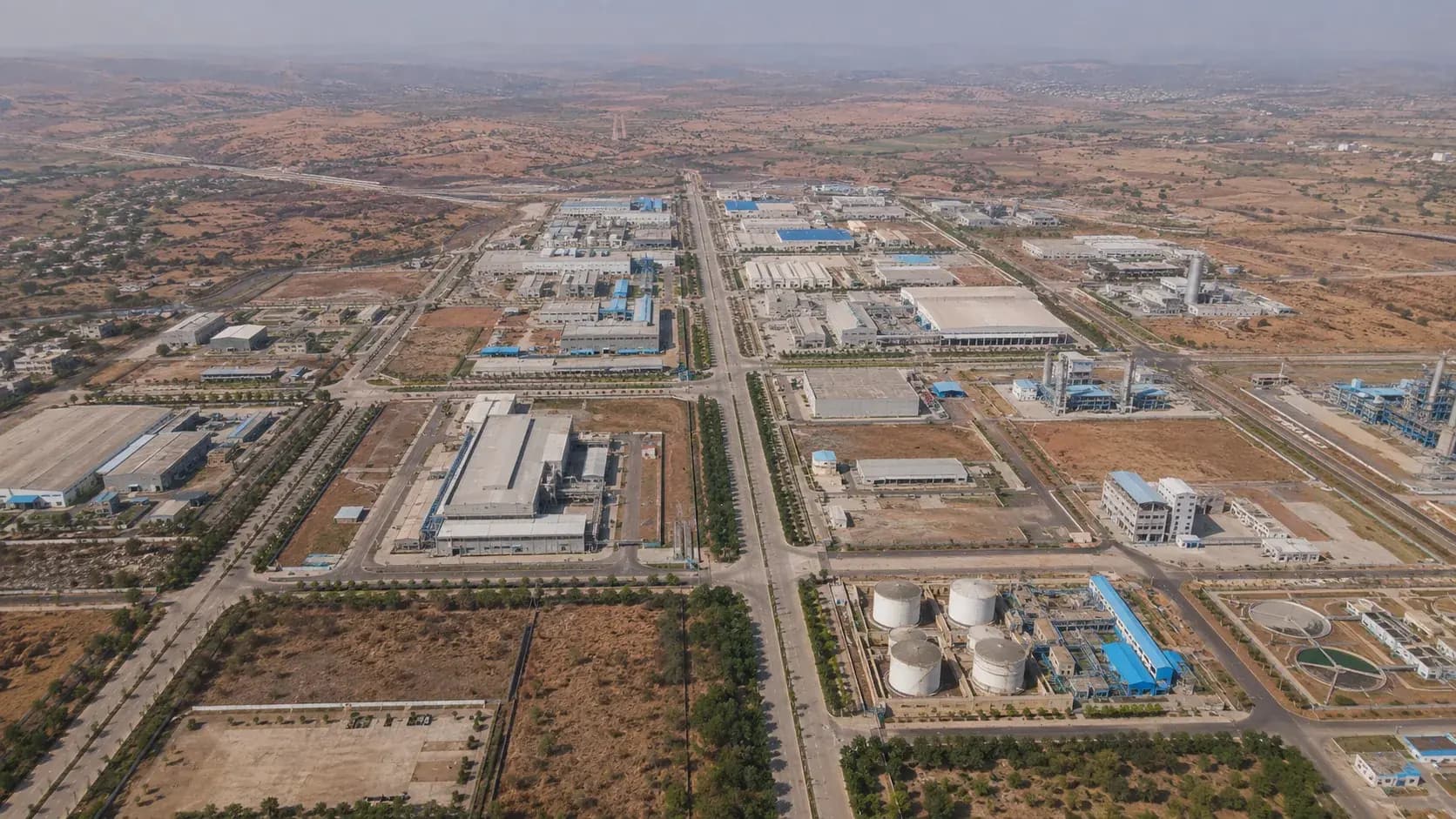
SHENDRA AND BIDKIN INDUSTRIAL AREA, AURANGABAD
Environmental compliance audits, Consent to Establish and green certification support across two industrial nodes of the Delhi-Mumbai Industrial Corridor.
- Shendra + Bidkin
- 4,024 ha
- City scale
- IGBC Gold
Where we do this
Green Building Certification for townships & area development, city by city.
Other sectors
Who else we run green building certification for.
Next step
Tell us the project, and we will tell you the category and the route.
Screening is the cheapest stage to get right and the most expensive to get wrong. We will say plainly what green building certification your townships & area development project needs, and what it does not.





























































Start the conversation