









Water Body Remediation · Industrial Corridors & MIDC
Nalah and Water Body Remediation for Industrial Corridors
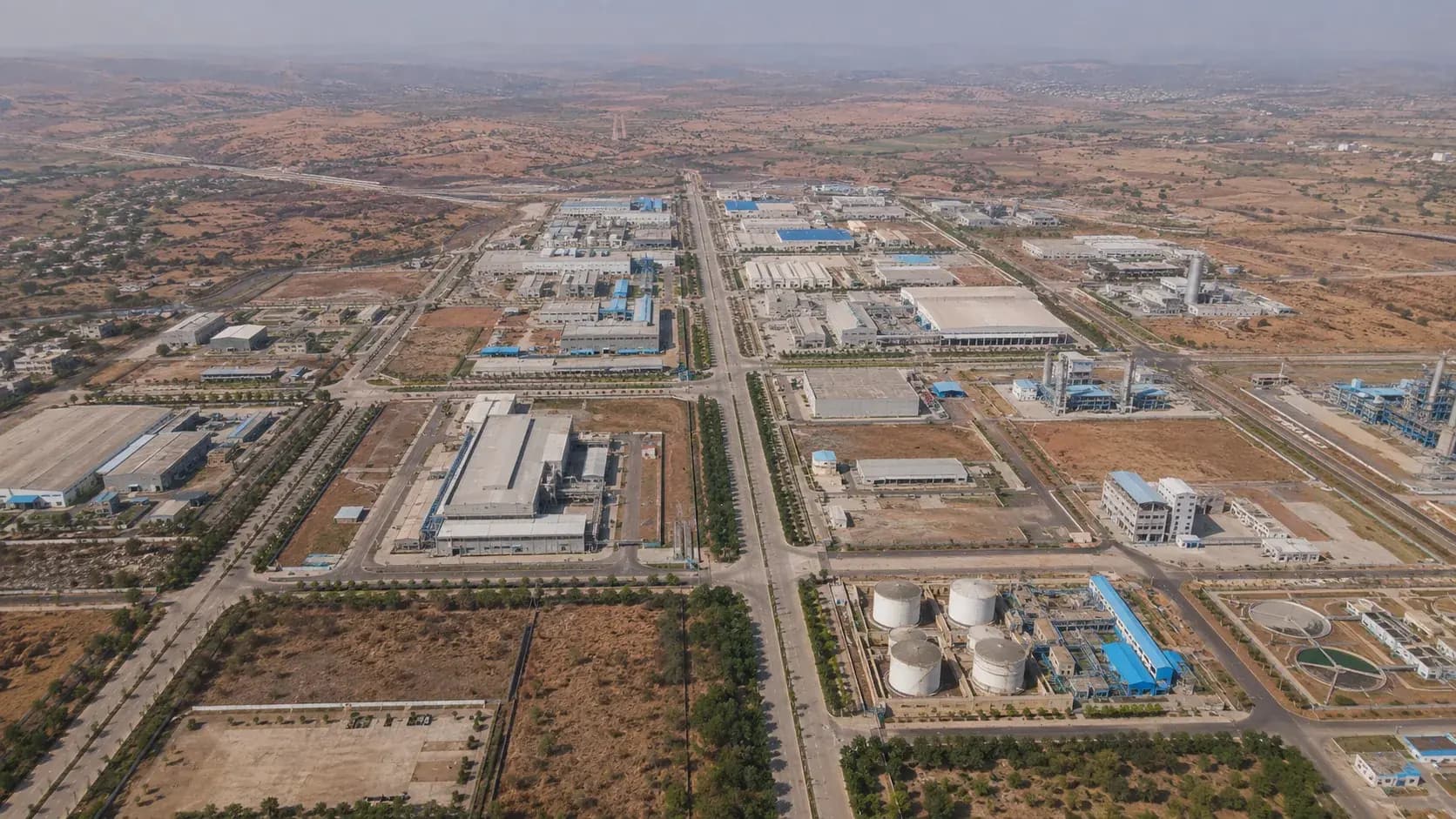
A nalah crossing an industrial estate carries both the node's stormwater and whatever is discharged into it unofficially, and its condition at the estate boundary is what downstream villages and the pollution control board both measure.
Screening view on your project, with the category and route named. No obligation.
What this means for industrial corridors & midc
Natural drainage lines through a node are a regulatory exposure in a way they are not for a single factory. Sampling at the point where a nalah leaves the estate produces a number attributed to the estate as a whole, whichever plot caused it, and the authority is then in the position of having to identify the source after the fact. Downstream villages, often the same communities that appeared at the public hearing for the node's clearance, read the nalah as the test of what was promised. Remediation therefore begins with source tracing rather than with treatment.
How KIPL runs it
KIPL approaches these as tracing exercises with a remediation component: segment-wise sampling up the drainage line to isolate where load enters, verification of each connection and outfall against what that plot is permitted to discharge, and only then a treatment or channel intervention sized for what remains after the illicit inflows are closed. The recurring error is a treatment contract at the outfall, which treats the symptom at the point of maximum visibility while the discharge continues upstream, and fails as soon as load rises.
Boundary sampling attributes load to the estate
The quality of a nalah where it leaves the node is read as the estate's performance. Without segment-wise data the authority cannot separate its own position from a single tenant's discharge.
Downstream communities hold the node to its hearing commitments
The villages that raised objections at the node's public consultation are usually the ones downstream, and the drainage line is the visible test of the commitments made there.
- Water Act 1974
Unauthorised discharge to a stream
Discharge of polluting matter into a stream without consent is an offence under the Water Act, and a stormwater drain used as an effluent route is the most damaging finding a boundary inspection can produce.
What you receive
Written for industrial corridors & midc, not adapted from a template.
- 01Drainage line mapping across the node, with every outfall and connection recorded
- 02Segment-wise sampling to isolate where load enters, rather than outfall sampling alone
- 03Verification of each connection against the discharging plot's permitted effluent route
- 04Illicit connection closure programme with the contractual basis for requiring it
- 05Channel, edge and treatment intervention sized for the load remaining after closures
- 06Continuing boundary and segment monitoring at fixed locations, with a stated reporting cycle
Questions from industrial corridors & midc
What industrial corridors & midc ask before appointing us.
Answered against the regulation as it stands, not as a sales pitch. If your situation is not here, ask us directly.
Ask a question →Why start with tracing rather than treatment?
Because treatment at the outfall is sized against a load that is still arriving. Closing illicit connections changes the load fundamentally and usually reduces the treatment required, sometimes to nothing. Building treatment first means paying to treat a discharge that should not exist and continuing to do so indefinitely.
How is the source of a discharge actually identified?
By sampling in segments up the drainage line rather than at the outfall, so that the point where load enters can be bracketed, and then by physically verifying the connections in that reach against what each plot is permitted to discharge. Timing matters, since intermittent discharges will not appear in a single daytime round.
What can the authority do about a tenant discharging to the stormwater drain?
It depends on what the allotment and connection agreements provide. Where obligations and monitoring rights are written in, the authority has graded remedies from notice through load restriction to disconnection, and the discharge is also an offence under the Water Act 1974 that the pollution control board can act on. Where nothing was written in, the authority is left relying entirely on the board.
Does the nalah condition affect the node's clearance compliance?
It appears in it, since the node's clearance conditions and its Environment Management Plan will cover surface water quality and drainage. A deteriorating boundary sample is exactly the kind of finding that surfaces in half-yearly compliance reporting and in any audit, and it is far better addressed with a documented tracing and closure programme than explained.
How should monsoon flows be dealt with?
By designing the intervention for them rather than around them. A nalah is a stormwater channel first, and any structure or treatment placed in it has to pass monsoon flow without failing or being washed out. Interventions sized only for dry-weather flow are removed by the first heavy season.
What does the downstream community need to see?
Measured, repeated data at fixed points, and evidence that identified sources were closed. Communities downstream of an estate have usually heard commitments before, and a one-off improvement announced without a monitoring record does not change the position. A published monitoring cycle at fixed locations is what builds a defensible position for the authority.
Stage by stage
How water body remediation actually runs, step by step.
Also for industrial corridors & midc
The rest of the environmental brief for this sector.
Primary sources
Verify any of this at the source.

Relevant proof
NAMAMI GANGE PROGRAMME
Environmental & Social Impact Assessment and EHS reporting for existing and proposed sewage treatment plants on the Ganga.
- Largest existing STP
- 130 MLD
- Assessed
- 5 plants
Where we do this
Water Body Remediation for industrial corridors & midc, city by city.
Other sectors
Who else we run water body remediation for.
Next step
Tell us the project, and we will tell you the category and the route.
Screening is the cheapest stage to get right and the most expensive to get wrong. We will say plainly what water body remediation your industrial corridors & midc project needs, and what it does not.





























































Start the conversation