









Lake and pond restoration: stopping the inflow, then repairing the water body.
Lake restoration is a catchment problem before it is a lake problem: the inflow has to be controlled first, or the desilting, aeration and planting that follow are simply repeated in a few years.
What it is
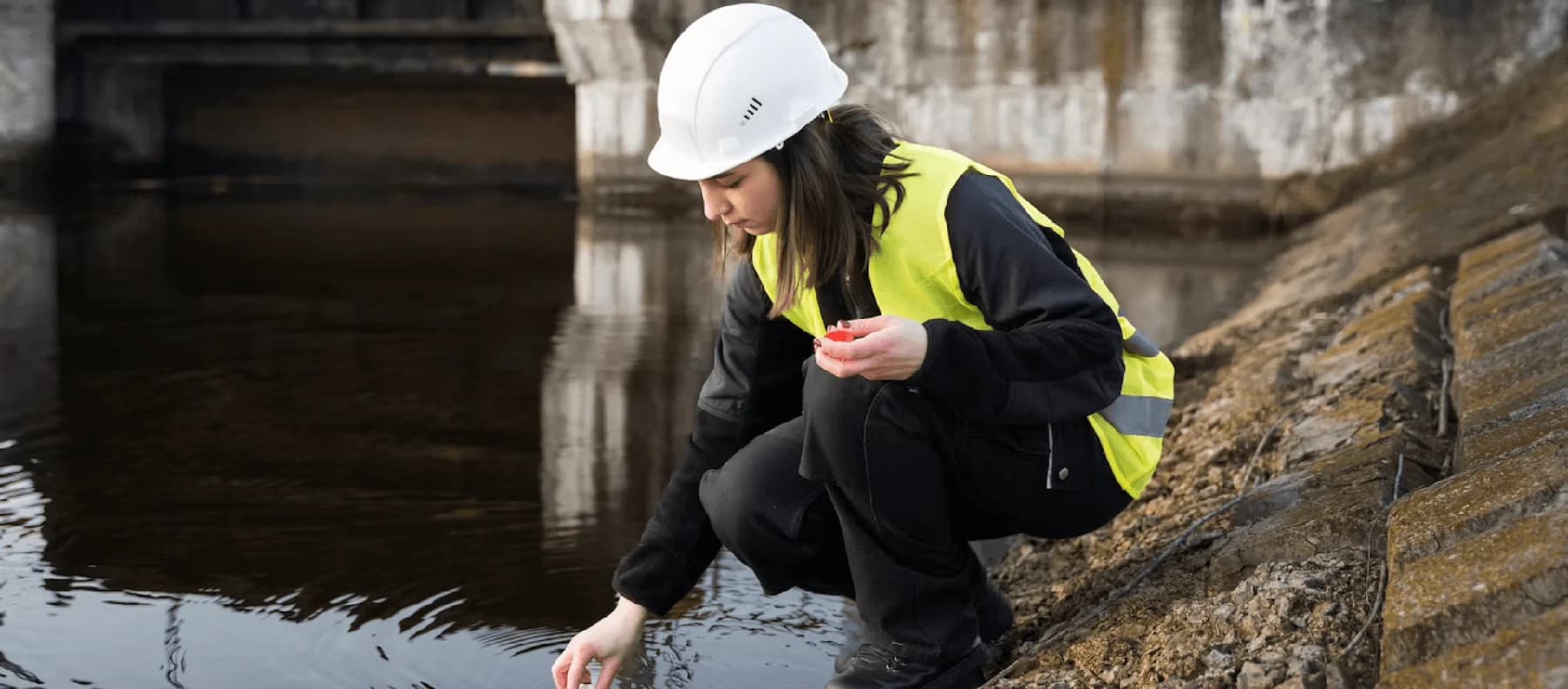
A restoration begins with a survey of what enters the lake and what has accumulated in it: catchment delineation, inlet and outfall mapping, bathymetry to establish sediment volume and storage lost, and water and sediment quality. From that follow the interventions: interception and diversion of sewage inflows, silt traps and inlet chambers, desilting to restore depth and remove stored nutrient load, bund and embankment repair, inlet and outlet structures to manage levels, and aeration or floating wetlands where in-water treatment is justified.
KIPL treats the edge and the fringe as part of the water body, not decoration: fringe vegetation, buffer planting, fencing or bunding to stop dumping, and a walkway that gives the public a reason to protect it. A restored lake also delivers benefits beyond appearance, restored storage attenuates local flooding and supports groundwater recharge: and those benefits, like the water quality, last only as long as the inflow control and the maintenance regime hold.
What you get
The deliverables, in hand.
- Authority
- NGT directions · NPCA guidelines · local body and water resources norms
- Typical timeline
- Works over months, sequenced around the dry season and monsoon
- Catchment, inlet and outfall survey with bathymetry and sediment volume
- Water and sediment quality baseline
- Sewage interception, silt traps and inlet control works
- Desilting with characterised handling and disposal of removed sediment
- Bund, embankment, inlet and outlet structure works
- Aeration, floating wetlands and fringe planting, with an O&M schedule
Straight answers
Lake & Pond Restoration: common questions.
01Why is inflow control more important than desilting?
Because sediment and nutrient load arrive with the inflow. A lake desilted while untreated sewage and silt-laden runoff continue to enter simply refills, and the money spent on dredging buys a few years at most. Interception, silt traps and catchment control are what make the desilting worth doing.
02How is the extent of desilting decided?
By bathymetric survey against the original or design bed level, which quantifies the sediment volume and the storage lost, and by sediment characterisation, which determines how the removed material can lawfully be handled. Removing more than the survey supports adds cost without benefit; removing less leaves the stored nutrient load that keeps releasing back into the water.
03What happens to the sediment that is removed?
It is characterised before removal, dewatered, and then reused as fill or landscape material where it is suitable, or handled and disposed of through authorised routes where the analysis puts it in a regulated category. Decant water from dewatering needs its own handling so that it is not simply returned to the lake that has just been cleaned.
04Do aeration and floating wetlands actually work?
They contribute, within limits. Aeration raises dissolved oxygen and supports aerobic degradation; floating wetlands and fringe planting take up nutrients and provide habitat and shading. Both are effective as polishing and as ongoing support once loading is controlled, and both are ineffective as a defence against a continuing sewage inflow. They also carry a permanent operating cost: power, maintenance and harvesting.
05Who is responsible for a restored lake?
The owning body, most often a municipal corporation, a development authority, an irrigation department or a panchayat, and in practice a local user or resident group alongside it. Aerators need power, silt traps need cleaning, wetlands need harvesting and the fringe needs protection from dumping. A restoration handed over without an operating budget and an accountable owner degrades within a few seasons.
06What statutory driver usually initiates a lake restoration?
Frequently a direction of the National Green Tribunal on a specific water body, along with state and national programmes for the conservation of lakes and wetlands such as the National Plan for Conservation of Aquatic Ecosystems, and local body obligations to protect notified water bodies. The applicable driver determines the reporting parameters and the accountable authority.
07Does restoration help with flooding or groundwater?
It can. Restoring lost storage volume gives a lake back its capacity to attenuate local storm flows, and improved bed and fringe conditions can support recharge where the geology allows. These are real co-benefits worth quantifying at design stage, but they follow from the hydrology of the specific site and should not be asserted generically.
Within Water Body Remediation
Part of the whole route, the other components.
Relevant proof
Where this stage has already been delivered.

Shapoorji Pallonji · Kanpur & Unnao, Uttar Pradesh
NAMAMI GANGE PROGRAMME
Environmental & Social Impact Assessment and EHS reporting for existing and proposed sewage treatment plants on the Ganga.
Where we do this
Water Body Remediation on the ground.
The authority, the timeline and the local ground differ by city. These pages set out how water body remediation actually runs in each.
Featured projects
Work that carries its own evidence.


Our expertise
One team across the whole environmental brief.
Lake & Pond Restoration is one stage of one practice. Most projects need several, and the commitments made at clearance are the ones we build and maintain.
Who we do this for
Water Body Remediation reads differently by industry.
- 01
Municipal CorporationsCore
Nalah, lake and pond restoration is where a corporation is judged publicly, and in-situ treatment has to hold through the monsoon.
Water Body Remediation for Municipal Corporations - 02
River & Water MissionsCore
Nalah interception, in-situ treatment and river stretch rejuvenation are the mission's actual deliverable, measured on river water quality.
Water Body Remediation for River & Water Missions - 03
Industrial Corridors & MIDC
Nalahs crossing an estate carry both stormwater and unauthorised discharge, and their condition is what the downstream village measures.
Water Body Remediation for Industrial Corridors & MIDC
Trusted by
The organisations this work is done for.






In the press