









ESIA for water bodies: assessing what a river or lake intervention actually changes.
An Environmental and Social Impact Assessment for a water body examines both sides of an intervention: what it does to the ecology and hydrology, and what it does to the people who depend on the water body.
What it is
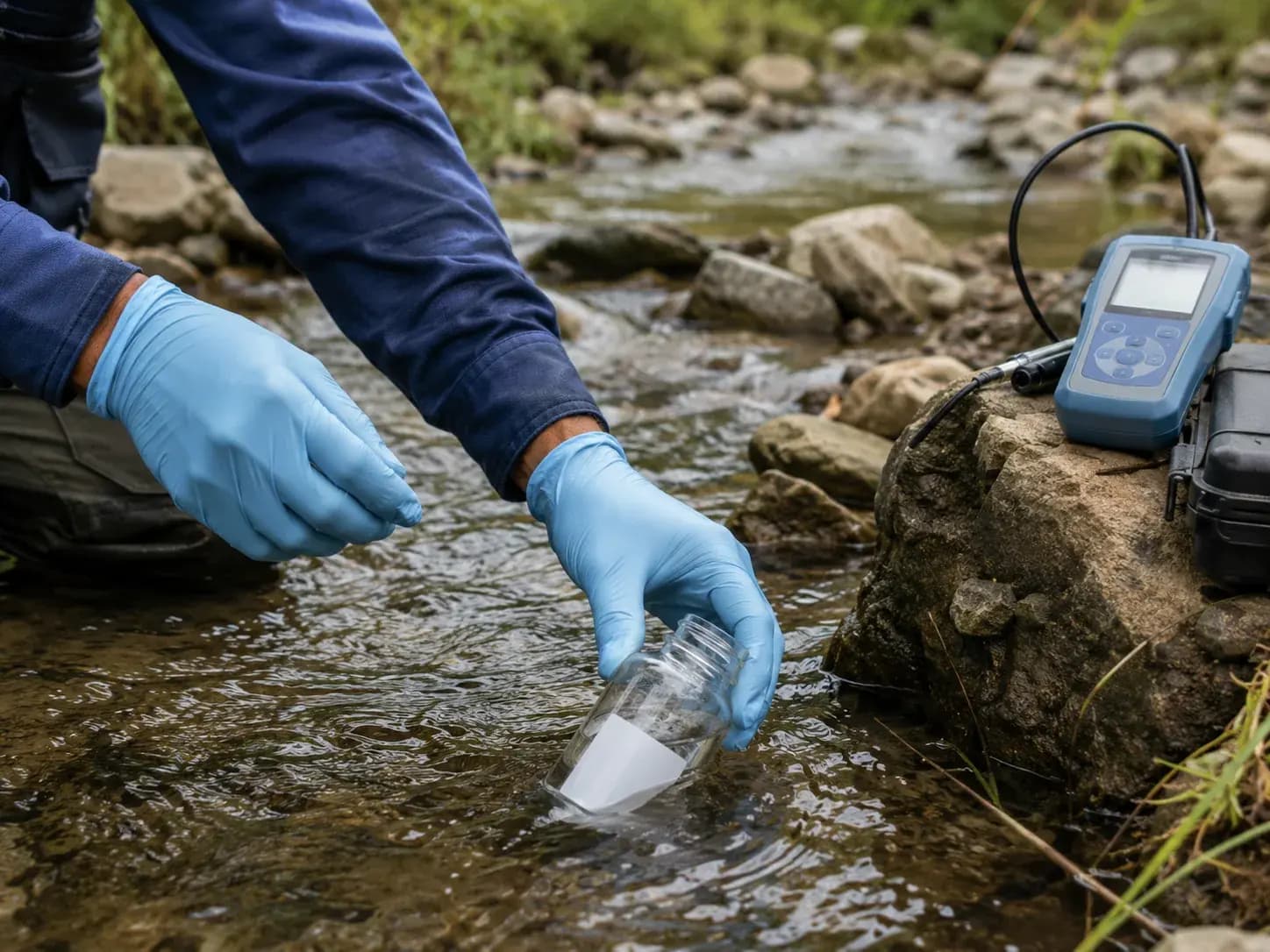
The environmental side establishes baselines that a restoration or a development will be judged against: water and sediment quality, bathymetry and hydrology, inflow and outflow regime, and ecology including macrophytes, fish and the bird populations that shallow margins and fringe vegetation support. It then predicts how the proposed intervention (dredging, embankment works, level control, an interception scheme or a development on the fringe) will alter those conditions during construction and afterwards.
The social side is what distinguishes an ESIA from an environmental assessment alone. Water bodies carry livelihoods and daily use: fishing, washing, cattle, irrigation abstraction, informal settlement on the fringe, and religious and cultural practice at the ghats and banks. KIPL identifies those users, assesses how construction and the restored regime affect them, and frames the mitigation and, where relevant, the livelihood restoration measures that lenders following IFC or World Bank standards expect. Where the intervention falls within the EIA Notification 2006, the statutory route applies alongside.
What you get
The deliverables, in hand.
- Authority
- EIA Notification 2006 where applicable · IFC / World Bank ESIA standards
- Typical timeline
- Months, including at least one season of baseline monitoring
- Water, sediment and hydrology baseline with bathymetry
- Ecological survey: aquatic flora, fish and avifauna, with habitat assessment
- Social baseline of dependent users, livelihoods and cultural and religious use
- Impact prediction for construction and operating phases
- Environmental and social management plan with mitigation and monitoring
- Stakeholder consultation record and grievance mechanism
Straight answers
ESIA for Water Bodies: common questions.
01How is an ESIA different from an EIA?
An EIA assesses environmental impacts; an ESIA covers environmental and social impacts together, with the social component (livelihoods, access, displacement, cultural use and vulnerable groups) assessed to the same standard as the environmental one. Lender-financed projects generally require the ESIA form because their safeguard policies place explicit obligations on social outcomes.
02When is an ESIA required for a water body project?
Where a lender or funding agency applies safeguard standards such as those of the IFC or the World Bank, where a state programme or a court or tribunal direction requires it, or where the intervention falls within the EIA Notification 2006 and statutory clearance is needed. Many restoration projects require assessment for the first two reasons even when the third does not apply.
03What social impacts arise from a lake or river restoration?
Restrictions on access during works, effects on fishing and on cattle watering, disturbance to washing and to religious and cultural use of the banks and ghats, and, where the fringe is occupied, displacement of informal settlement. A restoration is generally beneficial overall, which is exactly why the specific groups who bear a cost need to be identified rather than assumed away.
04What ecological baseline is needed?
Water and sediment quality, bathymetry and the hydrological regime, aquatic vegetation, fish, and bird populations with their use of the shallows and fringe, over a period sufficient to reflect seasonal variation. Bird use in particular is seasonal, and a single-visit survey will miss migratory presence entirely, which is why timing of the survey matters as much as its method.
05Can desilting itself cause environmental harm?
It can, and the assessment should say so. Dredging disturbs benthic habitat, resuspends sediment and nutrients, temporarily raises turbidity, and if timed badly can coincide with fish breeding or migratory bird presence. These are manageable through timing, staged working and turbidity control, but they have to be identified before the works rather than defended afterwards.
06What does the management plan actually commit to?
Specific, budgeted and monitorable measures: construction-phase controls on turbidity, noise and waste, timing restrictions around ecological windows, access arrangements for dependent users, livelihood restoration where a use is displaced, a grievance mechanism, and a post-works monitoring programme with named parameters and frequencies. A plan that cannot be audited is not a management plan.
07How does stakeholder consultation work for a water body project?
Through identifying the actual user groups (fisherfolk, adjoining residents, temple and community bodies, farmers abstracting water) and consulting them on the design and the construction arrangements, with the record and the responses forming part of the assessment. Water bodies are contested spaces, and a scheme that has not spoken to its users tends to meet them later through objections and litigation.
Within Water Body Remediation
Part of the whole route, the other components.
Primary sources
Check it at source.
This page describes EIA Notification 2006 where applicable · IFC / World Bank ESIA standards. The regulation and the filing portal are public, these are the official endpoints, not our summary of them.
Relevant proof
Where this stage has already been delivered.

Shapoorji Pallonji · Kanpur & Unnao, Uttar Pradesh
NAMAMI GANGE PROGRAMME
Environmental & Social Impact Assessment and EHS reporting for existing and proposed sewage treatment plants on the Ganga.
Where we do this
Water Body Remediation on the ground.
The authority, the timeline and the local ground differ by city. These pages set out how water body remediation actually runs in each.
Featured projects
Work that carries its own evidence.
Our expertise
One team across the whole environmental brief.
ESIA for Water Bodies is one stage of one practice. Most projects need several, and the commitments made at clearance are the ones we build and maintain.
Who we do this for
Water Body Remediation reads differently by industry.
- 01
Municipal CorporationsCore
Nalah, lake and pond restoration is where a corporation is judged publicly, and in-situ treatment has to hold through the monsoon.
Water Body Remediation for Municipal Corporations - 02
River & Water MissionsCore
Nalah interception, in-situ treatment and river stretch rejuvenation are the mission's actual deliverable, measured on river water quality.
Water Body Remediation for River & Water Missions - 03
Industrial Corridors & MIDC
Nalahs crossing an estate carry both stormwater and unauthorised discharge, and their condition is what the downstream village measures.
Water Body Remediation for Industrial Corridors & MIDC
Trusted by
The organisations this work is done for.






In the press