









Organic Waste Converters · Townships & Area Development
Organic Waste Converters for Townships & Area Development: decentralised composting sized per sector or cluster.
Decentralised organic waste converters sized per sector or cluster are how a township meets its wet-waste processing commitment across a phased build-out, without depending on a municipal tie-in that may not exist for years.
Screening view on your project, with the category and route named. No obligation.
What this means for townships & area development
A township's wet-waste load is large, continuous and geographically spread, and it grows sector by sector as occupancy arrives. Centralising all of it means internal haulage of putrescible waste across a residential settlement: unpleasant, expensive and fragile if the single unit is down. Decentralised converters sited per sector or cluster match the load as it appears, keep haul distances short, and let capacity be commissioned in step with each phase rather than sitting idle for years. The obligation behind it comes from the Solid Waste Management Rules 2016, which require a bulk generator to process the biodegradable fraction within the premises as far as possible, and it is reinforced by the 8(b) clearance conditions on solid waste. The compost produced has an obvious destination on a township that has committed to a green network: the belt, the sector open spaces and the landscape absorb it, which closes a loop the clearance already assumed.
How KIPL runs it
KIPL sizes the units to sector-level generation at design occupancy, sites them with the utilities and buffers they need, commissions them with the phase they serve, and sets up an operating routine the township's facility management can actually sustain. We also connect the output to the plantation programme so the compost is used rather than stockpiled. The failures we are called to fix are the same as in housing but multiplied by the number of sectors: units undersized against real occupancy, units sited where operation is unpleasant so they get bypassed, and units handed over without a budget, training or record-keeping, after which the township is quietly exporting wet waste it was approved on the basis of processing.
- SWM Rules 2016
In-premises processing of the wet fraction
A bulk waste generator must process its biodegradable waste within the premises as far as possible. On a township that means processing capacity distributed across the settlement, not a single distant unit.
- 8(b)
The clearance committed to it
On-site organic waste processing is a solid-waste condition of the township clearance, reported half-yearly against occupancy. Capacity has to arrive with the sectors it serves.
No municipal tie-in to fall back on
Greenfield townships often have no functioning municipal wet-waste route for years. Decentralised processing is the arrangement that works from day one of occupancy.
What you receive
Written for townships & area development, not adapted from a template.
- 01Sector-level wet-waste generation estimates at design occupancy across the phasing plan
- 02Decentralised converter capacity and unit selection, with siting, utilities, buffers and vehicle access designed into the layout
- 03Commissioning schedule that brings processing capacity online with each phase's occupancy
- 04Compost utilisation plan tied to the green network, sector open spaces and plantation programme
- 05Operator training, operating routines and service arrangements for the township facility management team
- 06Log formats and quantity records for the EC half-yearly report and the municipal corporation
Questions from townships & area development
What townships & area development ask before appointing us.
Answered against the regulation as it stands, not as a sales pitch. If your situation is not here, ask us directly.
Ask a question →One central plant or several sector units?
Several, in most township layouts. Decentralised units keep putrescible waste from being hauled across occupied sectors, allow capacity to be commissioned with each phase rather than idling, and limit the damage when one unit is down for service. The trade-off is more operating points, which the facility management arrangement has to be designed for.
How do we size units when occupancy arrives over years?
By sizing each unit for the sector it serves at that sector's design occupancy, and by commissioning it as that sector fills. This avoids the classic township problem of a large unit running at a fraction of load for three years and performing badly because of it.
Where does the compost go?
Into the township's own green network, sector open spaces and plantation programme, which the clearance has already committed the developer to building and maintaining. Planning that use in advance is what stops compost accumulating until the units are switched off.
What happens if there is no municipal collection nearby?
Then the decentralised processing is not a compliance nicety, it is the operational system. That situation is common for greenfield townships and should be assumed in the design rather than treated as a temporary condition to be resolved when the corporation extends services.
Who operates the units after residents move in?
The township facility management arrangement, with an operating budget and trained staff. Because the obligation continues under the clearance conditions and the SWM Rules, the handover has to transfer the routines, the logs and the service contracts, not just the machines.
How is this evidenced for compliance?
Through operating logs and quantity records (waste received, processed and compost produced, by sector) reported in the EC half-yearly compliance report and available to the corporation. Records kept per unit are also what tell you which sector's segregation has stopped working.
Stage by stage
How organic waste converters actually runs, step by step.
Also for townships & area development
The rest of the environmental brief for this sector.

Relevant proof
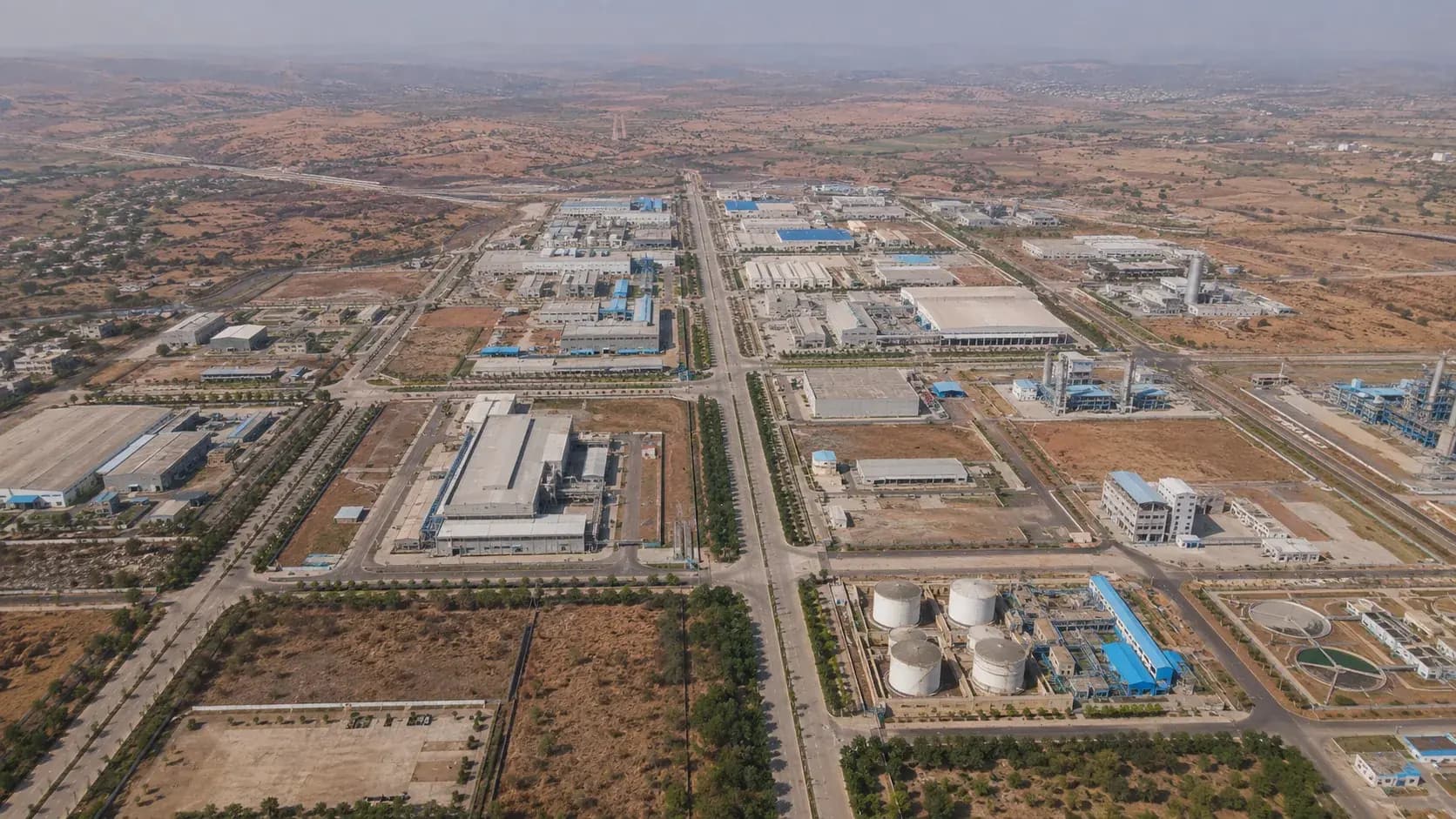
SHENDRA AND BIDKIN INDUSTRIAL AREA, AURANGABAD
Environmental compliance audits, Consent to Establish and green certification support across two industrial nodes of the Delhi-Mumbai Industrial Corridor.
- Shendra + Bidkin
- 4,024 ha
- City scale
- IGBC Gold
Where we do this
Organic Waste Converters for townships & area development, city by city.
Other sectors
Who else we run organic waste converters for.
Next step
Tell us the project, and we will tell you the category and the route.
Screening is the cheapest stage to get right and the most expensive to get wrong. We will say plainly what organic waste converters your townships & area development project needs, and what it does not.





























































Start the conversation