










Environmental Statement (Form-V): the annual return every consented unit owes by 30 September.
The Environmental Statement in Form-V is a statutory annual return under Rule 14 of the Environment (Protection) Rules 1986, submitted to the State Pollution Control Board by 30 September for the financial year ending 31 March.
What it is
Rule 14 of the Environment (Protection) Rules 1986 requires every person carrying on an industry, operation or process that holds consent under the Water Act 1974 or the Air Act 1981, or authorisation under the Hazardous Waste Rules, to submit an Environmental Statement for the preceding financial year. The prescribed Form-V covers water and raw material consumption per unit of product, pollution discharged to air and water against consented standards, hazardous and solid waste generated and disposed, disposal practices, impact of pollution abatement measures on conservation and production cost, and any additional investment proposed on environmental protection.
KIPL prepares Form-V from primary records rather than from last year's return: metered water consumption, production data, laboratory analysis reports, waste manifests and disposal receipts. The document matters more than its routine appearance suggests, because it is a self-declaration by the occupier that the Board can compare against consent conditions, against monitoring data it holds, and against the prior year. Internally inconsistent statements, or figures that contradict the consented quantum, are exactly what draw scrutiny.

What you get
The deliverables, in hand.
- Authority
- Rule 14, Environment (Protection) Rules 1986 · MPCB
- Typical timeline
- Annual, due by 30 September for the year ended 31 March
- Form-V compiled to the Rule 14 format for the financial year
- Water and raw material consumption normalised per unit of product
- Air and water pollutant discharge compared against consented standards
- Hazardous and solid waste generation, disposal route and quantities reconciled
- Abatement measures, their effect and proposed environmental investment
- Submission to the Board within the statutory date and record for the file
Straight answers
Environmental Statement: common questions.
01What is Form-V?
Form-V is the prescribed format of the Environmental Statement required under Rule 14 of the Environment (Protection) Rules 1986. It is an annual self-declaration of a unit's resource consumption, pollutant discharge, waste generation and abatement measures for the financial year, submitted to the State Pollution Control Board.
02Who has to file an Environmental Statement?
Every person carrying on an industry, operation or process that requires consent under the Water Act 1974 or the Air Act 1981, or authorisation under the hazardous waste rules. In practice that means essentially every consented unit, irrespective of category, files Form-V annually.
03What is the due date?
The statement is due on or before 30 September of each year, covering the financial year that ended on the preceding 31 March. The date is fixed by the rule, not by the Board, and late filing is a non-compliance that can be cited in consent renewal and in inspection findings.
04How is Form-V different from the returns filed with a consent?
Consent conditions typically require periodic monitoring reports and returns during the year, which are operational compliance data. Form-V is a separate annual statutory statement under the Environment (Protection) Rules with its own prescribed content, including consumption normalised per unit of product and the economics of abatement. Filing one does not discharge the obligation to file the other.
05What does the Board do with Form-V?
It is used to assess a unit's performance year on year and against its consented limits, and it feeds the Board record when consent renewal or enforcement action is considered. Because it is a declaration by the occupier, discrepancies between Form-V and the Board's own monitoring data are difficult to explain afterwards.
06What are the common errors in Form-V?
Consumption figures that do not reconcile with production, discharge quantum exceeding what the consent permits, waste quantities that do not match manifests and disposal receipts, and blanks left in the abatement and investment sections. Each of these is visible on the face of the return and invites a query or an inspection.
07Is Form-V the same as an environmental audit?
No. Form-V is a prescribed annual statement of specified parameters under Rule 14. An environmental audit is a wider examination of systems and compliance, which some Boards require separately as a consent condition. The two draw on overlapping data but are distinct obligations with different scope.
Within MPCB Consent
Part of the whole route, the other components.
Primary sources
Check it at source.
This page describes Rule 14, Environment (Protection) Rules 1986 · MPCB. The regulation and the filing portal are public, these are the official endpoints, not our summary of them.
Relevant proof
Where this stage has already been delivered.

KwaliChem Pvt. Ltd. · TTC Industrial Area, Rabale, Navi Mumbai
EIA for Synthetic Organic Chemical Industry
CTE/CTO application, ToR application, baseline data collection, EIA report and appraisal before the EAC: Category 5(f), the sector KIPL holds Category A accreditation in.
Where we do this
MPCB Consent on the ground.
The authority, the timeline and the local ground differ by city. These pages set out how mpcb consent actually runs in each.
Featured projects
Work that carries its own evidence.
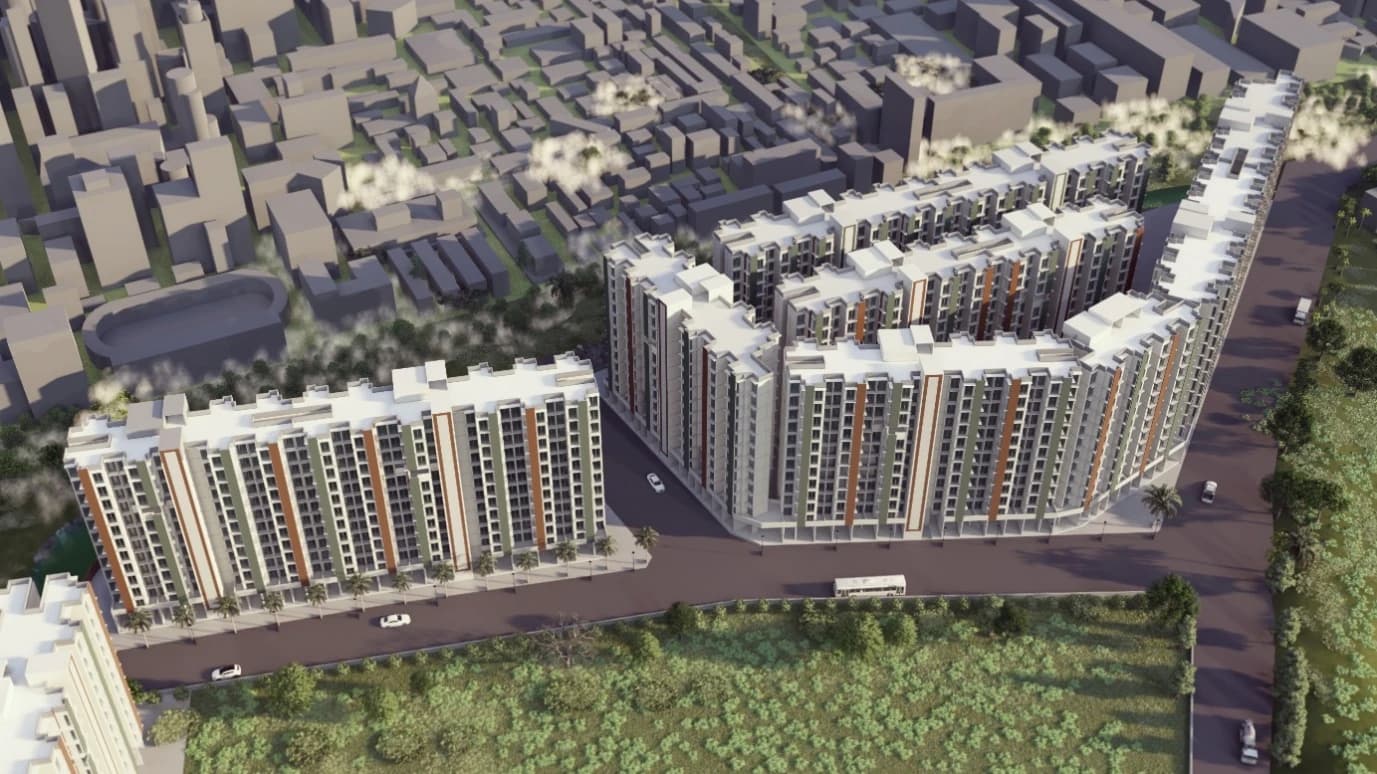
Our expertise
One team across the whole environmental brief.
Environmental Statement is one stage of one practice. Most projects need several, and the commitments made at clearance are the ones we build and maintain.
Who we do this for
MPCB Consent reads differently by industry.
- 01
Real Estate & ConstructionCore
Construction needs Consent to Establish and occupancy needs Consent to Operate; the STP and DG sets are what MPCB actually categorises.
MPCB Consent for Real Estate & Construction - 02
Townships & Area DevelopmentCore
Each phase needs its own CTE and CTO position, tied to the STP, water-supply and waste infrastructure actually commissioned in that phase.
MPCB Consent for Townships & Area Development - 03
Data Centres & IT ParksCore
DG capacity, HSD storage and cooling-tower blowdown are what set the consent category and the conditions MPCB attaches to operation.
MPCB Consent for Data Centres & IT Parks - 04
Hospitality, Healthcare & EducationCore
Healthcare occupancies sit in a higher consent category because of bio-medical waste and effluent, which changes both fees and conditions.
MPCB Consent for Hospitality, Healthcare & Education - 05
Chemical IndustryCore
A Red-category chemical unit's CTE and CTO conditions are written around effluent load, solvent handling and hazardous-waste storage.
MPCB Consent for Chemical Industry - 06
Distilleries & EthanolCore
Distilleries are Red category with consent conditions written around spent wash volume, storage lagoons and boiler emissions.
MPCB Consent for Distilleries & Ethanol - 07
Sugar IndustryCore
A mill's consent has to cover the crushing season load, bagasse-fired boiler emissions and press mud handling as one integrated position.
MPCB Consent for Sugar Industry - 08
Industrial & ManufacturingCore
Consent to Establish, Operate and renew is the licence to run, and the Red/Orange/Green/White category decides validity period and fees.
MPCB Consent for Industrial & Manufacturing
Trusted by
The organisations this work is done for.















In the press