









Wildlife Clearance · Logistics & Ports
Wildlife Clearance for Port & Logistics Sites near Coastal Sanctuaries
Thane Creek and the other coastal sanctuaries put a large share of Maharashtra's port and logistics land inside or beside an eco-sensitive zone, which routes the project through the State and National Boards for Wildlife before it can be built.
Screening view on your project, with the category and route named. No obligation.
What this means for logistics & ports
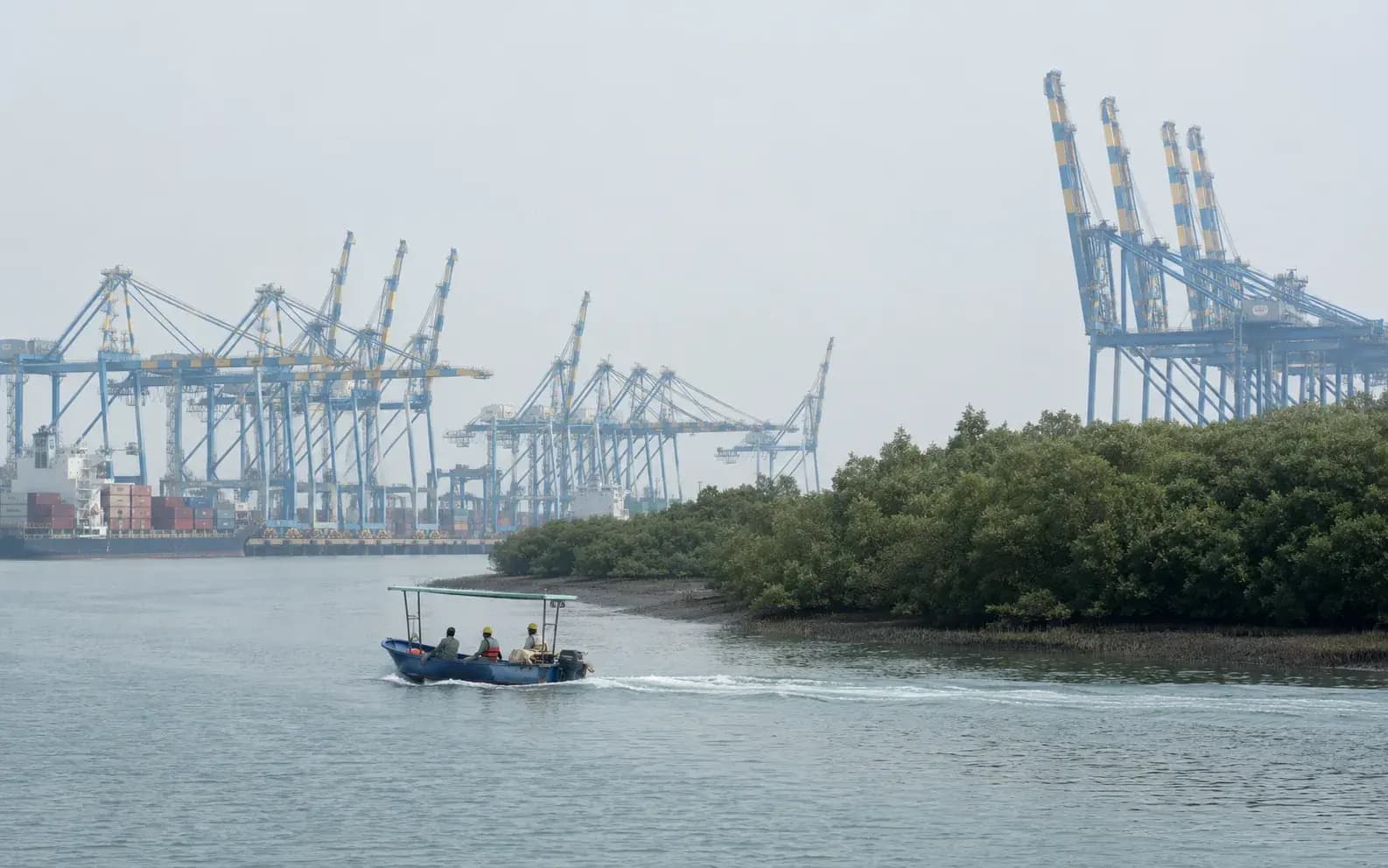
The coastal belt that logistics wants is the same belt that supports wader and flamingo habitat, mangrove creeks and marine sanctuaries, so proximity to a protected area is the rule rather than the exception around Mumbai, Navi Mumbai and the Konkan coast. Two consequences follow. First, the EIA Notification's General Condition escalates a project within the prescribed distance of a protected area to Category A, moving appraisal from the State authority to the MoEF&CC regardless of the project's size: which changes the committee, the timeline and the depth of the study. Second, where the site falls inside a notified eco-sensitive zone or otherwise requires it, the proposal has to go through the State Board for Wildlife and then to the Standing Committee of the National Board for Wildlife, accompanied by a wildlife conservation plan prepared with the forest department and funded by the proponent. What the wildlife committees actually examine for this sector is quite specific: night lighting from a 24-hour terminal spilling across roosting and feeding flats, noise and vibration from piling and dredging during the migratory season, loss or disturbance of intertidal feeding area, changes to creek hydrology and mudflat exposure caused by reclamation and bunding, traffic on the access corridor, and the mangrove buffer that separates the site from the creek.
How KIPL runs it
KIPL establishes the position on the map at concept stage, because it determines both the approval route and the category: the site boundary against the notified eco-sensitive zone and the sanctuary boundary, the distance measured from the correct reference, and a written statement of what that means for the file. Where the wildlife route applies, the submission is built around what the terminal will actually do: lighting design with cut-off luminaires and directed spill control, a dredging and piling calendar that avoids the peak migratory window, buffer marking on the creek edge, and a conservation plan agreed with the forest divisions rather than drafted in isolation. This is home-coast work for a Navi Mumbai firm, on a stretch where creek habitat and container terminals are neighbours. The costly error is treating wildlife as a downstream approval: a project scoped and baselined as Category B that turns out to be Category A on proximity has to start much of its appraisal again.
- ESZ
Coastal sanctuaries and their eco-sensitive zones
Thane Creek and other coastal protected areas carry notified zones that regulate activities on adjoining land, which is precisely where port and logistics sites are located.
- NBWL
SBWL then the Standing Committee
Proposals requiring wildlife clearance move through the State Board for Wildlife to the Standing Committee of the National Board for Wildlife, with a conservation plan funded by the proponent.
- General Condition
Proximity escalates the EC category
A site within the prescribed distance of a protected area is treated as Category A under the EIA Notification, moving appraisal to the MoEF&CC whatever the project's size.
What you receive
Written for logistics & ports, not adapted from a template.
- 01Site boundary mapped against notified ESZ and protected area boundaries, with distances established
- 02Written category and route position before the baseline programme is committed
- 03Eco-sensitive zone assessment and avifaunal baseline covering the creek, flats and roosting areas
- 04Wildlife conservation plan prepared with the forest divisions and costed for proponent funding
- 05SBWL submission and NBWL Standing Committee proposal with site inspection support
- 06Design and schedule mitigations carried into the EMP: lighting cut-off, dredging and piling windows, buffer marking
Questions from logistics & ports
What logistics & ports ask before appointing us.
Answered against the regulation as it stands, not as a sales pitch. If your situation is not here, ask us directly.
Ask a question →Does a container terminal near a creek sanctuary need wildlife clearance?
It depends on whether the site falls within a notified eco-sensitive zone or otherwise triggers the referral. The position has to be established against the actual notification for that protected area rather than a rule of thumb, because the zone boundary is rarely a simple radius. Separately, proximity to a protected area escalates the Environment Clearance category under the General Condition, and that applies whether or not a wildlife referral is required.
What do the wildlife committees focus on for a port project?
Disturbance rather than emissions. Night lighting from a terminal operating around the clock spilling onto roosting and feeding flats; noise and vibration from piling and dredging during the migratory season; loss of intertidal feeding area to reclamation; changes to creek hydrology and mudflat exposure from bunding; and the mangrove buffer at the water's edge. The conservation plan is judged on whether it addresses those concretely.
Can dredging and piling be scheduled around the birds?
That is usually the most effective mitigation available, and it is one the committees respond to. Confining the noisiest marine works to outside the peak migratory and roosting window is a schedule decision that costs far less than any engineering measure and is verifiable in the works programme. It has to be committed at proposal stage, since a contractor's programme fixed afterwards will not accommodate it.
How much does the wildlife route add to the timeline?
It is governed by the State Board for Wildlife's meeting cycle and the site inspection the Standing Committee normally calls for, neither of which the proponent controls. We do not quote a fixed period. What we do is sequence it so the wildlife position is being settled while the baseline programme runs, rather than discovered after the EIA is drafted.
Who prepares and pays for the wildlife conservation plan?
It is prepared with the territorial and wildlife forest divisions and approved by the Chief Wildlife Warden, and it is funded by the user agency. The proponent. Because it is a real project cost that arrives late in the approval sequence, we estimate it early so it is a budget line rather than a surprise after the Standing Committee's recommendation.
Does lighting design really matter for a coastal terminal?
Yes, and it is one of the few mitigations that is both effective and cheap if designed in. Cut-off luminaires, directed beams, shielded fixtures at the water-facing boundary and control of unnecessary night lighting substantially reduce spill onto adjacent flats. Retrofitting a lighting scheme across a working container yard after a condition is imposed is a different proposition entirely.
Stage by stage
How wildlife clearance actually runs, step by step.
Also for logistics & ports
The rest of the environmental brief for this sector.

Relevant proof
MCGM GARDEN DEVELOPMENT- MIYAWAKI PLANTATION
Miyawaki dense forestation across 27 locations in 7 wards using native species, delivered under the municipal greening programme.
- Area
- ~74,000 m²
- Trees
- ≈1,10,000
- CO₂ (est.)
- 2,052 t
Where we do this
Wildlife Clearance for logistics & ports, city by city.
Other sectors
Who else we run wildlife clearance for.
Next step
Tell us the project, and we will tell you the category and the route.
Screening is the cheapest stage to get right and the most expensive to get wrong. We will say plainly what wildlife clearance your logistics & ports project needs, and what it does not.





























































Start the conversation