










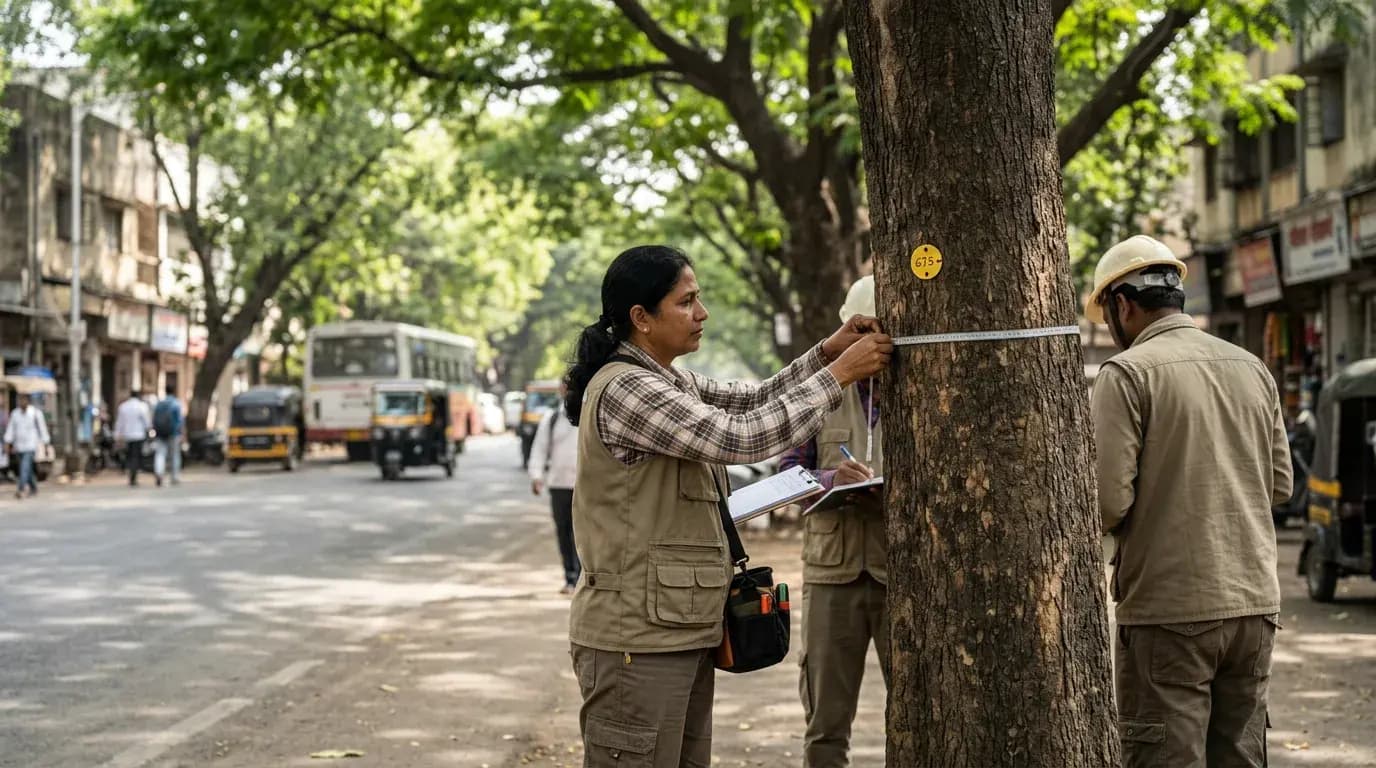
Tree Management in Lower Parel, Mumbai.
Tree Management for Lower Parel: read against this area's own ground, not the city's average.
Why Lower Parel
The ground this work sits on here.
- Area
- Lower Parel, Mumbai
- Practice
- Urban Ecology and Green Infrastructure Services
- Typically for
- Developers, contractors, infrastructure and industrial projects
Old mill compounds and the lanes around them hold rain trees, figs and banyans that predate most of the buildings. When a compound is redeveloped, each tree needs MCGM's Tree Authority before it is cut or moved, and older trees now carry heavier compensation. We number every tree in the compound, work out which can be kept by adjusting the layout, and plan transplanting where retention is impossible, so the permission application reflects real options rather than a request to clear.
Lower Parel was the heart of Girangaon, the mill district, where textile mills with tall chimneys stood among workers' chawls. As the mills closed through the 1980s and 1990s, their compounds were sold and rebuilt under the city's mill-land rules, and the area is now a cluster of office towers, malls, hotels and high-rise flats. Some mill walls, chimneys and chawls remain between them. Plots are compact and built to the edge, and the railway and flyovers cut through. The rebuilding is not finished; redevelopment of older chawls and buildings continues around the mill compounds.
How it works
Tree Management, from survey to survival.
- 01/05
Tree enumeration & census
Every tree on site numbered, measured and identified, the defensible count the whole application rests on.
- 02/05
Transplant feasibility
An honest assessment of which trees can be saved by transplantation rather than felled.
- 03/05
Tree Authority NOC
The cutting / transplantation application prepared and pursued through the relevant municipal Tree Authority.
- 04/05
Transplantation
Careful lifting, moving and replanting of feasible trees with root-ball protection.
- 05/05
Post-transplant survival
Monitoring and the survival compliance the authority requires after a transplant.
Local proof
Comparable work in Mumbai.
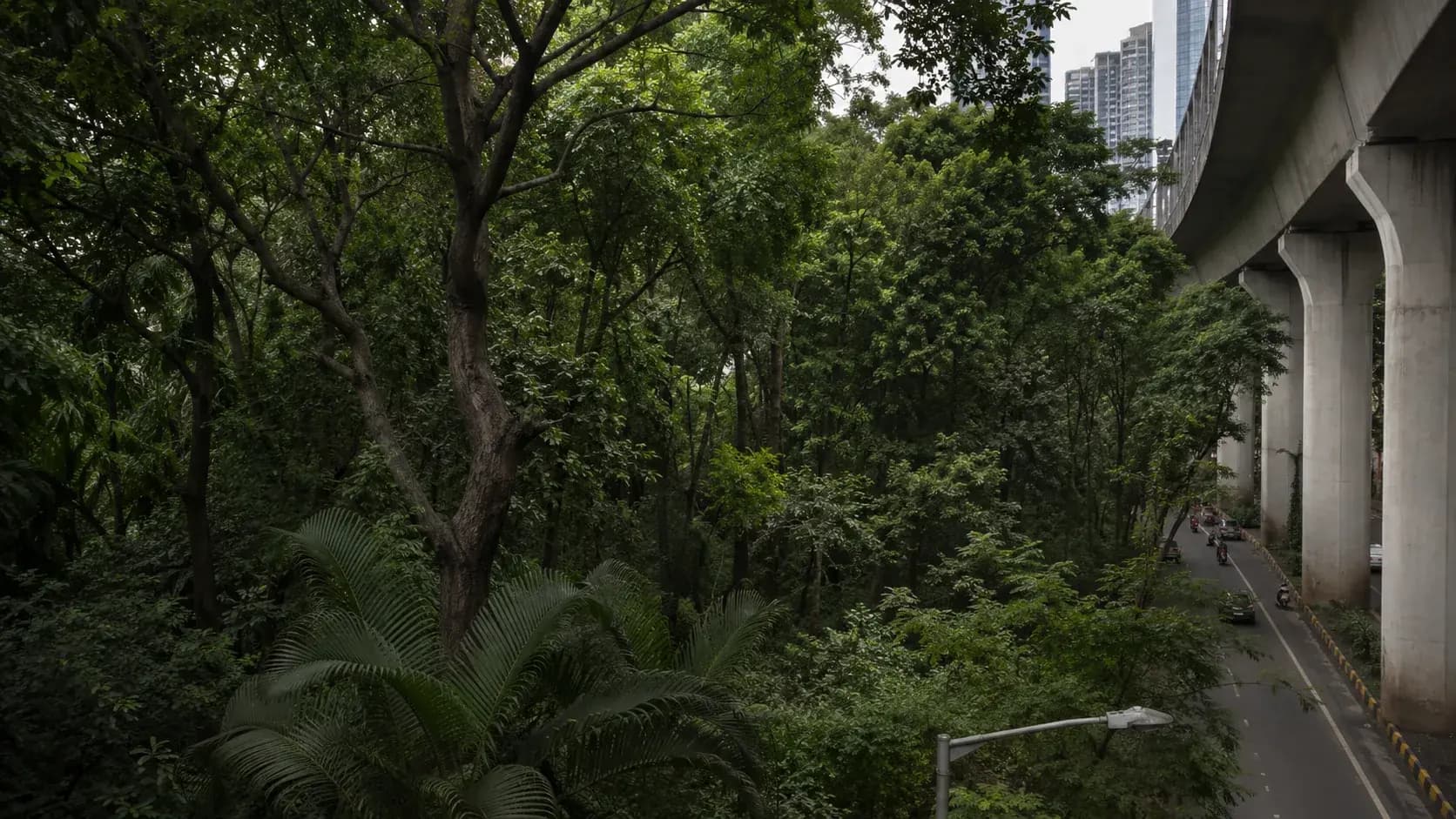
FDCM · Mumbai, Maharashtra
MIYAWAKI PLANTATION CONSULTANCY, MMRCL
Consultancy for Miyawaki plantation works associated with the MMRCL project, supporting plantation planning in coordination with the Forest Department.
See the full case →The record
The work, project by project.
Mandate, method and measured outcome, written end to end for every project on this list.
CTE/CTO application, ToR application, baseline data collection, EIA report and appraisal before the EAC: Category 5(f), the sector KIPL holds Category A accreditation in.
Read the case studyStraight answers
Tree Management in Lower Parel: common questions.
01Can we transplant a large old tree instead of cutting it?
Sometimes. Whether it lives depends on the species, its girth, the state of its roots and whether there is ground nearby to take it. Some species move well, others rarely recover. We judge each candidate, prepare the root ball months ahead where needed, and watch it after the move. For some trees, redesigning around them is the better answer.
02How long does tree management take in Lower Parel?
On timing: census in weeks; NOC by Tree Authority calendar. A realistic Lower Parel schedule is set once the site and the scope have been read, and the work is carried through to the outcome by the same named people.
In the press
Covers, features and conversations: the work, talked through.



Keep exploring
Where this connects.
Also in Lower Parel
Other work written for Lower Parel's own ground.
- Environment Clearance
- Post-EC Compliance
- Sewage Treatment Plants
- Organic Waste Converters
- Green Building Certification
Clients & partners
The work is trusted where the stakes are highest.
Two decades of clearances, treatment plants and green infrastructure delivered for India’s builders, industry and public bodies, and the global engineering firms beside them.





























































Tree Management in Lower Parel? Start with the ground you have.
One conversation to walk the site and plan for what survives: not just what gets planted.