









Regulatory Liaison and Audit Support: representing a cleared project to the authorities that inspect it.
Once a clearance is granted the relationship with the regulator becomes continuous (inspections, returns, queries and notices) and the quality of the response decides whether an issue closes or escalates.
What it is
A project holding an Environment Clearance is monitored by the regional office of the MoEF and CC and by the State Pollution Control Board under the Water Act 1974, the Air Act 1981 and the Environment (Protection) Act 1986. Inspections, monitoring visits, directions, show-cause notices and, in contested matters, proceedings before the National Green Tribunal follow a cleared project through its life. These are decided on the regulator's file (what was reported, what was evidenced, what was found on site), rather than on the proponent's intentions.
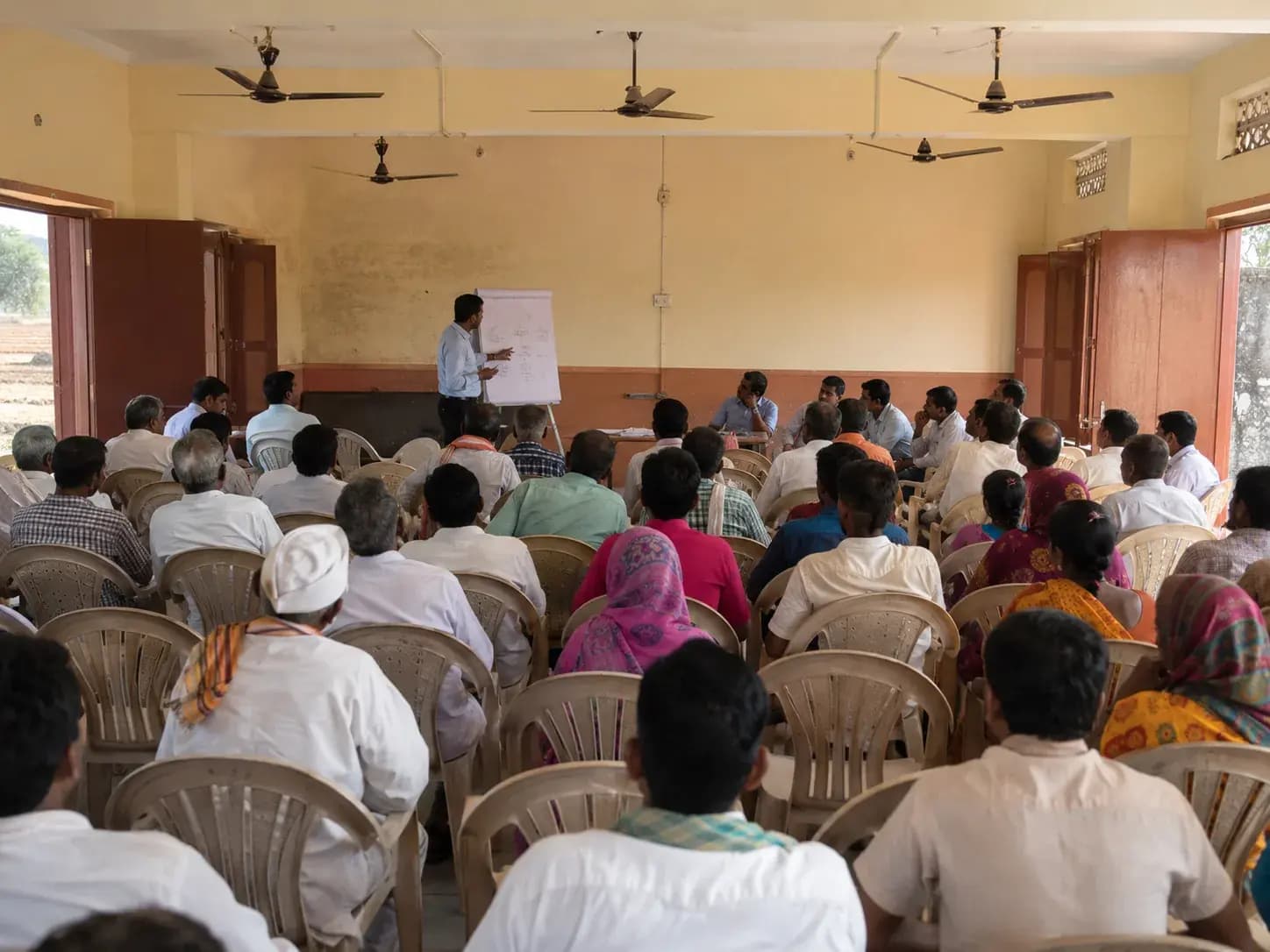
KIPL prepares projects for inspection, attends and supports monitoring visits, and drafts replies to queries and notices that are factual, evidenced and specific about corrective action and its dates. We also carry out internal compliance audits against the clearance and consent conditions so that weaknesses are found by the proponent before they are found by an inspecting officer. A notice answered with evidence and a dated corrective plan usually closes; the same notice answered with assertion tends to escalate, and escalation costs in ways that have little to do with the original lapse.
What you get
The deliverables, in hand.
- Authority
- MoEF&CC regional office · SPCB / CPCB · EP Act 1986
- Typical timeline
- Ongoing; notice replies within the period the notice states
- Inspection readiness review against both EC conditions and consent conditions
- Attendance and technical support during regional office, SPCB and monitoring-committee visits
- Drafted replies to queries, directions and show-cause notices, with the supporting evidence
- Internal environmental compliance audit with a prioritised corrective action plan
- Documentation packs for third-party and lender environmental audits
- Coordination of consent renewals and statutory returns alongside EC compliance
Straight answers
Regulatory Liaison & Audit Support: common questions.
01Who inspects a project after clearance?
The regional office of the MoEF and CC monitors compliance with the Environment Clearance and its conditions, and the State Pollution Control Board inspects under the consent regime and the rules made under the Environment (Protection) Act 1986. Monitoring committees constituted for a specific project or area may also visit.
02What is a show-cause notice and how should it be answered?
It is a notice calling on the proponent to explain an apparent non-compliance before action is taken. It should be answered within the period stated, factually, condition by condition, with documentary evidence for what has been complied with and a dated corrective plan for what has not. An evasive reply converts a documentation issue into an enforcement issue.
03Is regulatory liaison the same as influence or lobbying?
No. It is preparation, documentation and representation on the record, making sure the regulator sees an accurate and evidenced picture of the project and that queries are answered properly and on time. Where a project is not in compliance, the professional answer is to correct it and say so, not to manage the perception of it.
04What is an environmental compliance audit?
It is a structured internal review of a project against its clearance conditions, consent conditions and applicable rules, producing a finding-by-finding record of compliance, partial compliance and gaps with corrective actions. It is done for the proponent's own benefit, and it is what makes an external inspection predictable.
05What powers does a regulator have where there is non-compliance?
Directions under section 5 of the Environment (Protection) Act 1986, including closure or stoppage of power and water supply, prosecution under section 15, refusal or revocation of consent by the State Board, and proceedings before the National Green Tribunal which can direct restoration and compensation.
06How does the compliance record affect future approvals?
Directly. Applications for amendment, expansion or extension of validity are considered against the project's compliance standing, and a record of missed reports or unremedied findings is visible on the file. Good compliance is not only a defence; it is a precondition for the next approval.
07Who should attend an inspection from the proponent's side?
Someone who can speak to the plant or the works and someone who holds the records, typically the site or EHS head with the compliance documentation to hand. An inspection that has to be answered later by correspondence because nobody present could produce a record is an inspection that has already gone badly.
08Are consent conditions and EC conditions inspected together?
Often in practice, but they rest on different statutes and are enforced by different authorities. A project can be compliant with its consent and still in breach of a clearance condition, or the reverse. Both sets should be held in the same register precisely so that neither is managed in isolation.
Within Post-EC Compliance
Part of the whole route, the other components.
Primary sources
Check it at source.
This page describes MoEF&CC regional office · SPCB / CPCB · EP Act 1986. The regulation and the filing portal are public, these are the official endpoints, not our summary of them.
Relevant proof
Where this stage has already been delivered.

MIDC / AURIC · Shendra & Bidkin, Chhatrapati Sambhajinagar
SHENDRA AND BIDKIN INDUSTRIAL AREA, AURANGABAD
Environmental compliance audits, Consent to Establish and green certification support across two industrial nodes of the Delhi-Mumbai Industrial Corridor.
Where we do this
Post-EC Compliance on the ground.
The authority, the timeline and the local ground differ by city. These pages set out how post-ec compliance actually runs in each.
Featured projects
Work that carries its own evidence.


Our expertise
One team across the whole environmental brief.
Regulatory Liaison & Audit Support is one stage of one practice. Most projects need several, and the commitments made at clearance are the ones we build and maintain.
Who we do this for
Post-EC Compliance reads differently by industry.
- 01
Real Estate & ConstructionCore
Half-yearly compliance reports fall due 1 June and 1 December from the date of grant, and lapses surface at occupancy certificate stage.
Post-EC Compliance for Real Estate & Construction - 02
Townships & Area DevelopmentCore
A multi-phase township files half-yearly compliance for a decade, against commitments made before the first plot was sold.
Post-EC Compliance for Townships & Area Development - 03
Data Centres & IT ParksCore
ESZ and CER conditions are monitored, and half-yearly reporting is what keeps a clearance defensible through successive capacity phases.
Post-EC Compliance for Data Centres & IT Parks - 04
Chemical IndustryCore
Half-yearly reporting on a 5(f) clearance is read closely, and stack, effluent and hazardous-waste data has to reconcile with the EIA commitments.
Post-EC Compliance for Chemical Industry - 05
Distilleries & EthanolCore
Spent wash inventory, lagoon integrity and ZLD performance are the conditions that half-yearly reporting is checked against.
Post-EC Compliance for Distilleries & Ethanol - 06
Sugar IndustryCore
Half-yearly reporting has to hold through the crushing campaign and the off-season, when monitoring is most often allowed to lapse.
Post-EC Compliance for Sugar Industry - 07
Mining & MineralsCore
Mining clearances carry production-capped conditions, and half-yearly reporting is where over-production and reclamation slippage are caught.
Post-EC Compliance for Mining & Minerals - 08
Logistics & PortsCore
CRZ and EC conditions on marine water quality, mangrove protection and dredge disposal are monitored, not assumed.
Post-EC Compliance for Logistics & Ports
Trusted by
The organisations this work is done for.









In the press