









Post-EC Compliance · Industrial Corridors & MIDC
Post-EC Compliance for Industrial Corridors and MIDC Nodes
A node's Environment Clearance conditions keep running for the whole life of the estate, and the development authority remains the accountable clearance holder long after the plots have been sold.
Screening view on your project, with the category and route named. No obligation.
What this means for industrial corridors & midc
The conditions attached to an area-wide clearance are not discharged at commissioning. Half-yearly compliance reports are due to the granting authority and its regional office by 1 June and 1 December, covering the whole node: green belt area achieved, water drawn against what was cleared, effluent treated and disposed, waste handled, ambient monitoring results, and progress against every specific condition. Meanwhile the node has changed: plots have been sold, tenants have arrived with loads that differ from the projection, phases have been resequenced, and the officers who filed the last report have moved on. The authority still has to state a position that matches the clearance.
How KIPL runs it
KIPL maintains this position continuously for corridor authorities rather than assembling it twice a year, and has carried out environmental compliance audit work across the Shendra and Bidkin AURIC nodes. The two failures we correct most often are drift and gaps: the node develops away from what was cleared without the divergence ever being recorded or taken back to the granting authority, and the monitoring data needed for the report was never collected because no department owned that condition. Both are visible immediately in a compliance audit, and both are far cheaper to fix while the node is still building.
- EIA Notification 2006
Half-yearly reporting for the life of the node
Compliance reports are due on 1 June and 1 December to the granting authority and its regional office, and are placed in the public domain. The obligation continues for as long as the clearance stands.
The authority remains the holder after plots are sold
Allotment transfers the plot, not the clearance. The node's conditions on water, effluent, green belt and monitoring remain the authority's to report on and to meet.
The node drifts from what was cleared
Industry mix, phasing and consumption diverge from the projections the clearance was granted on. Divergence that is never recorded becomes a violation finding rather than an amendment.
What you receive
Written for industrial corridors & midc, not adapted from a template.
- 01Condition register mapping every clearance condition to a named department with a reporting date
- 02Continuous data collection against each condition, rather than assembly before the due date
- 03Half-yearly compliance reports filed by 1 June and 1 December, with supporting evidence
- 04Divergence tracking: actual water, effluent, industry mix and phasing against what was cleared
- 05Amendment or expansion applications where the node has moved beyond its cleared envelope
- 06Readiness pack for regional office inspection and for compliance audit at node scale
Questions from industrial corridors & midc
What industrial corridors & midc ask before appointing us.
Answered against the regulation as it stands, not as a sales pitch. If your situation is not here, ask us directly.
Ask a question →Who files the compliance report once plots are sold?
The development authority, because it holds the clearance. Allotment transfers the plot but not the environment clearance or its conditions. Individual allottees report on their own clearances and consents where they hold them; the node-level conditions on green belt, common infrastructure, water and monitoring remain the authority's obligation.
When are the reports due?
Half-yearly, by 1 June and 1 December, to the authority that granted the clearance and its regional office, and they are placed in the public domain. The obligation continues for the life of the clearance, not merely through construction.
What happens when the node develops differently from what was cleared?
The divergence has to be identified and taken back to the granting authority, through amendment or a fresh application depending on its nature and scale. Divergence absorbed quietly is the standard route to a violation finding years later, when the node is fully developed and the options for correction are worst. Tracking actual against cleared parameters continuously is what makes the choice available in time.
Why do node compliance reports have gaps?
Because the conditions cut across departments (planning, engineering, water, estate management) and no single one owns the reporting. Data that was never collected cannot be reported, and the gap becomes visible at inspection. A condition register with a named owner and a reporting date for each condition is the fix, and it has to be set up rather than assumed.
Does compliance reporting cover what tenants do on their plots?
The node's conditions cover the estate-level parameters, which are affected by tenant conduct: common effluent quality, water drawn, waste handled, ambient monitoring. So while the authority does not report on each tenant, it has to be able to state the aggregate position, which requires plot-level data flowing back to it under the allotment terms.
What does a compliance audit at node scale examine?
Each clearance condition against the evidence for it: green belt area actually planted and surviving against area committed, monitoring records at the fixed locations, water and effluent quantities against cleared figures, waste routes, and the filing history of the half-yearly reports. It also examines whether the node as built matches the node as described in the clearance, which is where drift surfaces.
Stage by stage
How post-ec compliance actually runs, step by step.
Also for industrial corridors & midc
The rest of the environmental brief for this sector.

Relevant proof
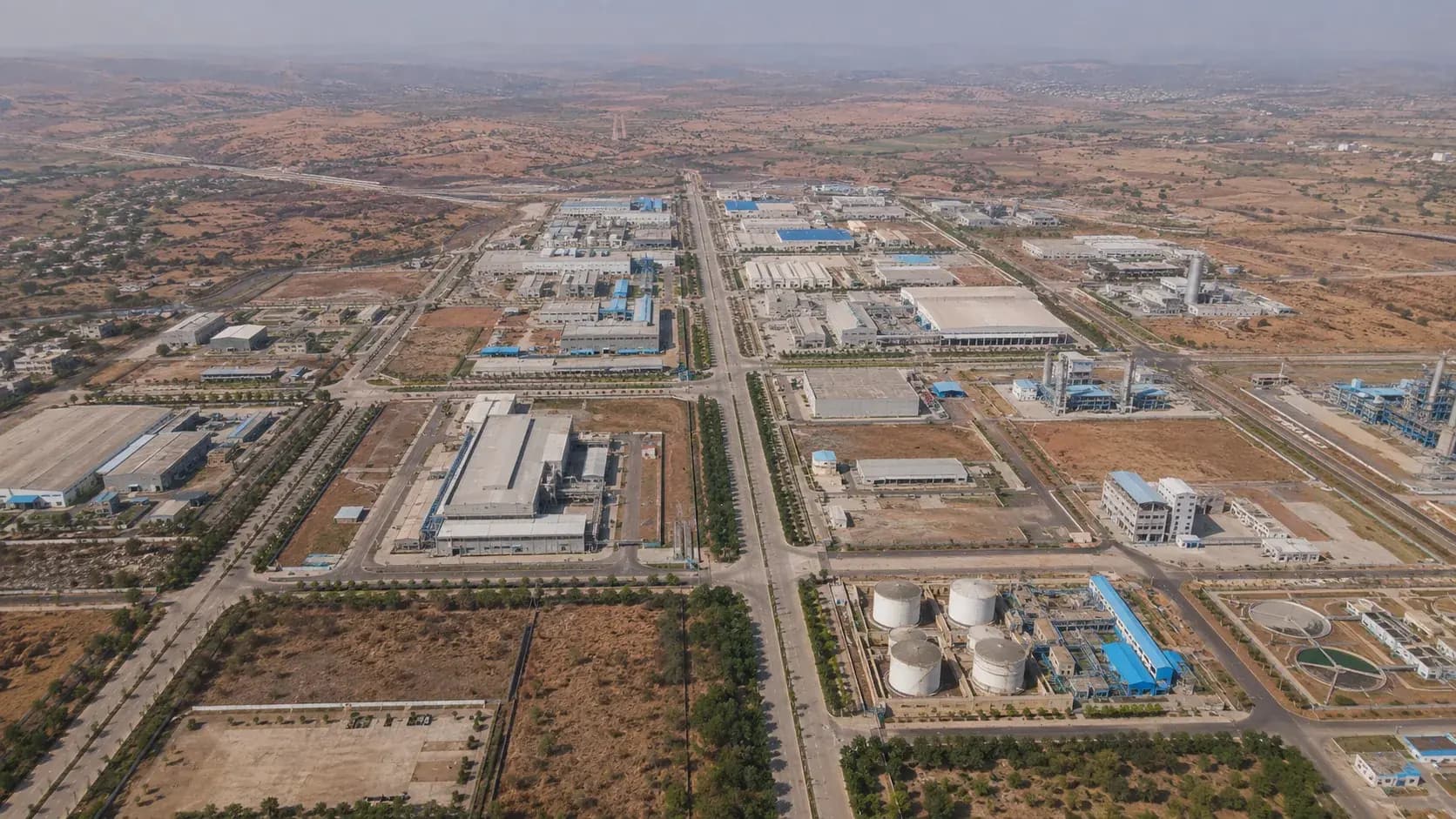
SHENDRA AND BIDKIN INDUSTRIAL AREA, AURANGABAD
Environmental compliance audits, Consent to Establish and green certification support across two industrial nodes of the Delhi-Mumbai Industrial Corridor.
- Shendra + Bidkin
- 4,024 ha
- City scale
- IGBC Gold
Where we do this
Post-EC Compliance for industrial corridors & midc, city by city.
Other sectors
Who else we run post-ec compliance for.
Next step
Tell us the project, and we will tell you the category and the route.
Screening is the cheapest stage to get right and the most expensive to get wrong. We will say plainly what post-ec compliance your industrial corridors & midc project needs, and what it does not.





























































Start the conversation