










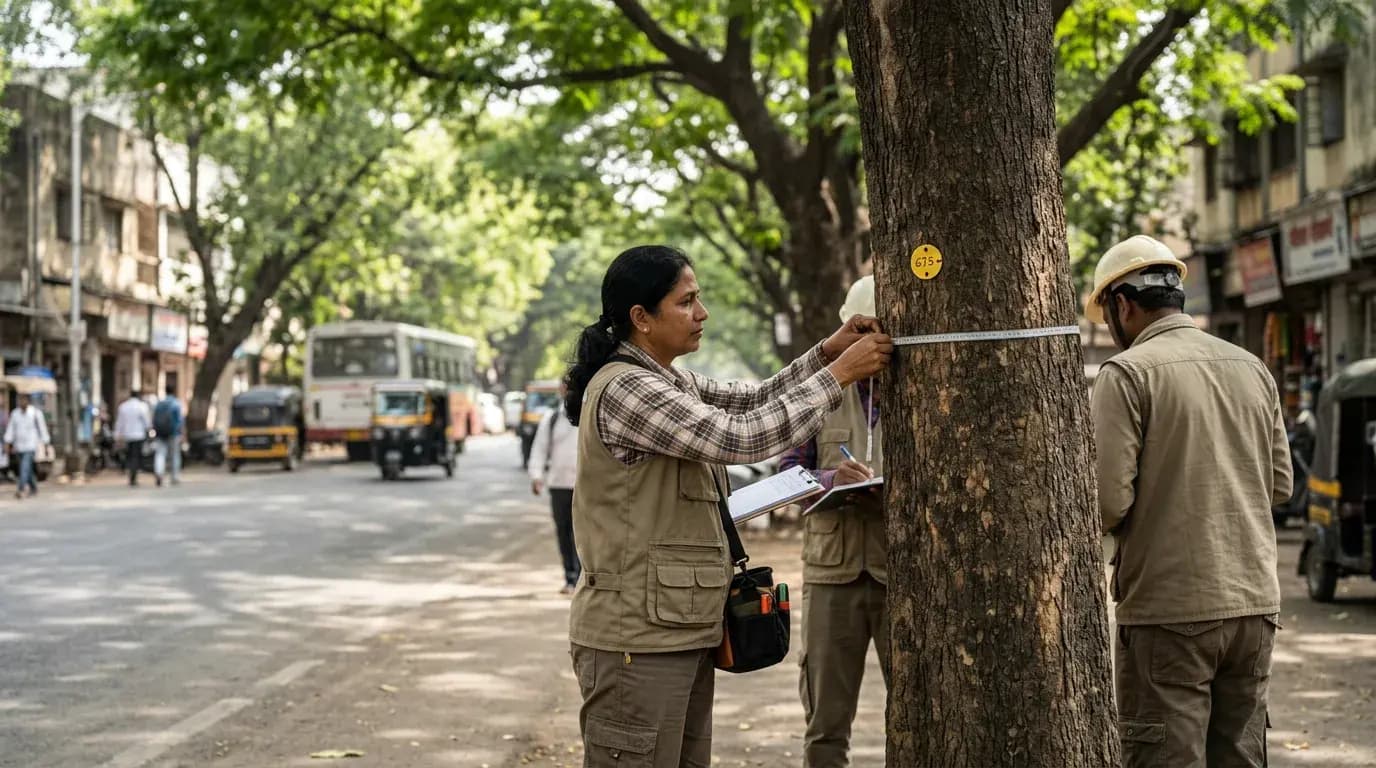
Tree Management in Vashi, Navi Mumbai.
Tree Management for Vashi: read against this area's own ground, not the city's average.
Why Vashi
The ground this work sits on here.
- Area
- Vashi, Navi Mumbai
- Practice
- Urban Ecology and Green Infrastructure Services
- Typically for
- Developers, contractors, infrastructure and industrial projects
CIDCO lined Vashi's roads and compounds with gulmohar, rain trees and other shade trees when the sectors were laid out, and many now stand taller than the buildings. Rebuilding brings basements, ramps and new foundations right up to them. Any felling or transplanting needs an order from NMMC's Tree Authority, followed by compensatory planting. We count and tag each trunk in the compound, sit with the architect to save those worth saving, and plan the moves and new planting around the finished compound.
Vashi was the first CIDCO node to be settled, at the Navi Mumbai end of the road bridge over Thane Creek, and it is still the city's busiest centre. Its sectors hold low-rise CIDCO housing put up in the seventies and eighties, much of it now due for rebuilding, alongside newer towers, malls, hospitals and the offices clustered around the railway station. The APMC wholesale markets, which moved here from south Mumbai in stages, trade produce, grain, spices and flowers for the whole region every night. Mangroves line the creek on its western side. Half a century on, Vashi is being rebuilt from within.
How it works
Tree Management, from survey to survival.
- 01/05
Tree enumeration & census
Every tree on site numbered, measured and identified, the defensible count the whole application rests on.
- 02/05
Transplant feasibility
An honest assessment of which trees can be saved by transplantation rather than felled.
- 03/05
Tree Authority NOC
The cutting / transplantation application prepared and pursued through the relevant municipal Tree Authority.
- 04/05
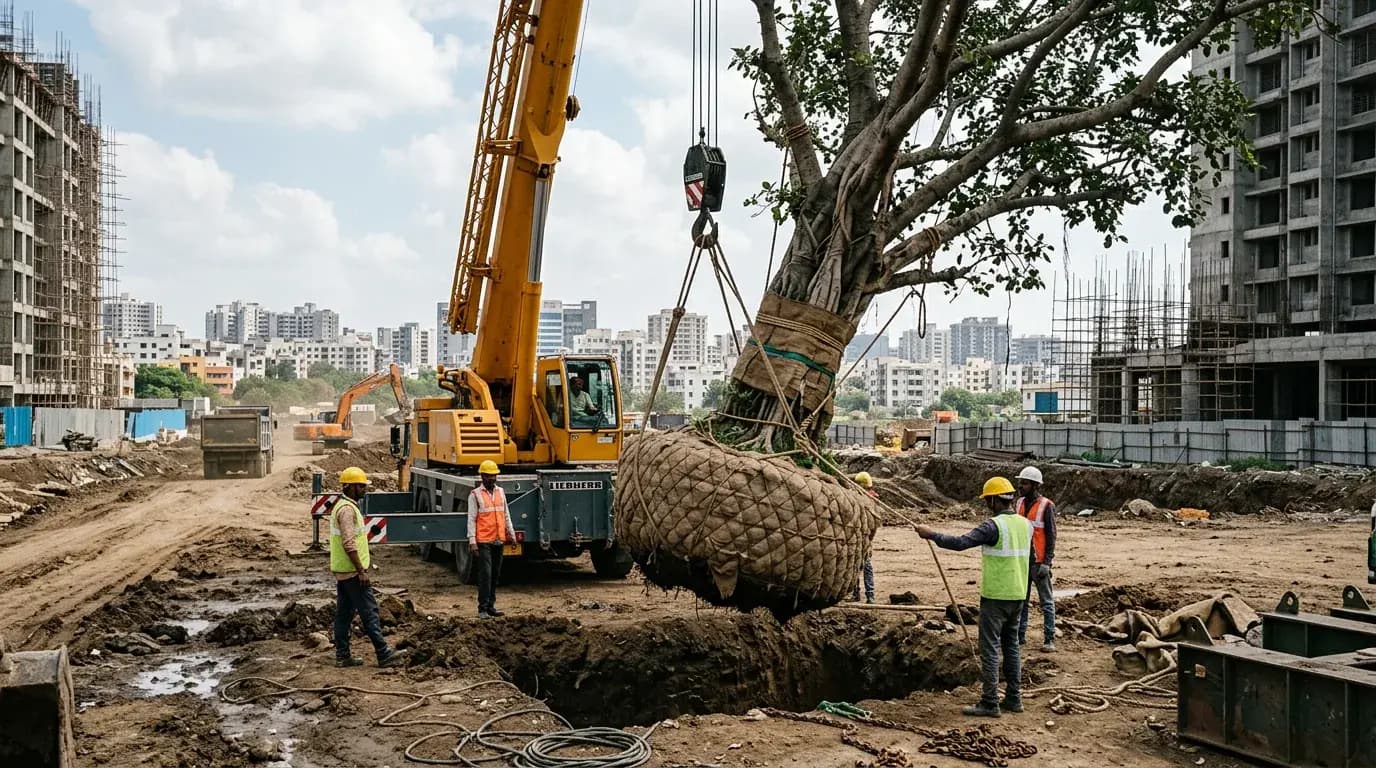
Transplantation
Careful lifting, moving and replanting of feasible trees with root-ball protection.
- 05/05
Post-transplant survival
Monitoring and the survival compliance the authority requires after a transplant.
Proof
Comparable work we've delivered.
MCGM · Eastern Suburbs, Mumbai
MCGM GARDEN DEVELOPMENT- MIYAWAKI PLANTATION
Miyawaki dense forestation across 27 locations in 7 wards using native species, delivered under the municipal greening programme.
See the full case →The record
The work, project by project.
Mandate, method and measured outcome, written end to end for every project on this list.
Category B1 under Schedule 8(b): EIA and EMP prepared and carried through SEIAA appraisal for the expansion at Nerul.
Read the case studyStraight answers
Tree Management in Vashi: common questions.
01Our compound has big old trees. Will the redevelopment take them all?
Not necessarily. Many can stay if the layout allows for them early; basement edges and driveways usually decide it. A few can be moved. The society is best placed to ask for this before the plans are frozen, and a tree survey gives it something concrete to ask for. We do that survey and mark which trees can realistically stay.
02How long does tree management take in Vashi?
On timing: census in weeks; NOC by Tree Authority calendar. A realistic Vashi schedule is set once the site and the scope have been read, and the work is carried through to the outcome by the same named people.
In the press
Covers, features and conversations: the work, talked through.



Keep exploring
Where this connects.
Also in Vashi
Other work written for Vashi's own ground.
- Environment Clearance
- Organic Waste Converters
- Integrated Solid Waste Management
- Sewage Treatment Plants
- CRZ Clearance
- Green Building Certification
Clients & partners
The work is trusted where the stakes are highest.
Two decades of clearances, treatment plants and green infrastructure delivered for India’s builders, industry and public bodies, and the global engineering firms beside them.





























































Tree Management in Vashi? Start with the ground you have.
One conversation to walk the site and plan for what survives: not just what gets planted.