









Forest Clearance · Logistics & Ports
Forest Clearance for Mangrove Diversion at Port & Logistics Sites
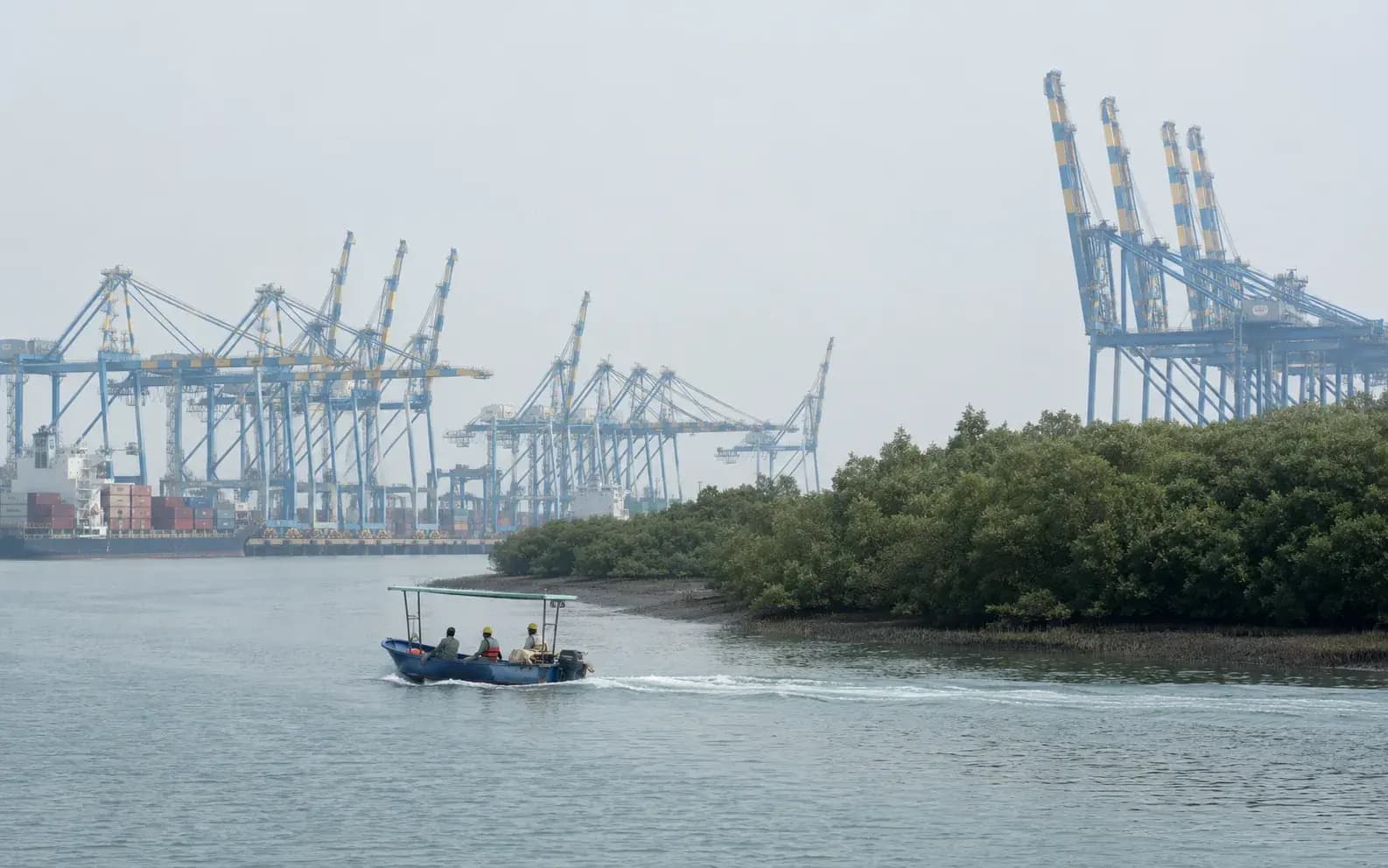
Mangroves on the Maharashtra coast are treated as protected forest, so any jetty approach, pipeline corridor, bund or access road that touches them runs through the Forest (Conservation) Act 1980 route in addition to CRZ clearance.
Screening view on your project, with the category and route named. No obligation.
What this means for logistics & ports
This surprises proponents more than any other approval on a coastal project, because the land in question is often not marked as forest on any revenue record. Mangrove areas in Maharashtra are treated as protected forest, and the effect is that removing them for a project is a diversion of forest land requiring Stage-I and Stage-II approval under the Forest (Conservation) Act 1980, renamed by the Van (Sanrakshan Evam Samvardhan) Adhiniyam 2023, with the diversion proposal routed through the forest department and the State's mangrove management arrangements. The obligations that follow are the standard ones applied to a very non-standard habitat: net present value for the diverted area, and compensatory planting at the multiple the authority sets, which for mangroves means identifying a coastal site where mangrove planting can actually establish, not a plot of upland scrub. Judicial orders on mangrove protection in Maharashtra add a further layer to how proposals affecting mangroves are dealt with. Alongside all of this the CRZ Notification 2019 is running in parallel: mangrove patches above the notified extent are CRZ-I(A) with a buffer landward of them, so the same trees generate both a forest question and a coastal one, decided by different authorities on different timescales.
How KIPL runs it
KIPL maps the mangrove edge before the alignment is fixed, because the cheapest mangrove diversion is the one designed out. On most coastal projects an approach road, a conveyor corridor or a pipeline route can be shifted at concept stage to avoid the patch entirely, and doing so removes a Stage-I and Stage-II process, an NPV liability, a compensatory planting obligation and a substantial timeline risk in one decision. Where diversion is genuinely unavoidable, we prepare the proposal properly: the mangrove area digitised and enumerated, the compensatory planting site identified on ground where mangroves will establish, the NPV liability sized at the start, and the forest file kept consistent with the CRZ and Environment Clearance files, which must all state the same affected area. On this coast the work is home ground for a Navi Mumbai firm, with waterfront mandates including the Chowgule Lavgan shiprepair facility at Jaigad. The failure that costs the most is clearing mangroves without diversion on the assumption that CRZ clearance covered it: it does not, and the consequences run through both the forest route and the tribunal.
- FCA 1980
Mangroves are treated as protected forest
Removing mangroves for a project is a forest land diversion requiring Stage-I and Stage-II approval, regardless of what the revenue record calls the land.
- CRZ-I(A)
The same trees are also a coastal feature
Mangrove patches above the notified extent are CRZ-I(A) with a landward buffer under the CRZ Notification 2019, so two authorities decide on the same area on different timescales.
Compensatory planting has to be on coastal ground
Compensatory mangrove planting must be established where mangroves can actually grow. Identifying that site, and its tenure: is the part of the proposal that takes the longest.
What you receive
Written for logistics & ports, not adapted from a template.
- 01Mangrove edge mapping and enumeration against the project alignment, before design freeze
- 02Avoidance review: realignment options for approach roads, corridors and bunds that remove the diversion
- 03Forest diversion proposal for the unavoidable area, with area statement consistent across CRZ and EC files
- 04Compensatory mangrove planting site identification, tenure check and planting specification
- 05NPV liability assessment and Stage-I condition compliance pack
- 06Stage-II follow-through and carry-over of forest conditions into the project EMP
Questions from logistics & ports
What logistics & ports ask before appointing us.
Answered against the regulation as it stands, not as a sales pitch. If your situation is not here, ask us directly.
Ask a question →Does CRZ clearance cover mangrove removal?
No, and assuming it does is the most expensive mistake on this subject. CRZ clearance addresses the coastal regulation question; removing mangroves is separately a diversion of forest land requiring approval under the Forest (Conservation) Act. A project holding a CRZ clearance and no forest diversion has no authority to clear mangroves, and doing so engages both the forest route and the tribunal.
Why are mangroves forest when the land is not recorded as forest?
Because protected forest status here follows the character of the vegetation and the orders that apply to it in Maharashtra, not the revenue classification of the parcel. This is why proponents are caught out: the title documents say nothing about forest, and the site looks like tidal scrub, but the diversion requirement applies all the same.
Can a mangrove diversion be avoided by design?
Very often, yes, and it is the first thing to test. An approach road, conveyor gallery, pipeline corridor or bund can frequently be realigned at concept stage to miss the patch, and a jetty approach can sometimes be trestled over rather than filled through. Each of those decisions removes a Stage-I and Stage-II process, an NPV payment and a compensatory planting obligation, so the mapping is worth doing before the layout is fixed.
What does compensatory mangrove planting involve?
Establishing mangroves at the multiple the authority sets, on a coastal site with the right tidal regime, salinity and substrate, which is a much narrower requirement than ordinary compensatory afforestation. Finding a suitable site with clear tenure is usually the longest part of the proposal, and survival on it has to be demonstrated afterwards rather than assumed at planting.
How do the forest, CRZ and EC files interact?
They must all describe the same affected area. The mangrove area in the diversion proposal, the CRZ-I(A) extent and buffer in the coastal file, and the land use in the Environment Clearance application are read by different authorities, and a discrepancy in any one of them raises queries in the others. We run them off a single base drawing for exactly that reason.
How long does mangrove diversion take?
Longer than proponents plan for, and it is governed by the forest department's proposal cycle, the identification and transfer of the compensatory planting site, and the additional layer that applies to mangrove proposals in Maharashtra. We do not quote a period. What we do is size the risk early enough that the project can decide whether avoidance by realignment is the better answer, which it usually is.
Stage by stage
How forest clearance actually runs, step by step.
Also for logistics & ports
The rest of the environmental brief for this sector.
Primary sources
Verify any of this at the source.

Relevant proof
MCGM GARDEN DEVELOPMENT- MIYAWAKI PLANTATION
Miyawaki dense forestation across 27 locations in 7 wards using native species, delivered under the municipal greening programme.
- Area
- ~74,000 m²
- Trees
- ≈1,10,000
- CO₂ (est.)
- 2,052 t
Where we do this
Forest Clearance for logistics & ports, city by city.
Other sectors
Who else we run forest clearance for.
Next step
Tell us the project, and we will tell you the category and the route.
Screening is the cheapest stage to get right and the most expensive to get wrong. We will say plainly what forest clearance your logistics & ports project needs, and what it does not.





























































Start the conversation