










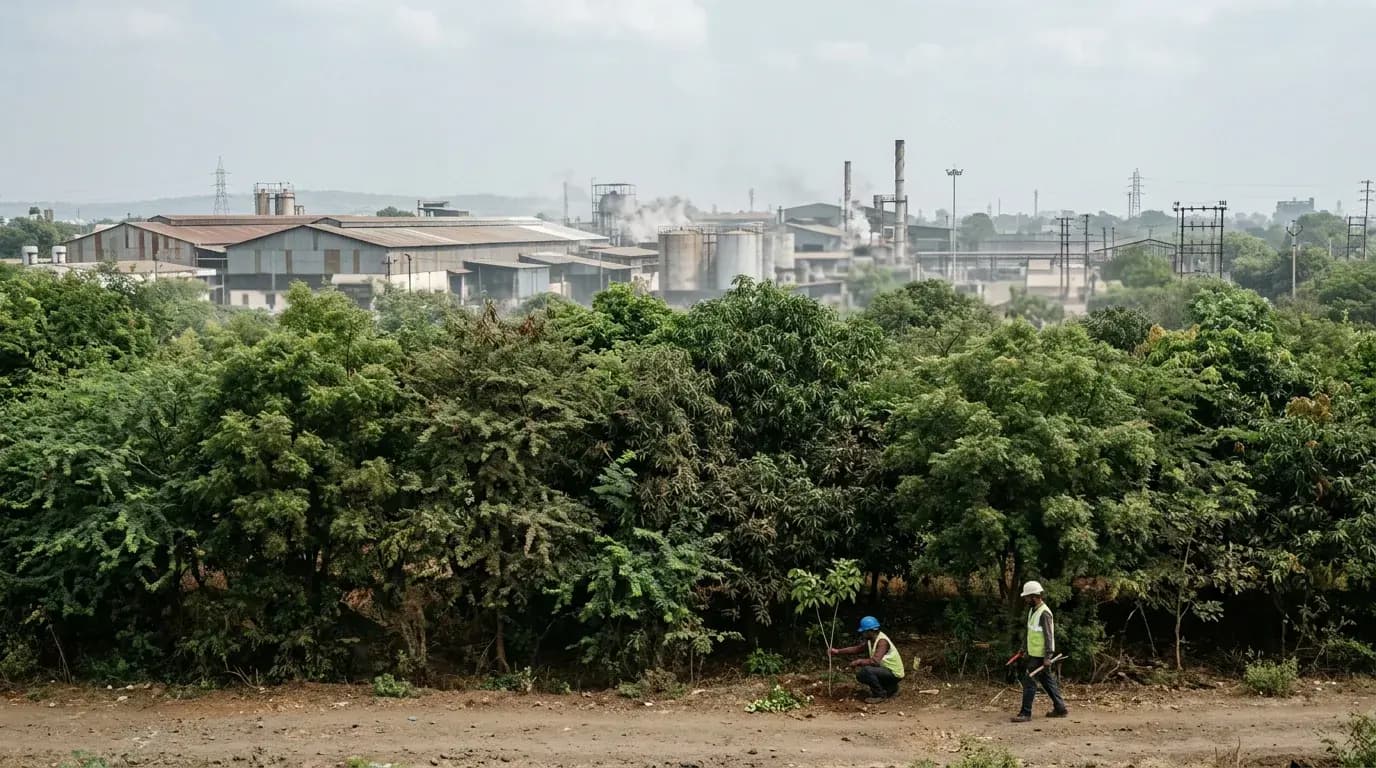
Green Belt Development for Industries in ONGC Uran, Uran.
Green Belt Development for Industries for ONGC Uran: read against this area's own ground, not the city's average.
Why ONGC Uran
The ground this work sits on here.
- Area
- ONGC Uran, Uran
- Practice
- Urban Ecology and Green Infrastructure Services
- Typically for
- Industrial units, estates, MIDC plots, chemical and manufacturing sites
Green belts around Uran's energy installations have to cope with salty, low land, sea wind and the plant's own emissions. They also serve as a buffer between the plant and the villages. We choose salt-tolerant native trees and mangrove associates, plant in improved soil on raised ground, keep safe distances from flares and pipelines, and number every tree so the compliance report can show what survives.
ONGC Uran is the area around ONGC's processing plant, which takes in crude and gas piped ashore from the fields off Mumbai and processes them before they go on to refineries and consumers. The plant's columns, flares and tank farms sit on low land near the creeks, and other energy installations stand in the same belt, including a gas-fired power station and LPG storage. Villages lie close by, many of them fishing and farming communities that predate the plant. Pipelines, access roads and the plant's own township and facilities spread across the area.
How it works
Green Belt Development for Industries, from survey to survival.
- 01/04
Condition & buffer planning
The EC and consent green-cover conditions read, and a buffer plan sized and structured to meet them on the available plot.
- 02/04
Species selection
Pollution- and dust-tolerant native species chosen for attenuation, screening and survival at an industrial boundary.
- 03/04
Planting & establishment
Multi-row planting and the establishment care a buffer needs to close its canopy.
- 04/04
Compliance records
Documentation of the green cover developed and maintained, for the post-EC compliance file.
Proof
Comparable work we've delivered.
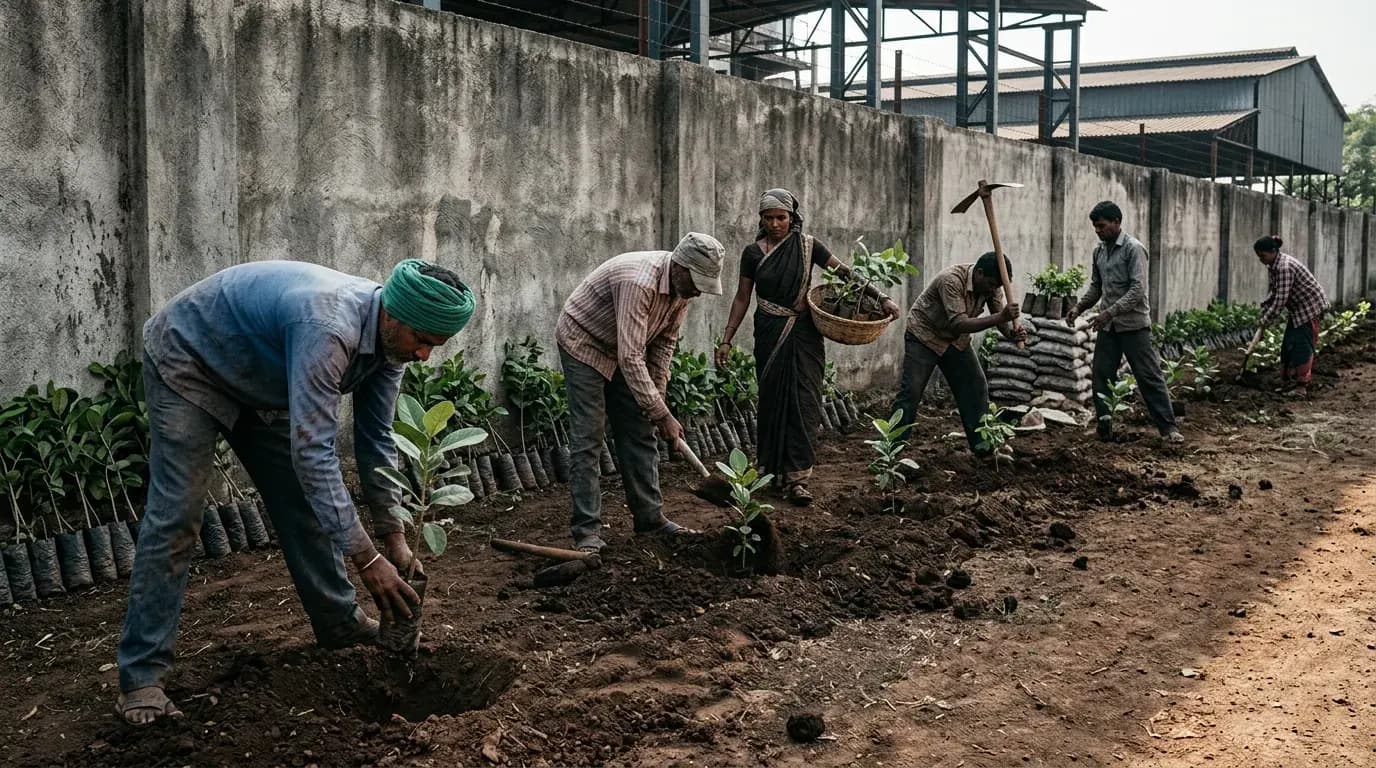
· Jamnagar, Gujarat
Miyawaki Plantations at Jamnagar and Junagadh
Land preparation, soil treatment, plantation and irrigation delivered phase-wise in four months.
See the full case →The record
The work, project by project.
Mandate, method and measured outcome, written end to end for every project on this list.
Environmental compliance audits, Consent to Establish and green certification support across two industrial nodes of the Delhi-Mumbai Industrial Corridor.
Read the case studyStraight answers
Green Belt Development for Industries in ONGC Uran: common questions.
01Can trees be planted over or near a buried pipeline?
Not directly over it. Pipeline corridors usually need a clear strip for access and inspection, and roots can damage coatings. Shrubs and grasses may be allowed at the edge. We plan the green belt to respect the pipeline operator's rules.
02How long does green belt development for industries take in ONGC Uran?
On timing: planting seasonal; establishment 2–3 years. A realistic ONGC Uran schedule is set once the site and the scope have been read, and the work is carried through to the outcome by the same named people.
In the press
Covers, features and conversations: the work, talked through.



Keep exploring
Where this connects.
Green Belt Development for Industries nearby
The same work, elsewhere across Uran.
Green Belt Development for Industries: the full serviceClients & partners
The work is trusted where the stakes are highest.
Two decades of clearances, treatment plants and green infrastructure delivered for India’s builders, industry and public bodies, and the global engineering firms beside them.





























































Green Belt Development for Industries in ONGC Uran? Start with the ground you have.
One conversation to walk the site and plan for what survives: not just what gets planted.