










Tree Management in Ulhasnagar 1, Ulhasnagar.
Tree Management for Ulhasnagar 1: read against this area's own ground, not the city's average.
Why Ulhasnagar 1
The ground this work sits on here.
- Area
- Ulhasnagar 1, Ulhasnagar
- Practice
- Urban Ecology and Green Infrastructure Services
- Typically for
- Developers, contractors, infrastructure and industrial projects
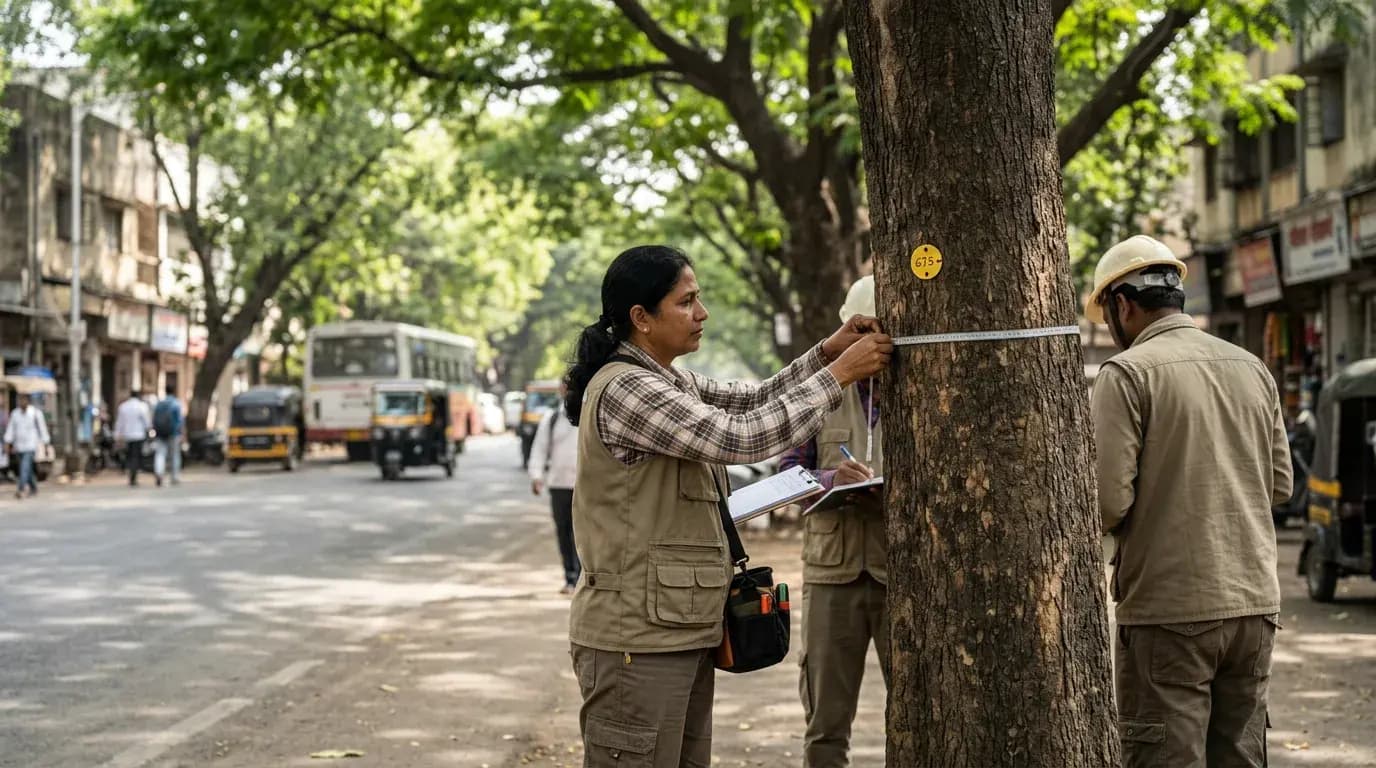
In Camp 1 a single tree in a compound may be the only shade on a street, and redevelopment puts it at risk. Each removal or transplant goes to UMC's Tree Authority. We survey the trees on a redevelopment plot, advise on which can be retained within the new building's footprint, and prepare applications and replacement planting for the others. Because on-site space is so short, we also identify places nearby where replacement trees can grow and be looked after.
Ulhasnagar 1 is the camp at the Shahad end of the city, closest to Kalyan and to the Ulhas. Like the other camps it began as rows of barracks for families arriving after Partition, and those rows were rebuilt, extended and built upon until they became narrow streets of three- and four-storey buildings. Shops and small workshops occupy the ground floors, and homes fill the floors above. Markets draw buyers from Kalyan, Ambernath and the villages beyond. Open land barely exists, and many of the older buildings are now due for redevelopment.
How it works
Tree Management, from survey to survival.
- 01/05
Tree enumeration & census
Every tree on site numbered, measured and identified, the defensible count the whole application rests on.
- 02/05
Transplant feasibility
An honest assessment of which trees can be saved by transplantation rather than felled.
- 03/05
Tree Authority NOC
The cutting / transplantation application prepared and pursued through the relevant municipal Tree Authority.
- 04/05
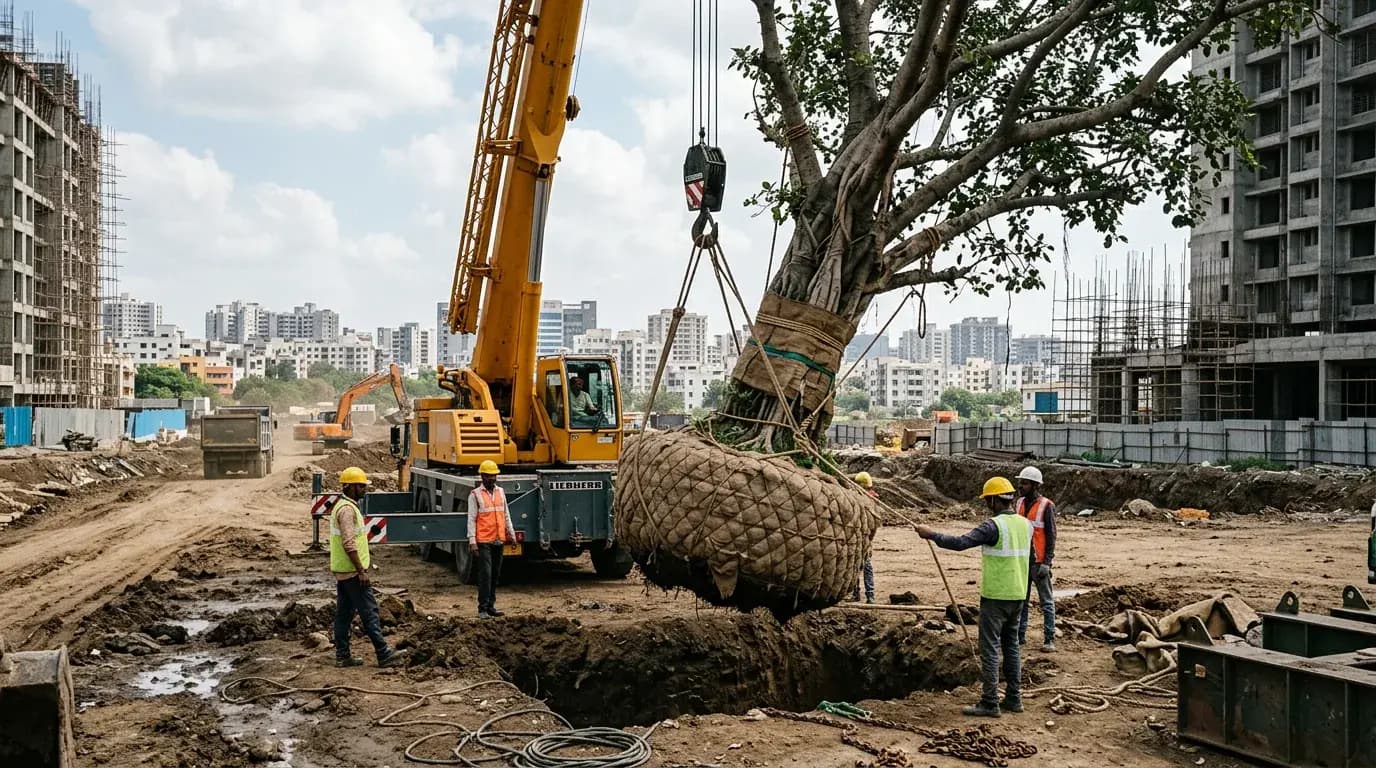
Transplantation
Careful lifting, moving and replanting of feasible trees with root-ball protection.
- 05/05
Post-transplant survival
Monitoring and the survival compliance the authority requires after a transplant.
Proof
Comparable work we've delivered.
MCGM · Eastern Suburbs, Mumbai
MCGM GARDEN DEVELOPMENT- MIYAWAKI PLANTATION
Miyawaki dense forestation across 27 locations in 7 wards using native species, delivered under the municipal greening programme.
See the full case →The record
The work, project by project.
Mandate, method and measured outcome, written end to end for every project on this list.
CTE/CTO application, ToR application, baseline data collection, EIA report and appraisal before the EAC: Category 5(f), the sector KIPL holds Category A accreditation in.
Read the case studyStraight answers
Tree Management in Ulhasnagar 1: common questions.
01Can we plant our compensatory trees in pots on the terrace?
Tree Authorities generally expect trees planted in the ground, where they can grow to full size. Terrace planting may help with green cover but rarely counts as compensation. When the plot cannot take them, we propose locations such as school grounds or public spaces, with the landowner's consent and someone to look after them.
02How long does tree management take in Ulhasnagar 1?
On timing: census in weeks; NOC by Tree Authority calendar. A realistic Ulhasnagar 1 schedule is set once the site and the scope have been read, and the work is carried through to the outcome by the same named people.
In the press
Covers, features and conversations: the work, talked through.



Keep exploring
Where this connects.
Also in Ulhasnagar 1
Other work written for Ulhasnagar 1's own ground.
- Environment Clearance
- Sewage Treatment Plants
- Integrated Solid Waste Management
- MPCB Consent
- Statutory Compliance Management
Clients & partners
The work is trusted where the stakes are highest.
Two decades of clearances, treatment plants and green infrastructure delivered for India’s builders, industry and public bodies, and the global engineering firms beside them.





























































Tree Management in Ulhasnagar 1? Start with the ground you have.
One conversation to walk the site and plan for what survives: not just what gets planted.